

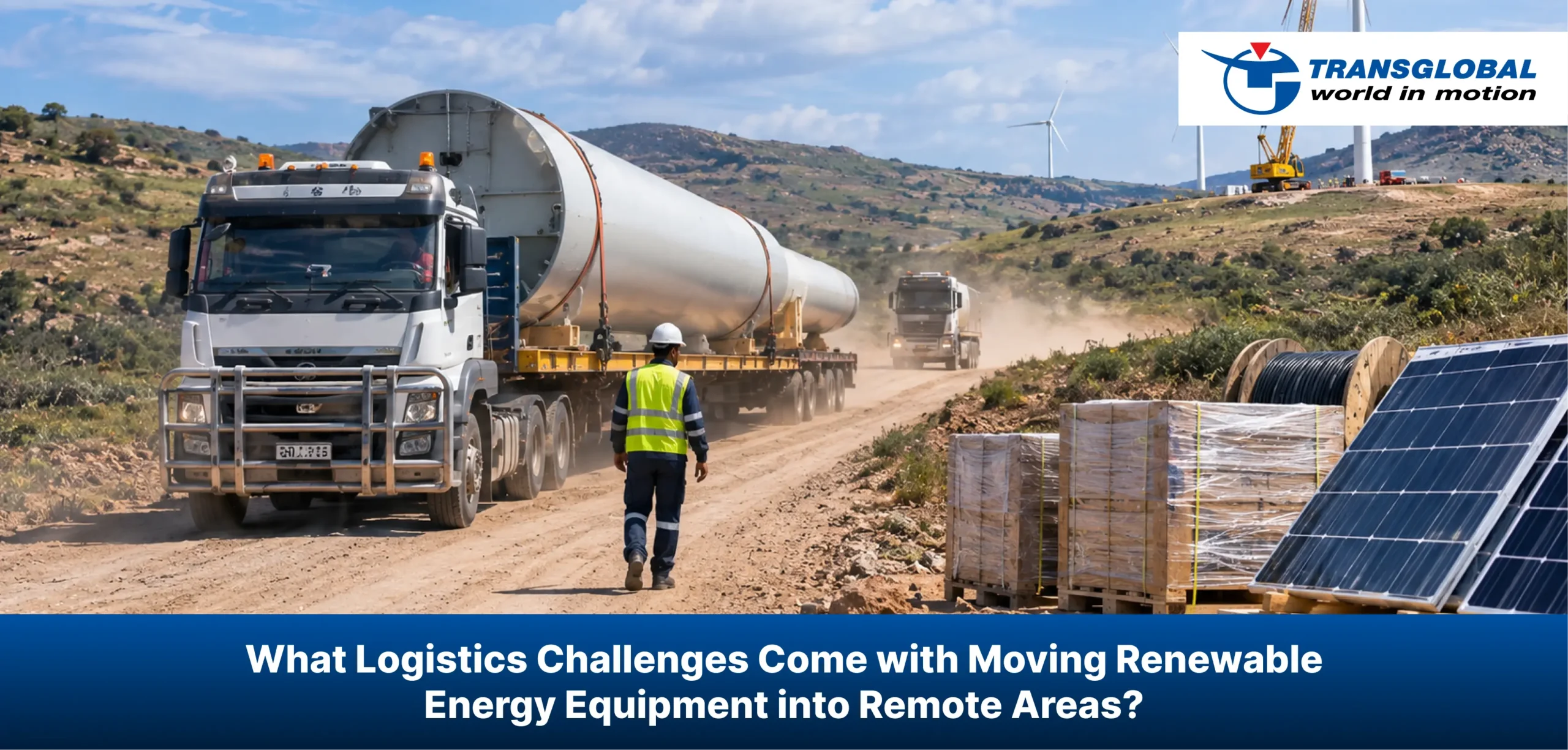
A wind turbine component may travel thousands of kilometres from its manufacturer, cross an international border, and reach the nearest town without difficulty.
Then comes the final stretch.
The project site may be 80 kilometres away, accessible only through narrow roads, uneven terrain, or temporary construction routes. A trailer carrying an oversized component may struggle with sharp bends, steep gradients, or restricted turning space.
For renewable energy developers, this is where a seemingly straightforward delivery can become a major logistical challenge.
Solar farms, wind farms, battery energy storage facilities, and substations are often developed away from established industrial centres. These locations offer suitable land and energy resources, but they may lack infrastructure designed for transporting large equipment.
Energy logistics must therefore consider the physical conditions of the destination, not simply the distance from the port.
From abnormal load restrictions to ground conditions and installation schedules, moving renewable energy equipment into remote areas requires careful coordination between transport providers, engineers, and project teams.
Why Remote Project Locations Create Difficult Transport Conditions?
Remote renewable energy sites may have suitable conditions for generating electricity but limited infrastructure for delivering the equipment needed to build them.
A wind farm in a rural area may be connected to the main road by a narrow access route. A solar installation may be located beyond several kilometres of gravel roads. A battery storage project may require delivery through an area where heavy commercial vehicles rarely operate.
These conditions influence the transport plan.
Road width, surface stability, drainage, gradients, and turning areas determine whether the selected vehicle can reach the destination safely.
For example, a road that accommodates ordinary construction trucks may not support a long trailer carrying a wind turbine blade.
Similarly, a bridge may have sufficient clearance but insufficient load-bearing capacity for a heavy transformer.
Before dispatch, the route may require a physical survey, engineering assessment, or confirmation from the relevant road authority.
Through its energy and renewables logistics services, Transglobal supports transport planning for renewable equipment, including abnormal loads and deliveries to project sites.
The critical question is whether the equipment can travel along the entire proposed route, including the final access road.
A successful port arrival means little if the cargo cannot physically reach the installation site.
How Oversized Equipment Changes the Road Transport Plan?
Renewable energy projects involve equipment with very different transport characteristics.
Solar modules may move in standard freight units, while turbine blades, tower sections, transformers, and large generators can require specialised trailers and lifting arrangements.
The challenge becomes greater when the cargo exceeds normal road dimensions or weight limits.
An oversized wind turbine component may need an extendable trailer, approved transport permits, escort vehicles, and restrictions on when the load can travel.
Overhead cables, roadside structures, traffic islands, and tight intersections can also affect route suitability.
For heavy transformers, the concern may be concentrated weight rather than length.
The transport team must consider axle loading, vehicle configuration, bridge restrictions, and how the cargo’s weight will be distributed during movement.
These requirements are explained further in oversized cargo transport, where equipment dimensions and route conditions determine the appropriate movement plan.
For suitable inland movements, road freight connects ports, storage facilities, and equipment suppliers with renewable energy project locations.
However, selecting a trailer is only part of the work.
The route must be suitable for the complete loaded vehicle, and the required approvals must be obtained before the movement begins.
What Happens When the Site is Not Ready to Receive Heavy Equipment?
A transport vehicle may reach the project entrance on schedule and still be unable to unload.
Remote construction sites are often developed in stages. Access roads, crane pads, foundations, storage areas, and internal movement routes may not all be completed at the same time.
This creates a specific challenge for project cargo.
A transformer weighing several tonnes cannot simply be placed wherever space is available. The unloading area must support the equipment, the lifting machinery, and the forces involved in the operation.
Wind turbine sections may require large cranes and prepared assembly areas. Solar modules need protected storage that limits unnecessary handling and exposure to damage.
If the receiving area is unsuitable, the transport vehicle may have to wait or the cargo may need to be redirected.
Both situations can increase costs.
Site readiness should therefore be confirmed before the equipment leaves its previous holding point.
For heavy equipment, the project team may need to verify ground-bearing capacity, crane access, lifting plans, unloading personnel, and available storage space.
The same principle applies to smaller but sensitive components.
Battery units, inverters, and electrical control systems may require specific handling and environmental protection arrangements.
Remote site logistics works best when the delivery plan is based on what the receiving location can safely accommodate.
How Weather and Equipment Sensitivity Affect Remote Deliveries?
Weather conditions can change the suitability of a remote transport route.
Heavy rainfall may soften unsealed roads, create washouts, or make temporary construction access routes unsuitable for loaded vehicles.
Strong winds can restrict lifting operations, particularly when large components present significant surface areas.
These conditions are especially relevant for wind farm construction, where turbine components require controlled handling during unloading and assembly.
Equipment sensitivity introduces another consideration.
Solar modules can suffer damage from poor load restraint or repeated vibration. Electrical equipment may need protection against moisture, impact, and contamination.
Battery energy storage systems bring additional requirements.
Depending on their design and classification, lithium battery shipments may be subject to dangerous goods regulations, specific packaging and securing requirements, and carrier acceptance conditions.
Transglobal has also examined the transport concerns associated with large lithium batteries used in South African renewable energy projects.
For remote deliveries, transport planning should account for seasonal road conditions, suitable weather windows, and the protective measures required for each equipment type.
A route that works during dry conditions may need reassessment after significant rainfall.
Similarly, a scheduled lifting operation may need to be postponed when conditions exceed the equipment’s safe operating limits.
Why Equipment Delivery Must Follow the Installation Sequence?
A renewable energy project may involve hundreds of individual shipments, but the construction team does not need every component at the same time.
This creates an important scheduling challenge.
Consider a wind farm awaiting turbine installation.
Tower sections may need to arrive before the nacelle and blades can be assembled. If a critical component is delayed, the project may have expensive lifting equipment and installation personnel waiting on site.
For a solar farm, mounting structures, modules, electrical cables, inverters, and transformers must be available according to the construction programme.
Delivering everything early is not always practical.
Remote sites may have limited storage capacity, restricted vehicle access, and insufficient space to accommodate several large deliveries simultaneously.
The transport schedule should therefore reflect the installation sequence.
This may involve holding equipment at a suitable logistics facility and releasing consignments according to confirmed site requirements.
Supplier coordination also matters when components originate from different countries.
As discussed in renewable energy logistics, equipment must move through international supply routes before reaching the project.
For remote installations, that wider supply plan needs to connect directly with construction progress.
When delivery dates change, project managers and transport teams should reassess vehicle bookings, handling equipment, and receiving arrangements.
This helps prevent avoidable waiting time, repeated handling, and congestion at the project site.
Conclusion: Remote Energy Logistics Begins with Understanding the Destination
Moving renewable energy equipment into remote areas presents challenges that standard freight arrangements may not address.
Limited road infrastructure can restrict access. Oversized components may require specialist transport and permits. Unprepared unloading areas can prevent delivery, while weather and equipment sensitivity introduce additional risks.
The installation programme also determines when individual consignments are needed.
For renewable energy developers, these considerations should be addressed before equipment is dispatched.
A workable transport plan begins with understanding the cargo’s dimensions and handling requirements, assessing the destination route, and confirming that the project site can receive the shipment.
This approach helps reduce unnecessary transport interruptions and supports the construction of renewable energy infrastructure across South Africa and the wider region.
Planning the movement of solar, wind, battery storage, or heavy electrical equipment to a remote location? Contact us to discuss the cargo specifications, route conditions, abnormal load requirements, and site delivery arrangements.
Move renewable energy equipment with leading freight forwarders who understand energy logistics, remote site logistics, and specialist project cargo transport.
Frequently Asked Questions
Why are route surveys important for wind turbine transport?
Wind turbine components can exceed normal road dimensions. A route survey helps identify restrictions such as narrow bends, overhead obstacles, steep gradients, and unsuitable bridges before transport begins.
Can heavy renewable energy equipment be delivered on gravel roads?
Yes, where the road is suitable for the loaded vehicle. Its width, surface condition, gradients, and load-bearing capacity must be assessed before delivery.
Why is crane pad preparation important for transformer delivery?
A crane pad provides a prepared working area for lifting equipment. It must have sufficient stability and bearing capacity to support the planned lifting operation safely.

Comments