

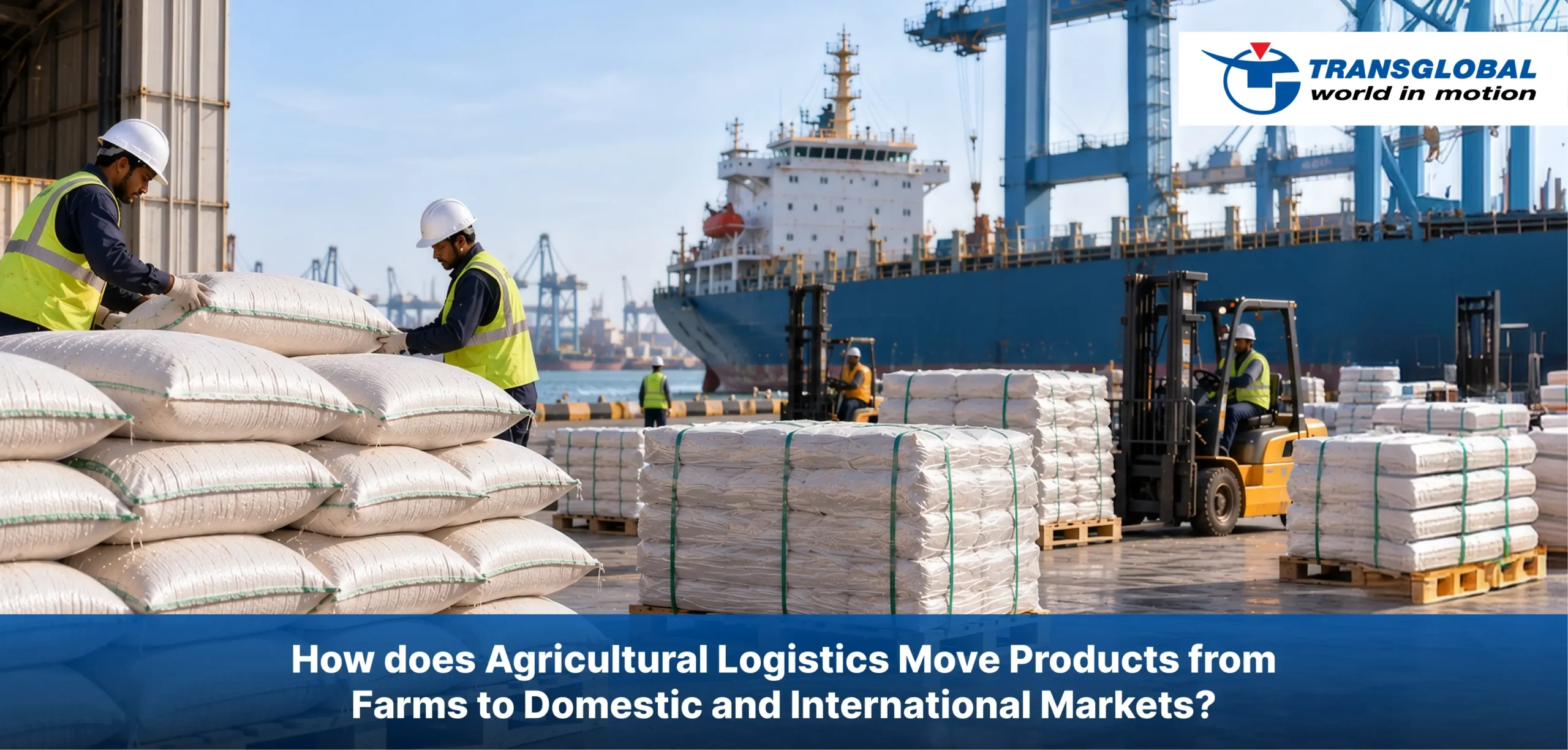
Agricultural products do not wait for perfect logistics conditions.
A crop is harvested when it is ready. Fresh produce has a short selling window. Grain, seeds, animal feed, flowers, packaged food, and farming inputs all have their own handling timelines.
Once the product leaves the farm, the movement has to protect more than the shipment.
It has to protect quality, timing, market value, buyer confidence, and in many cases, export eligibility.
That is where agricultural logistics becomes important.
It manages the movement of farm and food-related products from rural collection points to packhouses, processors, cold stores, warehouses, ports, airports, retailers, wholesalers, and overseas buyers.
The work is not only transport.
It includes collection planning, product handling, packing, storage, route selection, export documents, inspection readiness, and buyer delivery.
For farmers, exporters, importers, processors, and distributors, agricultural logistics turns farm output into cargo that can reach domestic and international markets in the right condition.
Why does Agricultural Logistics Begin Before the Truck Arrives?
The first part of agricultural logistics happens at the farm gate.
Before collection, the product, volume, packing method, loading point, vehicle access, and delivery deadline should be clear.
A farm is not always built like a commercial loading facility.
The road may be narrow. The loading area may be open. Weather can affect access. Harvesting may finish later than expected. Labour, equipment, and buyer instructions can also affect collection timing.
Fresh produce may need faster uplift after packing. Grain may need dry handling. Flowers may need careful temperature attention. Packaged food products may need pallet stability and clean loading.
For farm-to-market movement, road freight plays a major role because the first journey often starts by truck, whether the cargo is moving to a local buyer, a distribution centre, or an export point.
A strong collection plan reduces pressure at the next handover.
When the product leaves the farm correctly, the shipment has a better chance of reaching the buyer without losing time or quality.
How Packing and Holding Protect Product Value?
Agricultural cargo can lose value quickly if it is not prepared properly.
Packing is not only there to make the product easier to move. It protects shape, freshness, cleanliness, shelf life, and presentation.
Fresh fruit, vegetables, flowers, grains, seeds, animal feed, packaged food, and processed agricultural goods all need different preparation.
Some products need ventilation. Some need dry protection. Some need strong cartons. Some need pallets that will not collapse during handling. Others need wrapping, labels, batch details, temperature notes, or inspection marks.
Temporary holding also matters.
Products may wait at a packhouse, warehouse, cold store, export facility, or consolidation point before the next movement.
For agricultural cargo that needs organised holding before dispatch,warehouse can help manage stock, dispatch preparation, loading order, and movement readiness.
The purpose is clear.
The product should reach the buyer in a condition that protects its quality, value, and market acceptance.
Good packing and holding protect the value created at the farm.
Why does Domestic Distribution Depend on Timing and Access?
Domestic agricultural distribution is often time-sensitive.
Products may move from farms to processors, supermarkets, food manufacturers, restaurants, wholesalers, regional distribution centres, or fresh produce buyers.
The route has to match the product and the buyer’s receiving process.
A food processor may need delivery at a specific production time. A retailer may need stock before store replenishment. A fresh produce buyer may expect the product early in the day. A warehouse may require booking before arrival.
Access can also affect the movement.
Some farms are far from main corridors. Some receiving sites are in busy urban areas. Some rural routes have long distances between loading and delivery points.
For South African and regional movements, border crossings can also influence agricultural distribution when products move into neighbouring markets.
Domestic delivery is not only about distance.
It is about reaching the right receiving point while the product still holds its commercial value.
How Export Requirements Open the Door to International Markets?
Agricultural exports need more preparation than local delivery.
The product must meet buyer requirements, destination rules, inspection standards, and transport conditions.
Depending on the cargo, exporters may need invoices, packing lists, certificates of origin, phytosanitary certificates, health certificates, permits, inspection records, and product-specific approvals.
The document file should match the shipment exactly.
Product description, weight, package count, origin, consignee details, marks, and inspection references should be consistent before the cargo reaches the port, airport, or border.
For wider trade movement, imports and exports planning helps explain how cargo moves through different transport modes and clearance steps.
Export agricultural logistics has one clear purpose.
It helps move products from local supply into international trade without losing control at the document, inspection, or handover stage.
Why must the Transport Mode match the Product?
Agricultural cargo can move by road, sea, air, or a mix of modes.
The right choice depends on the product, shelf life, volume, value, destination, cost, and delivery window.
Sea freight may suit larger volumes, processed food, grains, packaged agricultural goods, and reefer container shipments where cost and capacity matter.
For port-based exports, sea freight flow shows how cargo links into vessel schedules, port handling, and overseas distribution.
Air freight can be useful for products with shorter selling windows, such as flowers, samples, urgent food items, or high-value perishables.
For fast-moving exports, air cargo trade can support cargo where freshness and speed carry more weight than transport cost alone.
The transport mode should be chosen by product reality.
A cheaper option may not be better if the product loses quality before it reaches the buyer. A faster option may not be necessary if the product can safely move by sea or road.
Good agricultural logistics balances cost, condition, timing, and buyer expectation.
Conclusion: Agricultural Logistics Turns Farm Output into Market-Ready Cargo
Agricultural logistics moves products from farms into domestic and international markets by managing collection, packing, holding, transport, inspection, documentation, and delivery.
The process starts at the farm gate and continues until the product reaches the buyer in usable, saleable, or export-ready condition.
For farmers and exporters, the value of the crop or product depends on how well it is handled after harvest.
A late collection, weak packing method, poor storage decision, missing certificate, unsuitable route, or wrong transport mode can reduce product value before it reaches the buyer.
That is why agricultural logistics must match the product, the buyer, and the destination.
It protects quality, supports traceability, keeps delivery timing realistic, and helps agricultural products move from local production into wider trade.
Planning agricultural cargo movement? Contact us to review product type, collection points, packing, documents, transport mode, and buyer delivery requirements.
Move agricultural products with leading freight forwarders who understand agricultural logistics, farm collection, export movement, and market delivery.
Frequently Asked Questions
What is agricultural logistics?
Agricultural logistics is the movement and handling of farm and food-related products from farms to packhouses, warehouses, processors, domestic buyers, ports, airports, and export markets.
What makes agricultural logistics different?
Agricultural logistics is shaped by harvest timing, product quality, shelf life, packing, storage, route access, inspection needs, and buyer delivery windows.
Which transport mode is used for agricultural products?
Agricultural products may move by road, sea, air, or multimodal transport depending on the product type, volume, shelf life, destination, cost, and delivery deadline.


Comments