
Secure & Certified Logistics for Explosives and Radioactive Cargo
Expert Handling of Explosives & Dangerous Goods
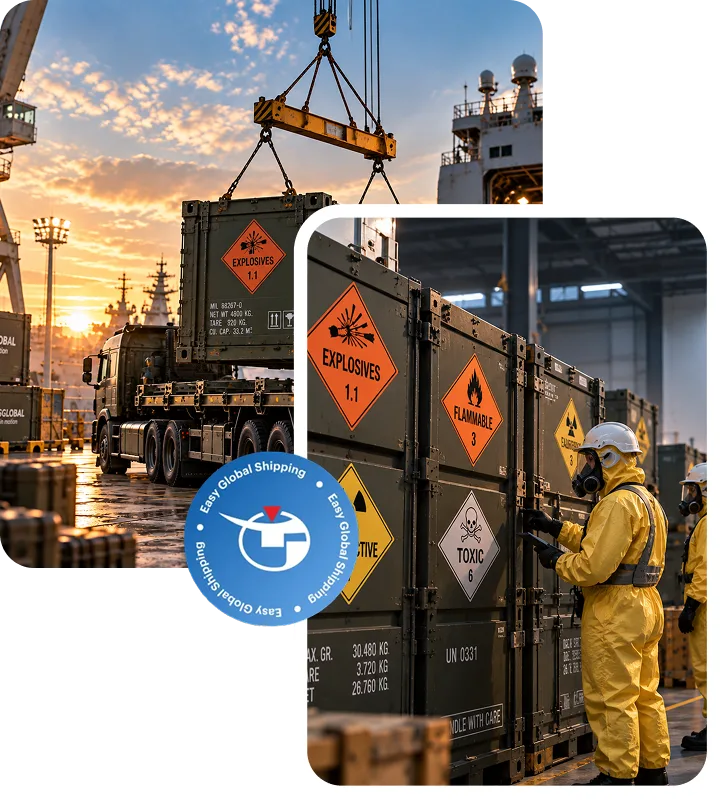
At Transglobal, we provide specialized logistics for explosives and other high-risk cargo. Our certified team handles Class 1 to Class 9 Dangerous Goods via air and sea, meeting all IMO and national safety standards. Whether it's military-grade explosives or radioactive isotopes, we ensure every movement is safe, legal and precise.
We Give Every Explosives Shipment the Attention it Demands
-
 Class 1 Explosives: Certified transport for military cargo, handled under strict safety protocols for secure, compliant delivery.
-
 Radioactive Cargo: Class 7 isotope shipments — South Africa's largest handler of isotopes via NTP Logistics, by air and sea.
-
 Full DG Compliance: All classes covered — our team is certified for all 9 Dangerous Goods classes, with 24/7 tracking in place.
Every Explosives Shipment Must be
Ready Before Dispatch

Classification Defines the Transport Controls
The UN Number, hazard division and compatibility group are confirmed early so the consignment follows the correct Class 1 transport requirements.
Compatibility Controls What Moves Together
Compatibility groups and segregation requirements are reviewed before consolidation to prevent incompatible explosive substances or articles from being loaded or stowed together.
Acceptance Confirms Readiness for Dispatch
Packaging, marks, labels and required declarations are checked against carrier conditions so acceptance issues can be resolved before the consignment is presented.
Each Explosive Hazard Presents a Different Risk During Transport
Explosives can react differently if exposed to heat, impact, friction or accidental initiation. Mass explosion, projection, fire and propagation risks therefore require different levels of separation, stowage control and handling throughout transport.
Mass Explosion Hazard
A single event can involve almost the entire load, making separation, controlled stowage and route planning especially important during transport.
Projection Hazard
Fragments can be projected without causing a mass explosion, requiring controls that limit exposure to surrounding cargo, equipment and handling areas.
Fire, Minor Blast or Projection Hazard
Fire is the primary risk, while limited blast or projection effects influence how the cargo is positioned, handled and stowed during transport.
No Significant Hazard
Explosive effects are generally confined to the package, while compatibility and handling conditions continue to determine how the cargo can be transported.
Very Insensitive Substances
These substances are difficult to initiate but can still present a mass explosion hazard, requiring defined transport controls and controlled handling.
Extremely Insensitive Articles
Accidental initiation or propagation is highly unlikely, but the articles remain subject to explosives transport controls based on their assigned classification.
Not Sure How to Move Dangerous Goods? We'll Guide You Safely
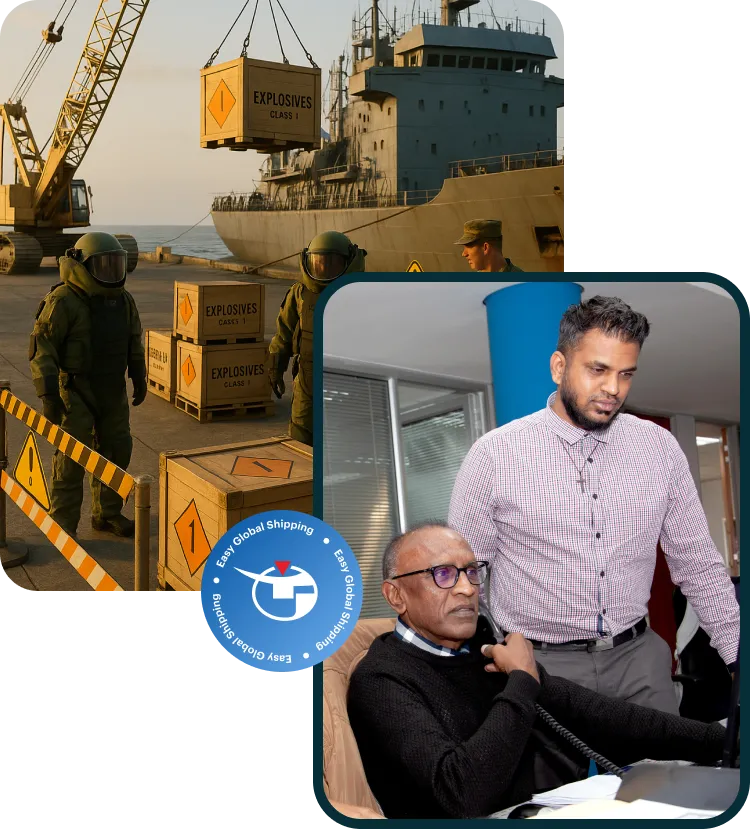
Shipping hazardous cargo like explosives and radioactive materials requires precision, certification and trust. That's where Transglobal excels. Our trained and certified team follows strict IMO and local compliance, ensuring your sensitive cargo moves securely via air or sea.
- Fully certified to handle Class 1 to Class 9 Dangerous Goods
- South Africa's largest handler of Class 7 isotopes via NTP Logistics
- Trusted partner for military, nuclear and radioactive shipments
Why Choose Our Explosive Logistics Services

Certified Expertise
Our team is trained and certified to handle Dangerous Goods from Class 1 to Class 9, ensuring full compliance with IMO and IATA regulations for secure shipping.

Secure and Trusted Network
From radioactive materials to military-grade explosives, we operate with vetted partners and secured routes across air and sea, trusted by defence and medical sectors.

Special Handling & Clearance
We manage all legal documentation, permits and customs processes needed to move hazardous goods, including nuclear and radioactive cargo.

South Africa's Leading Isotope Handler
Through NTP Logistics, we're the largest mover of Class 7 isotopes in the country, with proven capability in nuclear and medical-grade logistics.
Our Accreditations and Industry Standing

SARS AEO
Level 1 & 2 Accredited
ISO 9001:2015
Quality Management Certified
SAMSA Mobile Weighing
SOLAS VGM Method 1 Authorised
IATA
Air Cargo Industry AffiliationA Message From Our CEO
Moving explosives carries consequences far beyond the consignment itself. Every decision affects employees, contractors, surrounding communities and the continuity of the client's operation. Our approach therefore begins with respect for the cargo and the responsibility that accompanies it.
At Transglobal Cargo, we encourage our people to question details, raise concerns early and never allow urgency to replace sound judgement. We provide honest answers, responsible decisions and dependable support because every assignment deserves leadership that remains accountable from beginning to completion.

 100% Trusted Freight Forwarder
100% Trusted Freight Forwarder
100% Trusted Freight Forwarder
100% Trusted Freight Forwarder
100% Trusted Freight Forwarder
100% Trusted Freight Forwarder
100% Trusted Freight Forwarder
Answers to your
Explosives Transport questions
Explosives must follow strict global safety rules like the IMDG Code for sea and IATA for air. For road, national laws apply. These standards make sure the cargo is declared, packed, labeled and moved safely across borders.
They must be packed in certified, durable containers with moisture protection. Hazard labels are required on the outside. The shipment also needs proper documentation, including safety data sheets and transport declarations.
Only approved carriers with trained staff and valid permits can transport explosives. They must follow national safety laws and meet strict handling standards.
Staff need certified HAZMAT training. It covers explosive types, safe packing, labeling and emergency handling. Refresher training is also required to meet the latest safety and compliance standards.
Permit requirements depend on the explosive classification, quantity, route and whether the consignment is moving domestically, being imported or exported. We review the shipment and coordinate the applicable transport and border approvals before booking.