
Fine Art Logistics for Collectors and Museum Consignments
Moving Fine Art? Protection Starts Before the First Hand Touches It.
Fine art, antiques and museum objects require more than careful transport. We establish the object's condition, packing requirements, custody controls and applicable cross-border requirements before movement begins, keeping protection and accountability connected throughout the journey.
What We Establish Before Every Movement
-
 Condition Documented: The object's condition is recorded before packing and handling begins.
-
 Packing Specified: Materials, protection and crating are selected around the object and its transport requirements.
-
 Custody Controlled: Collection, handling, transport and handover are planned around a documented chain of custody.
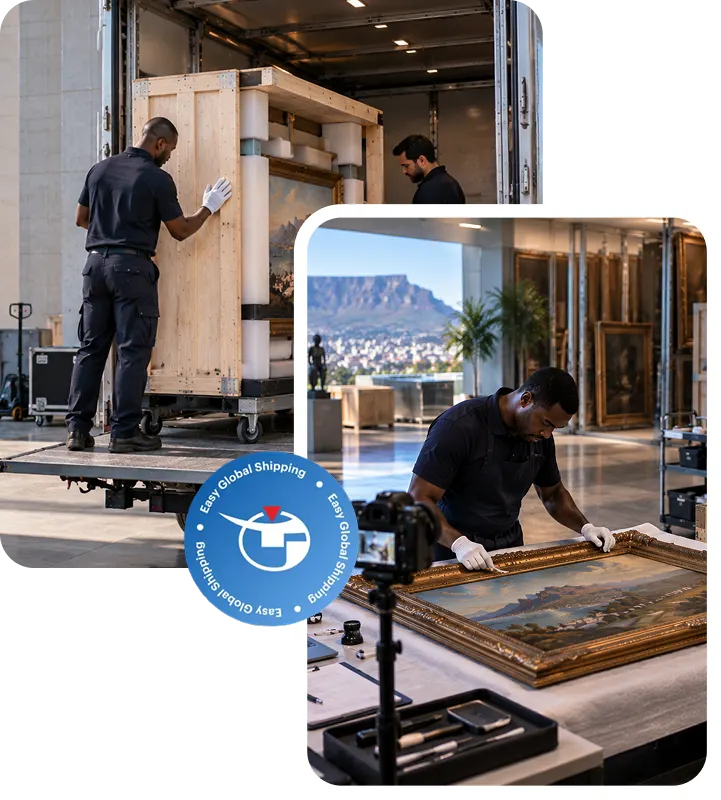
We Keep Every Valuable Consignment
Accounted for Throughout Its Journey

Condition is Recorded Before Handling
Condition reports and photographs document the object before packing begins, providing a clear reference for every subsequent handling stage.

Custody Stays Documented
Each collection, transfer and handover is recorded so responsibility for the consignment remains traceable while it changes hands.

Permits are Checked Before Dispatch
Export, temporary import and protected-material requirements are identified early so the required approvals can be addressed before the consignment moves.
Every Collection Requires Handling That Respects What Makes it Unique
Paintings, sculptures, antiques and heritage objects differ in material, fragility, value and conservation needs. We consider these characteristics when planning the packing, handling and transport requirements for each consignment.
Fine Art & Works on Paper
Paintings, drawings, prints and works on paper are handled around surface sensitivity, framing, condition and object-specific protection requirements.
Sculpture & Three-Dimensional Works
Sculptures and dimensional pieces require packing and handling planned around their material, weight, shape, structural stability and lifting requirements.
Antiques & Period Furniture
Antiques and period furniture are prepared around age, construction, fragile components and surface finishes requiring protection during handling and transport.
Museum & Heritage Objects
Museum artefacts and heritage objects are coordinated around condition, provenance documentation and applicable cultural-property requirements before movement.
Rare Books & Archives
Rare books, manuscripts and archival collections require suitable protective materials and handling that limits unnecessary contact throughout packing and transport.
Natural History Specimens
Taxidermy, biological specimens and objects containing protected materials are reviewed for applicable permit requirements before cross-border movement.
Precious Collectibles
Coins, stamps, medals, jewellery and other precious objects require discreet handling, controlled custody and protection appropriate to their size and value.
Exhibition & Collector Pieces
Musical instruments, militaria, photographic collections and collector vehicles displayed as exhibition pieces are planned around their individual handling and transport requirements.

How We Take Your Consignment from Condition Review to Final Handover
Every movement begins with understanding the object, its condition and the requirements surrounding its journey. We align packing, documentation, transport and customs arrangements before collection, then coordinate each stage through to delivery or installation.
- Assess & Prepare: Condition records, photographs, object-specific packing and applicable permit requirements
- Move & Monitor: Collection, controlled handling, air or sea freight, customs coordination and documented custody
- Deliver & Complete: Scheduled delivery, supervised handover, installation coordination and return logistics where required
Why Collectors and Institutions Trust Us with Objects That Cannot Be Treated as Ordinary Freight

Packing Starts with the Object
We specify protection around the object's material, dimensions, condition and sensitivity, using appropriate wrapping, conservation-grade contact materials and purpose-built crating where required.

Discretion Shapes the Movement
Transport arrangements are planned around the value and sensitivity of the consignment, limiting unnecessary exposure while keeping collection, transfer and delivery carefully coordinated.

Custody Remains Traceable
Condition records and documented handovers create a clear chain of custody, keeping responsibility for the object visible as it passes between handling points.

Exhibitions Stay Coordinated
Delivery sequence, installation requirements, packing-material storage, return movements and multi-venue schedules are aligned around the exhibition programme.
The Standards Behind How We
Handle Valuable Collections

SARS AEO
Level 1 & 2 Accredited
ISO 9001:2015
Quality Management Certified
SAMSA Mobile Weighing
SOLAS VGM Method 1 Authorised
FIATA
Global Freight AffiliationA Message From Our CEO
When a client entrusts us with fine art, an antique or a museum object, we understand that its importance cannot be measured by value alone. Our responsibility is to respect the object, protect its condition and keep every stage of its movement carefully coordinated.
That responsibility also means knowing when discretion matters, when documentation must be exact and when a permit can determine whether a consignment moves at all. We bring that attention to every collection, exhibition and specialist consignment placed in our care.

 100% Trusted Freight Forwarder
100% Trusted Freight Forwarder
100% Trusted Freight Forwarder
100% Trusted Freight Forwarder
100% Trusted Freight Forwarder
100% Trusted Freight Forwarder
100% Trusted Freight Forwarder
Answers to your
Fine Art Logistics questions
Valuable artwork is assessed before shipping to determine suitable packing, handling and transport requirements. Depending on the object and destination, fine art shipping may involve specialist crating, documented condition records, controlled handovers, customs formalities and air or sea freight.
Fine art shipping costs depend on the artwork's dimensions, weight, value, packing requirements, origin, destination and transport method. Custom crating, specialist handling, customs requirements and the level of protection required can also affect the final shipping cost.
Antique furniture should be assessed for fragile joints, removable components, surface finishes and structural condition before packing. The appropriate antique shipping method depends on the piece, with protection and crating specified around the object rather than using standard freight packing.
Certain artworks, antiques and heritage objects may require an export permit before leaving South Africa, depending on their age, significance and classification. Permit requirements should therefore be established before international transport is booked.
Requirements vary by object and destination but can include a commercial or pro forma invoice, packing list, condition documentation, customs records and applicable export or temporary-import permits. Heritage objects or items containing protected materials may require additional approvals.