
Move your LCL & FCL Shipment with Certified Sea Freight Expertise
Shipping Less Than a Container? Or More Than One?
Cargo volume decides the answer, and it decides it earlier than most shippers expect. We measure the consignment, compare the landed cost across both configurations and confirm the documentation path before space is booked. That assessment determines the equipment, routing and clearance sequence that follow.
We Confirm Three Things Before Space is Booked
-
 Volume Assessment: Actual dimensions, gross weight and stacking capability establish whether the consignment prices better as LCL groupage or a full container.
-
 Configuration Comparison: LCL and FCL are costed side by side on the same lane, including terminal handling, unpack and delivery, so the comparison reflects landed cost rather than ocean freight alone.
-
 Documentation Path: Tariff headings, permit requirements and origin documentation are confirmed against the commercial invoice before the booking is placed, not after the container is gated.
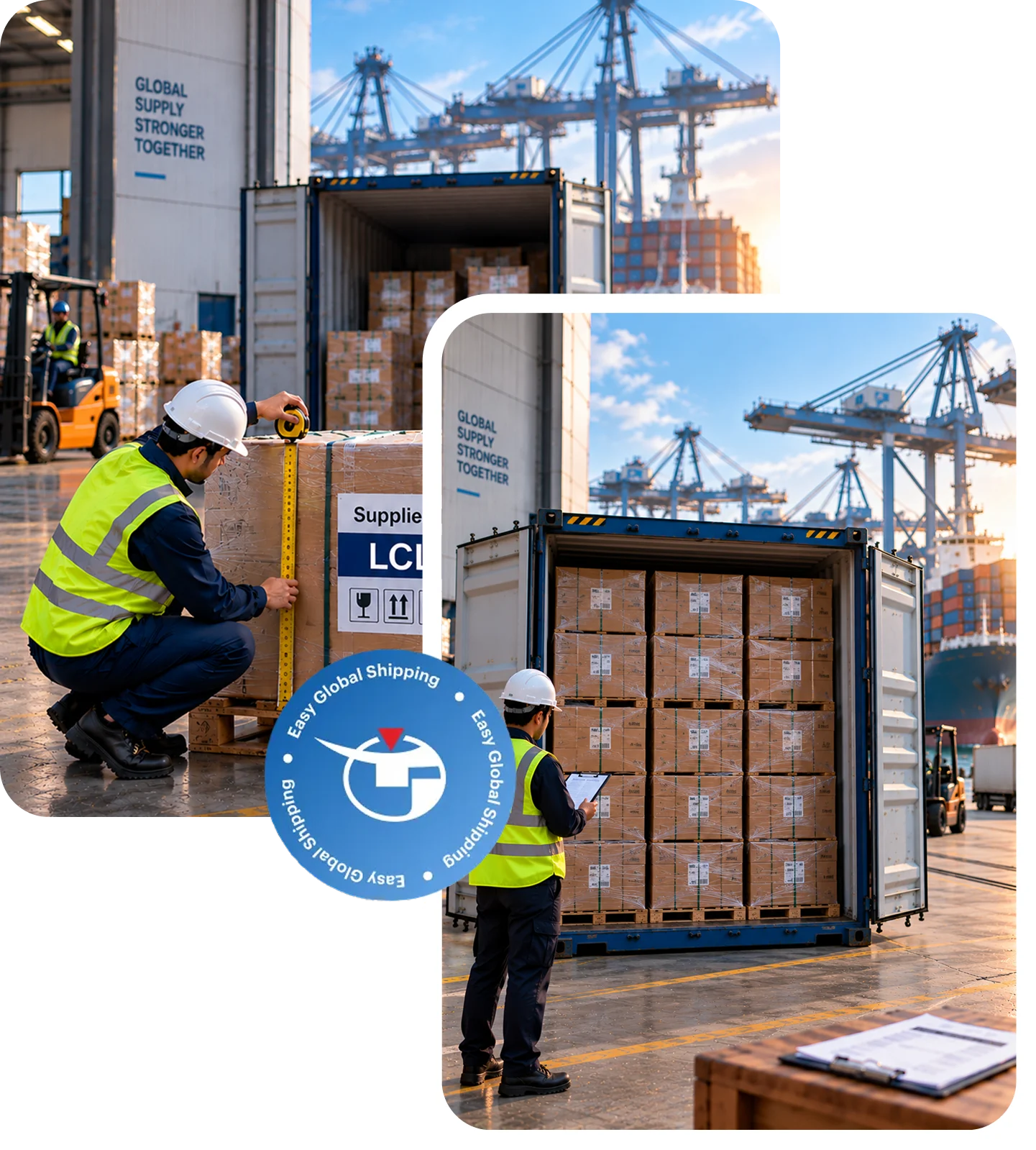
The Right Cargo Data Keeps
Sea Freight on Track

Measured at Source
Cubic volume and gross weight are established before booking. LCL is charged on the applicable freight tonne, so an under-measured consignment can reprice after loading.

Classified Before Clearance
Tariff headings, duty rates and any anti-dumping exposure are confirmed against the invoice before dispatch, helping prevent avoidable clearance holds and unbudgeted duty on arrival.

Weighed Before Gating
Container mass is verified through our authorised SAMSA mobile weighing operation, helping prevent VGM discrepancies from affecting terminal acceptance or the intended sailing.
Every Consignment has a Load Configuration Before it has a Rate
Sea freight is priced against equipment, not simply against cargo. Volume, density, dimensions and stacking behaviour determine which configuration a consignment can use — and that choice influences cost, transit and handling at both ends.
LCL - Groupage
Consignments below container volume move in shared equipment on a consolidated bill. LCL groupage is charged on the applicable freight tonne, with unpack and deconsolidation at destination.
FCL - 20ft General Purpose
Dense cargo that reaches payload before volume can suit a 20ft container. Steel, tiles, machinery and packaged liquids are typical examples.
FCL - 40ft General Purpose
A 40ft container provides greater cubic capacity for larger consignments and palletised freight once cargo moves beyond the practical LCL breakpoint.
FCL - 40ft High Cube
Additional internal height supports light, bulky and palletised cargo where available cube rather than mass becomes the limiting factor.
45ft High Cube
Higher-volume consignments can use 45ft equipment where available, subject to carrier, port and inland transport limitations on the selected lane.
Open Top
Top-loading equipment accommodates cargo that cannot pass through standard doors or exceeds internal height, with suitable securing and weather protection.
Flat Rack
Over-width, over-height or irregular cargo moves on fixed or collapsible equipment with lashing and securing arranged to carrier requirements.
Ventilated
Passive airflow equipment supports suitable moisture-sensitive commodities where ventilation can help reduce condensation risk during ocean transit.
Part Charter & Break-Bulk
Cargo that cannot be containerised can move as break-bulk or on part-charter space, planned around vessel capability and the required loading sequence.

How We Take Your Cargo from Booking to Delivery
A named controller carries the file from booking through to proof of delivery. Suppliers, the consolidation depot, carrier and receiving warehouse remain aligned to one shipment plan and clearance instruction throughout.
- Assessment and Booking: Volume, weight, commodity and Incoterm reviewed; configuration selected and space booked against the applicable cut-off
- Consolidation and Loading: Collection at origin, consolidation or container stuffing, VGM verification and documentation completed before cut-off
- Clearance and Delivery: Customs entry lodged, duty and VAT settled, unpack coordinated where applicable and delivery arranged to the consignee
Why Shippers Choose Transglobal for FCL and LCL

Volume Decides the Configuration
A consignment is measured and costed across both LCL and FCL on the same lane before a recommendation is made. The groupage breakpoint changes with cargo volume, prevailing rates and the trade lane.

Classification Protects Landed Cost
Tariff heading, valuation and origin treatment are established before dispatch. Applicable anti-dumping exposure, preferential treatment and supporting origin documentation can therefore be considered while commercial decisions can still be made.

AEO Supports Customs Release
Entries are lodged through our customs operation, with our SARS AEO standing supporting a structured and compliant approach to import and export clearance.

Verified Mass Protects the Sailing
As an authorised SAMSA mobile weighing operation, we can verify container mass for SOLAS VGM requirements, helping prevent weight discrepancies from affecting terminal acceptance.
Credentials Behind Our
Sea Freight Operations

ISO 9001:2015
Quality Management Certified
SARS AEO
Customs Compliance Accredited
SAMSA Mobile Weighing
Authorised VGM Verification
FIATA
Global Freight AffiliationA Message From Our CEO
Sea freight looks straightforward until a measurement, classification or weight discrepancy interrupts the shipment. These issues rarely begin at sea. They begin much earlier, when important cargo information has not been established accurately enough to support the booking.
That is why our teams focus on getting the fundamentals right from the outset. Whether cargo moves as LCL groupage or FCL, we connect the booking, documentation, customs and delivery stages so clients have clarity from origin through to destination.

 100% Trusted Freight Forwarder
100% Trusted Freight Forwarder
100% Trusted Freight Forwarder
100% Trusted Freight Forwarder
100% Trusted Freight Forwarder
100% Trusted Freight Forwarder
100% Trusted Freight Forwarder
Answers to your
LCL & FCL questions
LCL means your cargo shares container space with other shippers' consignments and is charged according to the applicable volume or weight basis. FCL means the container is booked for your cargo alone and charged as a unit.
There is no fixed figure. The breakpoint changes with the trade lane, season, prevailing rates and destination charges. We compare both configurations against the actual consignment rather than applying a fixed rule of thumb.
LCL groupage is commonly charged according to the applicable freight tonne, based on volume or weight. Terminal handling, deconsolidation and delivery charges also need to be considered when comparing it with FCL.
A 20ft general-purpose container can suit dense cargo, while a 40ft unit provides greater cubic capacity for larger loads. A 40ft high cube provides additional internal height for light or bulky cargo.
Yes. Cargo from several suppliers in the same origin market can be collected and consolidated into a coordinated shipment, subject to compatible cargo, documentation and scheduling requirements.
Verified Gross Mass is the SOLAS requirement for the confirmed mass of a packed container before vessel loading. Transglobal is authorised by SAMSA for mobile container weighing under the applicable VGM method.
Containerised cargo can be coordinated through South Africa's principal container gateways, with the port selected according to the cargo, carrier service, origin or destination and trade lane.
Yes. Customs clearance can be coordinated alongside the sea freight, including tariff classification, valuation, applicable duty and VAT, and customs-controlled onward movements where required.