
Dangerous Goods Move Safely When the Right Expertise Leads
Shipping Dangerous Goods? We Confirm What the Classification Requires
Dangerous goods cannot be planned from a product description alone. We establish the UN classification, hazard characteristics and applicable restrictions first, giving the shipment a clear technical basis before the transport method or carrier is confirmed.
What We Check Before Dangerous Goods Move
-
 Hazard Profile: SDS, UN Number, Proper Shipping Name, hazard class and Packing Group, where applicable, establish the transport classification.
-
 Transport Restrictions: Quantity limits, compatibility concerns and mode-specific restrictions are identified before arrangements are committed.
-
 Acceptance Readiness: Required declarations, permits and carrier conditions are established before the consignment is presented for transport.
Carrier Acceptance Depends on More Than
Correct Classification

Packaging is Verified Before Presentation
Applicable packing instructions are reviewed against the classification to confirm that the packaging and permitted quantities meet the requirements for carrier presentation.
Compatibility is Confirmed Before Loading
Segregation and compatibility requirements are established before consolidation so dangerous goods are not loaded with cargo that creates an unacceptable transport risk.

Mode Restrictions are Identified Early
Air, sea and road transport do not apply identical rules. Restrictions affecting the selected mode are checked before dispatch or booking commitment.
Every Hazard Determines How Dangerous Goods Must be Handled
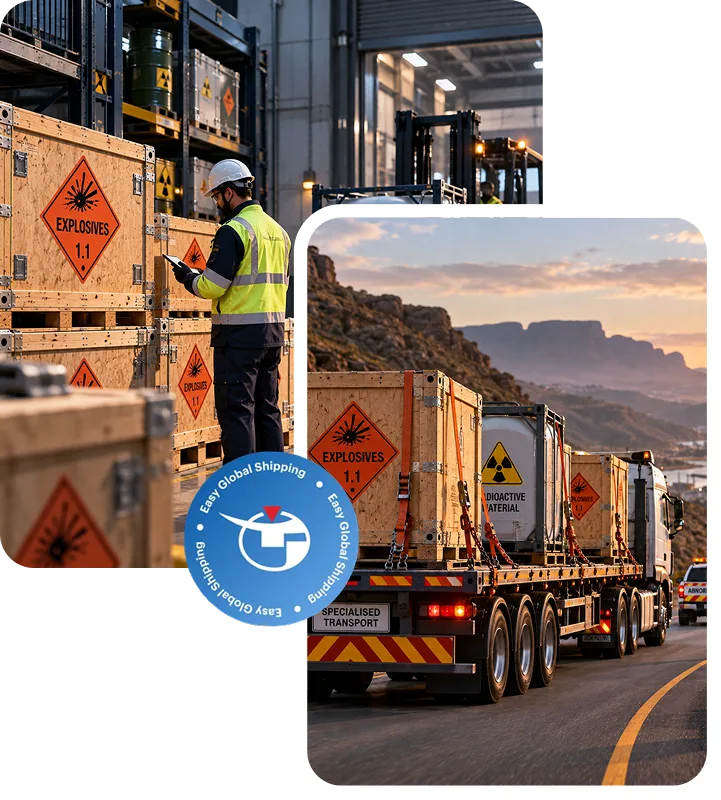
Dangerous goods are classified according to the risk they present in transport. Explosives, gases, flammable substances, toxic materials and radioactive cargo therefore require different controls, restrictions and acceptance conditions before they can enter the transport chain.
Explosives
Hazard division, compatibility group and regulatory status determine how Class 1 cargo can be prepared, routed and accepted for movement.
Gases
Gas type, receptacle condition, pressure characteristics and valve protection influence how cylinders and other gas consignments can be transported.
Flammable Liquids
Flash point, Packing Group and quantity influence the restrictions that apply to paints, solvents, fuels and other flammable liquid cargo.
Flammable Solids
Combustion behaviour, moisture sensitivity and reaction risk determine the precautions required when preparing flammable solid substances for movement.
Oxidising Substances & Organic Peroxides
Oxidising properties, decomposition risk and potential temperature sensitivity require careful assessment before these substances enter a transport plan.
Toxic & Infectious Substances
Toxicity, infectious risk and substance-specific restrictions determine the controls required for safe acceptance and movement through the transport chain.
Radioactive Material
Activity level, material classification, package type and regulatory authorisation determine how radioactive consignments can be accepted and transported.
Corrosives
Corrosive properties, concentration and Packing Group, where applicable, influence the protection and compatibility requirements applied during transport.
Miscellaneous Dangerous Goods
Lithium batteries and other Class 9 cargo are assessed according to their configuration, condition and the specific restrictions applying to the consignment.

We Manage Dangerous Goods from Classification to Final Handover
An assigned controller connects the technical and operational stages of the movement. Classification information is translated into booking requirements, preparation is coordinated before presentation, and transport partners remain aligned with the confirmed shipment conditions through to final handover.
- Review the Cargo: SDS, classification details, quantity, route and intended transport mode
- Prepare the Shipment: Required declarations, permits, packing requirements and carrier submission
- Coordinate the Movement: Acceptance, collection, transport connections, customs processing and final handover
We Resolve the Issues that can Hold Up Your Shipment

Carrier Acceptance is Cleared Before Dispatch
Dangerous goods can meet general transport requirements and still face carrier-specific restrictions. Acceptance conditions are checked before dispatch so cargo does not reach the terminal or airline without the necessary approval.

Route Restrictions are Checked Before Booking
Dangerous goods may face restrictions at particular ports, terminals, borders or transit points. The planned route is reviewed before booking so known restrictions can be addressed before the cargo enters the movement.

Non-Compliant Preparation is Corrected Early
Where packing, marks, labels, overpacks or placarding do not meet applicable requirements, corrective action can be coordinated before final presentation rather than after carrier rejection.

Unclear Dangerous Goods are Stopped Before Commitment
Undeclared, incorrectly classified or insufficiently documented dangerous goods should not progress as ordinary freight. Unresolved information is identified during enquiry so unnecessary transport costs are not committed prematurely.
Recognised Standards
Behind Our Capabilities

SARS AEO
Level 1 & 2 Accredited
ISO 9001:2015
Quality Management Certified
SAMSA Mobile Weighing
SOLAS VGM Method 1 Authorised
IATA
Air Cargo Industry AffiliationA Message From Our CEO
At Transglobal Cargo, dangerous goods logistics starts with understanding exactly what is being moved. When the classification is clear, the right operational decisions can follow, from selecting the transport method to preparing the consignment for carrier acceptance.
Our responsibility is to make those decisions before the shipment enters the transport chain. That means bringing technical knowledge, operational coordination and accountability together so dangerous goods move on a plan built around the actual hazard.

 100% Trusted Freight Forwarder
100% Trusted Freight Forwarder
100% Trusted Freight Forwarder
100% Trusted Freight Forwarder
100% Trusted Freight Forwarder
100% Trusted Freight Forwarder
100% Trusted Freight Forwarder
Answers to your
Dangerous Goods shipping questions
Start with the current Safety Data Sheet, particularly Section 14. It may identify the UN Number, Proper Shipping Name, hazard class and Packing Group, where applicable, which provide the basis for determining the transport requirements.
Requirements vary by classification and transport mode. They can include a Dangerous Goods Declaration, SDS, shipping documents, applicable permits, emergency information and other supporting records required by the carrier or relevant transport regulation.
International dangerous goods shipments must first be correctly classified and then prepared for the chosen mode. Air movements follow applicable IATA DGR requirements, sea shipments follow the IMDG Code, while customs and destination requirements must also be satisfied.
An SDS is commonly used to establish the information needed for dangerous goods assessment, particularly the transport details in Section 14. If adequate classification information is unavailable, the shipment should not proceed until the required transport information has been established.
Yes, but not every dangerous good is accepted by every mode. Classification, quantity, packaging, route and carrier restrictions determine whether a consignment can move by air, sea or road and under what conditions.