

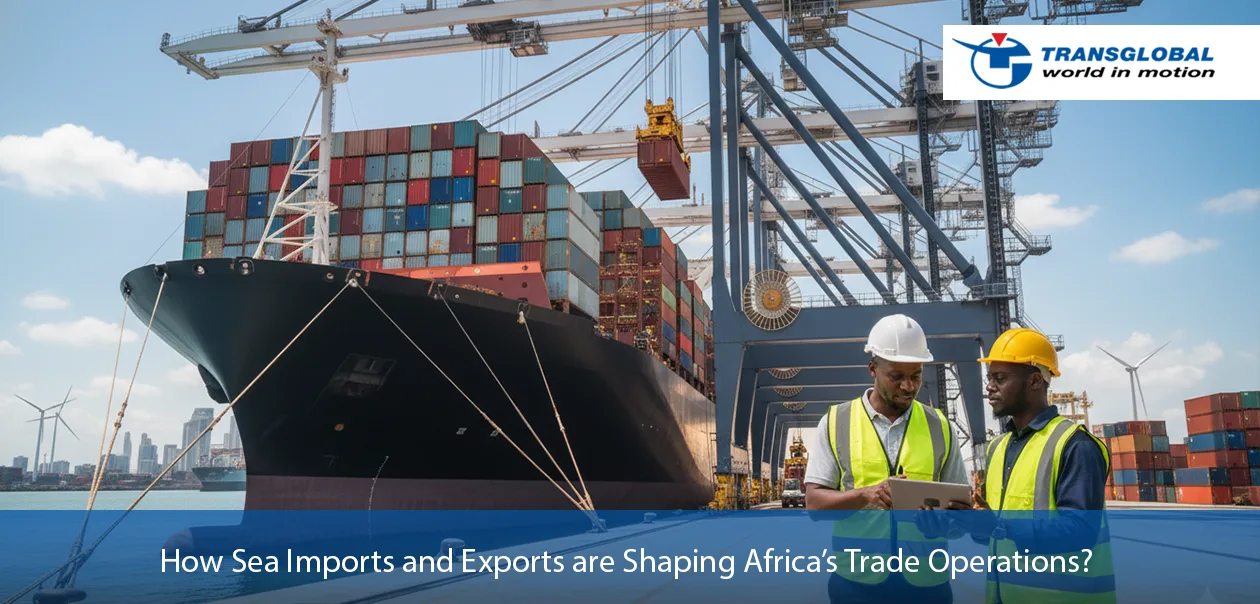
When you think about Africa’s economy, it’s impossible to separate it from the ocean. From the ports of Durban and Mombasa to Lagos and Djibouti, the sea remains the artery through which the continent’s trade flows. Nearly 90% of goods imported or exported in Africa move by sea, connecting local markets with Asia, Europe, and the Americas.
Yet, behind this massive network of maritime trade lies a set of evolving dynamics, modern port upgrades, changing trade policies, and growing intra-African connectivity under frameworks like the African Continental Free Trade Area (AfCFTA). Sea imports and exports are no longer just about moving containers; they are shaping how African businesses grow, compete, and connect globally.
Why Sea Freight Remains the Backbone of African Trade?
Sea freight service continues to dominate African logistics for a simple reason, it’s cost-effective, scalable, and globally accessible. From heavy machinery and refined oil to minerals, coffee, and cocoa, the majority of Africa’s trade commodities depend on maritime transport.
For importers, sea freight enables sourcing from manufacturing hubs like China, India, and Europe at far lower per-unit costs than air or road alternatives. For exporters, it’s the only practical route for bulk goods such as metals, agricultural produce, and construction materials.
Ports such as Durban (South Africa), Mombasa (Kenya), Abidjan (Côte d’Ivoire), Tema (Ghana), and Port Said (Egypt) serve as lifelines for their regions, handling millions of containers each year. We not only move cargo but also generate employment, attract investment, and support cross-border logistics through rail and road corridors that link coastal and inland countries.
The New Trade Reality: Modernization Meets Challenges
Africa’s maritime sector is seeing a wave of investment. Several countries are expanding port terminals, introducing digital customs systems, and improving connectivity to inland routes. For example, the Durban Port Expansion Project, Lamu Port Corridor (Kenya), and Lekki Deep Sea Port (Nigeria) aim to reduce congestion and handle larger vessels that can match global shipping standards.
However, challenges persist. Port delays, limited automation, and poor hinterland infrastructure continue to inflate logistics costs. According to the African Development Bank, logistics inefficiencies can add up to 40% more to trade costs compared to other regions. That means even when ships dock on time, road congestion, customs compliance delays, and lack of warehouse coordination can derail supply chain schedules.
The Impact of Specialized Sea Freight Services
In this evolving trade environment, not all cargo fits into standard shipping containers, and that’s where specialized sea freight services become essential.
At Transglobal, we support Africa’s growing and diversified trade needs with expert handling of:
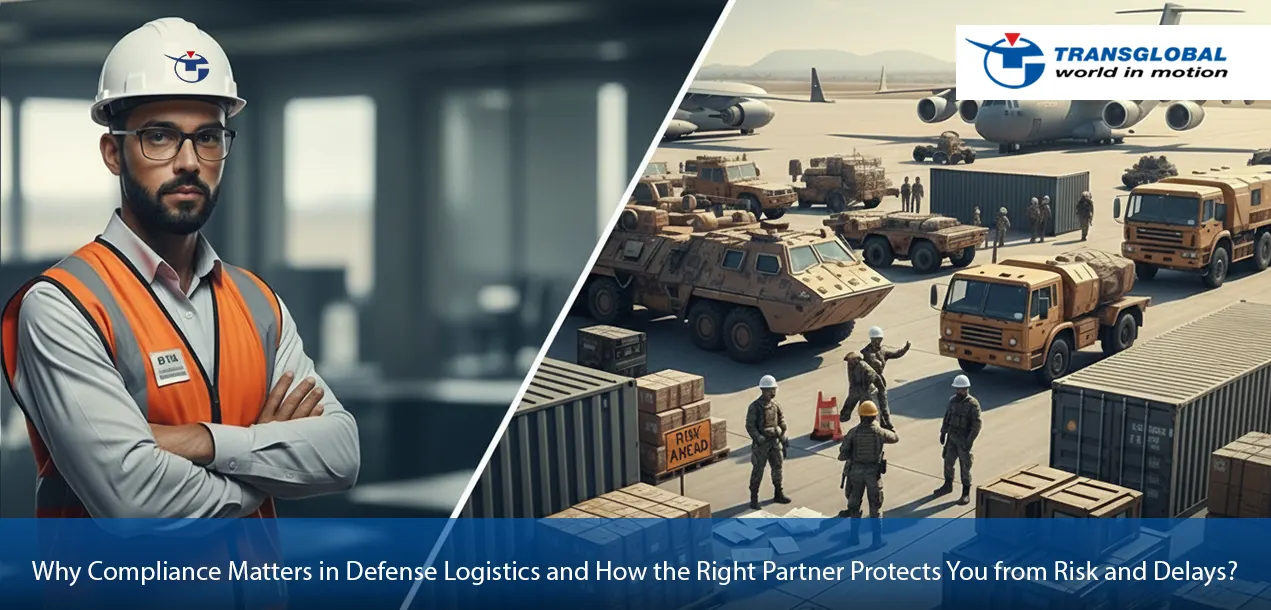
Military and Defense Logistics
Handling classified, sensitive, and time-critical cargo for government and defence contractors, including weapon systems, armoured vehicles, and secure documentation, with full compliance and discretion.
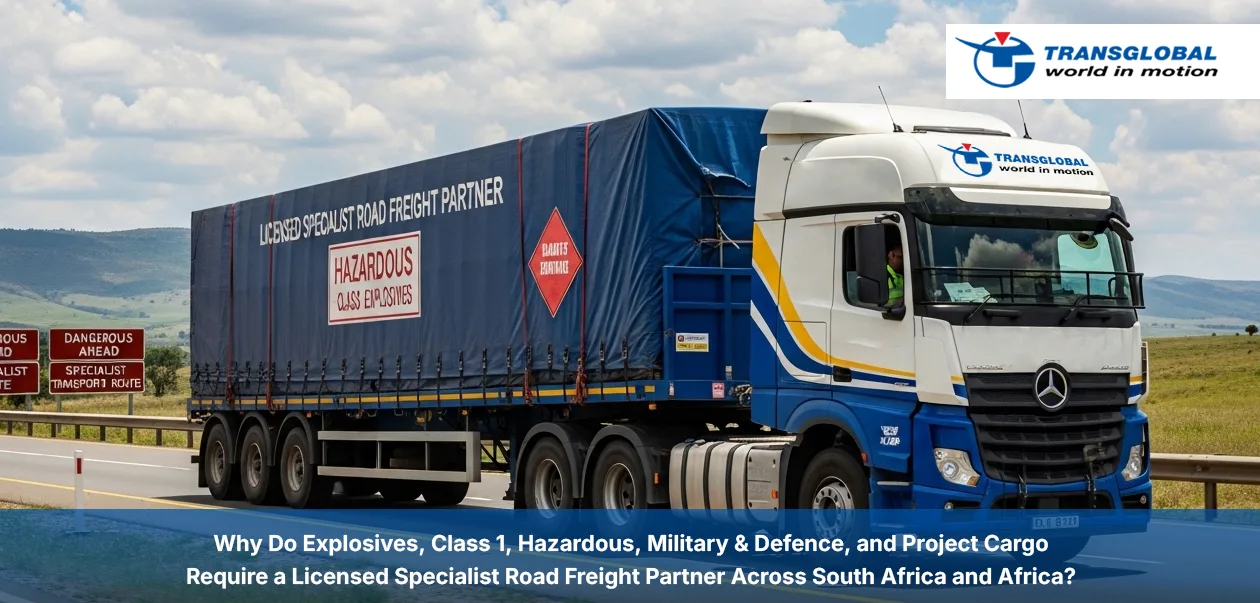
Class 1 Explosives & Dangerous Goods
Transporting regulated hazardous cargo such as blasting agents, ammunition, and pyrotechnics under IMDG code compliance, from port entry to inland destinations with the highest safety protocols.
Project Cargo & Oversized Equipment
Facilitating the movement of out-of-gauge shipments like turbines, generators, mining equipment, and construction machinery, with route planning, permits, and heavy-lift coordination.
Collectors & Museum Consignments
Sea freight for rare, delicate, and historically significant artifacts requires custom crating, climate-controlled containers, and white-glove handling, from international museums to African institutions.
Luxury Vehicle Imports & Exports
Handling high-value cars and motorcycles with secure roll-on/roll-off or containerized methods, including customs valuation, duty management, and showroom-ready delivery.
These services support Africa’s trade not just in volume, but in value. Whether it’s a government defence shipment from Europe or a museum exhibit returning from Asia, Transglobal ensures that your non-standard cargo flows just as smoothly as a container of consumer goods.
By aligning our capabilities with the realities of African port access, customs systems, and inland transport, we help businesses and institutions move complex cargo with confidence, from the first mile to the final handover.
FCL vs. LCL – The Smarter Freight Choice
Choosing between Full Container Load (FCL) and Less than Container Load (LCL) can significantly affect pricing and timelines.
FCL is ideal for companies moving over 12–13 cubic meters or 10+ pallets of cargo. You get an entire container dedicated to your shipment, reducing handling risk and transit time.
LCL, on the other hand, consolidates multiple smaller shipments in one container, allowing flexibility for businesses with lower volumes. It’s cost-effective, but slightly slower due to consolidation and deconsolidation at hubs like Jebel Ali or Durban.
For growing African importers and exporters, combining both models strategically, FCL for high-volume trades and LCL for smaller, frequent shipments, offers the best balance between cost and control.
Key Challenges Shaping Maritime Logistics
Even with expanding trade, certain obstacles continue to challenge smooth import and export operations:
Port Congestion: Major ports like Lagos, Durban, and Mombasa face vessel queues and container backlogs during peak seasons.
Customs Complexity: Varied documentation and inspection procedures lead to unpredictable clearance times.
Infrastructure Limitations: Weak road and rail networks slow cargo movement from ports to inland markets.
Rising Costs: Fuel fluctuations, currency changes, and new surcharges (like the BAF and CAF) impact freight budgets.
Limited Cold Chain Capacity: For perishable exports such as flowers and fish, inadequate reefer facilities can cause losses.
The good news is that these challenges are being actively addressed through digital port systems, customs modernisation projects, and public-private logistics investments that aim to make African ports globally competitive.
Technology’s Role in Transforming Sea Trade
- Technology is reshaping how cargo moves, tracks, and clears through African ports.
- Real-time cargo visibility now allows importers and exporters to track their shipments from loading to delivery.
- Electronic bills of lading (eB/Ls) and automated customs filings are reducing paperwork delays.
- Smart warehousing systems improve coordination between port terminals and inland logistics hubs.
Some freight forwarders also integrate advanced data tools that predict congestion, optimize routes, and monitor compliance for dangerous or sensitive cargo. These changes don’t just make operations faster, they make them more transparent and predictable, which is exactly what African trade needs.
The Strategic Role of Freight Forwarders
In a market where policies differ across every border, working with an experienced freight forwarder can mean the difference between efficiency and unnecessary costs. A professional forwarder understands how to:
- Manage port documentation and clearance.
- Optimize FCL and LCL shipping choices.
- Handle surcharges and customs duties accurately.
- Coordinate bonded warehousing and inland transport.
Transglobal Cargo, for instance, offers fully integrated sea freight solutions that connect African ports with global routes, providing tracking, compliance support, and local expertise for specialized cargo such as dangerous goods, project cargo, and vehicles.
Conclusion
From Cape Town to Cairo, sea imports and exports form the lifeline of African trade. The key to success lies in understanding your routes, managing compliance proactively, and choosing a logistics partner who knows the continent inside out.
At Transglobal Cargo, we simplify ocean shipping for African businesses, offering FCL and LCL solutions, real-time tracking, customs management, and inland delivery support. Whether you’re expanding regionally or trading globally, we help your cargo move smarter, safer, and faster.
Get in touch today to learn how our sea freight services can streamline your import and export operations.
Frequently Asked Questions
Which African ports handle the most sea freight volume?
Durban (South Africa), Mombasa (Kenya), Lagos (Nigeria), and Port Said (Egypt) are among the busiest, handling both containerized and bulk cargo.
What documents are required for sea imports and exports?
Essential documents include a Bill of Lading, Commercial Invoice, Packing List, Certificate of Origin, and, when applicable, permits such as phytosanitary or DG certificates.
How can I reduce delays in African sea freight operations?
Book early, ensure accurate documentation, use digital tracking, and partner with a forwarder who understands both global shipping standards and local customs procedures.

Comments