

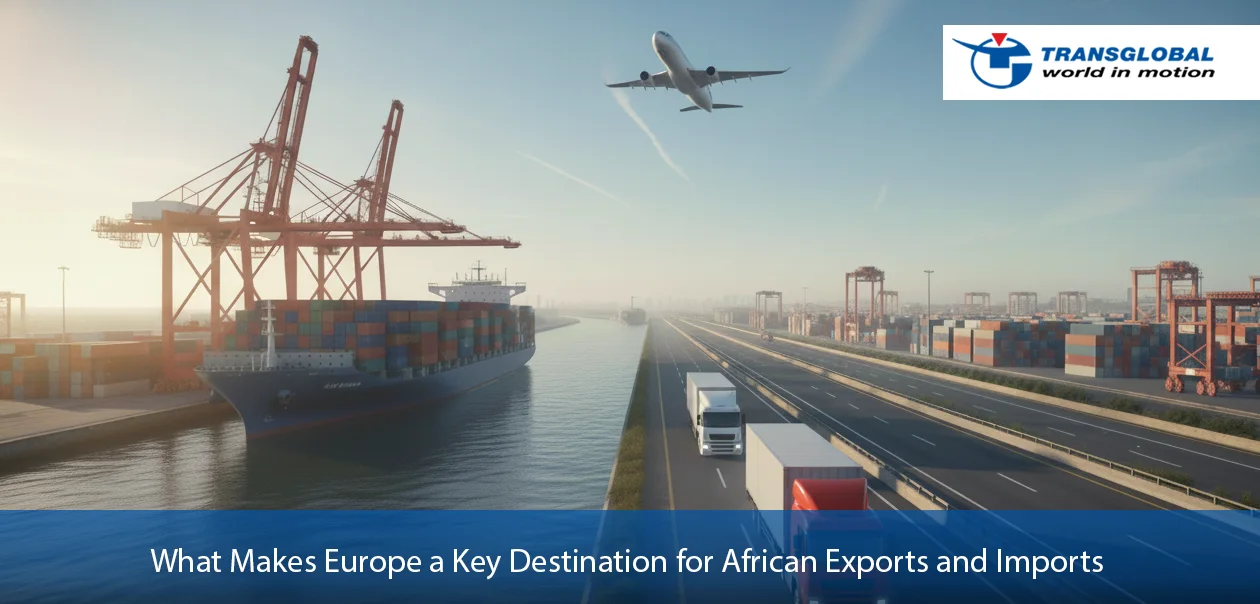
“Trade is not just about goods, it’s about connections, opportunities, and building futures across continents.”
In today’s globally connected economy, Africa and Europe are more than just neighbours, they are vital trading partners shaping the future of cross-continental commerce. With sea ports buzzing from Cape Town to Antwerp, and cargo volumes moving between industries as diverse as agriculture and aerospace, Europe continues to be a strategic gateway for African trade. But what exactly makes Europe such a key destination for African exports and imports?
Let’s explore the dynamics behind this powerful trade relationship and explore how African businesses can unlock growth through smarter logistics, stronger compliance, and optimized sea freight strategies.
Why Europe Still Matters in Africa’s Trade Landscape?
Europe has long held a prominent position in Africa’s external trade flows. Despite the emergence of China, the Middle East, and intra-African trade agreements like AfCFTA, Europe remains one of Africa’s largest export markets and sources of essential imports.
From a strategic point of view, Europe offers:
Proximity: Shorter transit times than Asian markets.
Diversified demand: Industrial goods, raw materials, agriculture, and consumer goods.
Regulatory partnerships: Through Economic Partnership Agreements (EPAs), Generalised Scheme of Preferences (GSP), and ongoing bilateral trade talks.
Moreover, historical trade routes and existing infrastructure links (like port-to-port lanes and customs harmonization programs) provide a framework for smoother trade execution compared to more distant partners.
What Goods Are Moving Between Africa and Europe?
Top African Exports to Europe
Africa is rich in resources, and Europe’s industries rely heavily on these commodities. Key exports include:
Raw minerals and metals – copper, cobalt, gold, and platinum from countries like DRC, Zambia, and South Africa.
Agricultural products – cocoa from Côte d’Ivoire, coffee from Ethiopia, and fruits from Kenya and Morocco.
Textiles and apparel – driven by AGOA and EPA agreements.
High-value niche cargo – such as museum consignments, luxury goods, and collectors’ items.
Common European Imports to Africa
On the other side, African nations import crucial goods from Europe, such as:
- Industrial machinery and construction equipment
- Automobiles and spare parts
- Pharmaceuticals and medical devices
- Processed food and agricultural chemicals
- Energy technologies and solar infrastructure
These goods often enter through ports in Egypt, South Africa, Nigeria, and Kenya, with inland logistics taking over for regional distribution.
Challenges That Still Impact Africa–Europe Trade
Despite long-standing trade ties, challenges continue to affect the smooth movement of cargo across this route:
Port congestion and delays: Several African ports face obstacles due to aging infrastructure, labor strikes, and inefficient cargo handling systems.
Customs procedures: Disparate customs frameworks slow down the clearance process, especially for time-sensitive or hazardous cargo.
Regulatory compliance: European standards, especially for perishables or dangerous goods, are stringent. Improper packaging or labelling can result in rejections or penalties.
Documentation mismatches: A single error in a commercial invoice, bill of lading, or HS code can lead to shipment delays and fines.
For exporters of hazardous cargo, military logistics, or project cargo, like explosives, luxury vehicles, and oversized equipment, these challenges multiply due to added documentation, certifications, and handling requirements.
The Role of Sea Freight in Strengthening Africa–Europe Trade
While air freight covers urgent and high-value cargo, sea freight remains the workhorse for Africa–Europe logistics. It’s cost-effective, scalable, and reliable, especially when shippers partner with experienced freight forwarders who understand both African operational conditions and European compliance frameworks.
Benefits of sea freight include:
Economies of scale for bulk or containerized cargo
- Specialized container options for refrigerated, hazardous, or oversized goods
- Strong port infrastructure in Europe for onward distribution
- Pre-defined sailing schedules and tracking for better visibility
Countries like Morocco, Senegal, Ghana, and South Africa are rapidly modernizing their seaports with improved terminal handling, digital customs clearance, and bonded warehouses to reduce delays.
Strategies to Strengthen Your Africa–Europe Supply Chain
If you’re exporting or importing between Africa and Europe, here are some key ways to improve efficiency:
Leverage multimodal solutions: Combine sea freight with rail or road to optimize inland movement, especially for landlocked African countries.
Ensure packaging compliance: Use certified packaging for goods like chemicals, artwork, or electronics to meet European safety regulations.
Work with specialized freight partners: For sensitive cargo like museum consignments, dangerous goods, or military equipment, a logistics partner with niche expertise is critical.
Digitize documentation: E-invoicing, digital certificates of origin, and integrated customs systems (like ASYCUDA) help speed up cross-border processing.
Plan for contingencies: Factor in port strikes, sailing delays, and political disruptions with buffer stock strategies or alternative routing plans.
How Transglobal Helps You Trade Smarter?
At Transglobal, we understand that Africa–Europe trade isn’t just about transportation, it’s about trust, timing, and tailored service. Whether you’re importing specialized equipment from Germany or exporting hazardous cargo to Rotterdam, our team is equipped to manage every detail:
- Full-service handling for dangerous goods, explosives, and project cargo
- Customs brokerage and documentation assistance
- Real-time cargo tracking and bonded warehousing
- Personalized support for museum pieces, military freight, and luxury vehicle logistics
Conclusion
Europe isn’t just another market, it’s a gateway to global growth for African exporters. But success depends on more than just booking space on a vessel. It requires smart planning, regulatory know-how, and freight solutions built around your cargo needs.
Transglobal is your trusted sea freight partner for Africa–Europe trade, ensuring smooth, secure, and strategic shipments from port to port and beyond.
Let’s simplify your sea freight service today. Contact our team to get started.
Frequently Asked Questions
What documents are required to ship from Africa to Europe?
Typically, you’ll need a commercial invoice, bill of lading, packing list, certificate of origin, HS code declarations, and any licenses or permits related to specific goods like hazardous materials or antiques.
How long does sea freight take from Africa to Europe?
Transit time varies by route. From Durban to Rotterdam, it can take 20–30 days. From Lagos to Antwerp, about 15–20 days. Planning and buffer time are key.
Is it possible to ship explosives or dangerous goods from Africa to Europe?
Yes, but it requires strict adherence to IMDG (International Maritime Dangerous Goods) regulations. Work with a certified freight forwarder like Transglobal to handle compliance, documentation, and secure handling procedures.
Comments