

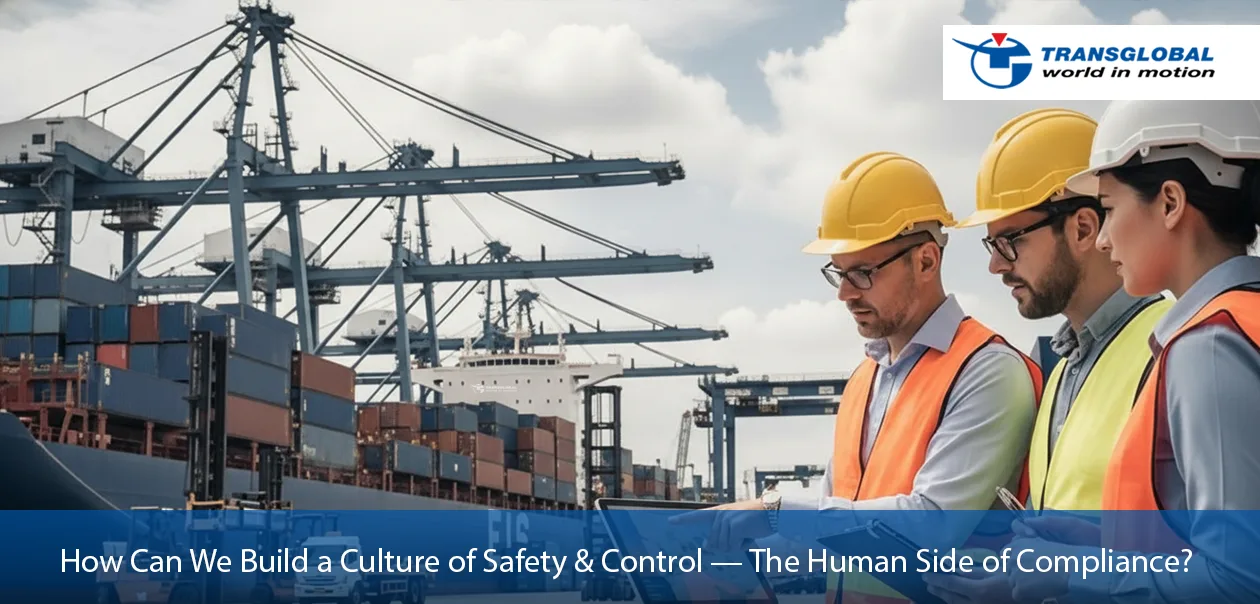
In highly regulated logistics operations, transporting arms, explosives, or other controlled cargo demands more than permits, escorts, and equipment. It demands a culture where every individual takes ownership of compliance, not because they’re told to, but because they believe in the purpose behind the rules.
At Transglobal Cargo and Defenlog, we’ve learned that people move compliance forward. Systems, audits, and SOPs may be the framework, but without a workforce that understands and believes in safety, the foundation remains shaky.
Let’s explore how human behavior, awareness, and accountability shape the real-world success of arms logistics compliance.
Compliance Begins With People
Every permit, escort, or regulated consignment starts with someone making the right decision to inspect a truck, verify a seal, check a driver’s medical certificate, or escalate a documentation issue. These aren’t just operational tasks. They’re acts of responsibility.
Whether you’re in the driver’s seat, dispatch control, or warehousing, compliance decisions are being made in real time, on the ground, by people.
That’s why we focus on building a safety-first culture where compliance is not external or forced, it’s part of our identity.
Turning Awareness Into Daily Practice
Policies written on paper mean very little unless they’re brought to life on the warehouse floor and during daily route operations.
At Transglobal and Defenlog, we build awareness into day-to-day workflows:
Mandatory training on NCACC regulations, CIE logistics standards, and the Draft Explosives Regulations 2024, refreshed annually and after key incidents.
Toolbox talks that connect safety concepts to real-life consequences, especially in the movement of Class 1 materials (e.g., explosive devices).
Scenario-based debriefs that review events like seal breaches, route deviations, or near misses, helping teams learn through reflection, not reprimand.
Team recognition programs that reward crews and control room staff who uphold safety, even under pressure.
We don’t just train for compliance; we nurture a mindset where people ask: “What could go wrong, and how do I prevent it?”
Collective Accountability Across the Chain
Regulated cargo doesn’t move in isolation. Every NCACC-permitted movement involves multiple parties, from consignors to subcontracted drivers, loading teams, route monitors, and receiving officers. That means compliance is not the job of one department. It’s everyone’s job.
At Transglobal, this is how we embed shared ownership:
- Drivers confirm both documentation and permit alignment, including vehicle-specific approvals.
- Dispatchers validate the CIE status of any subcontractors or partner hauliers before engaging.
- Control rooms track movement in real time, flag deviations, and are authorized to halt a journey if safety or legality is compromised.
- Clients are educated on timelines, documentation expectations, and route planning, so they play a role in supporting compliance.
Every stakeholder is seen as a custodian of national security, not just a vendor or employee. This mindset creates stronger alignment and fewer weak links.
When Safety Becomes Culture, Not Just Compliance
A true safety culture exists when people follow regulations not because they must, but because they understand the “why.”
We’ve seen this in practice:
- Drivers voluntarily report route concerns because they recognize risk early.
- A junior warehouse loader refuses a load because permit seals don’t match, saving the company from a possible NCACC audit failure.
- A dispatcher challenges a last-minute shipment request because the forwarding agent isn’t listed under CIE registration.
These are small acts, but they protect national compliance, reputation, and lives. That’s what culture looks like when the rulebook becomes a habit.
Investing in Human Capital Is Regulatory Insurance
While technology plays a growing role in secure logistics, from TMS tracking and e-signatures to sealed smart containers, it’s the human layer that decides whether a company can pass a real-world inspection or not.
By investing in:
- Continuous training
- Field audits with feedback
- Emergency scenario simulations
- Open reporting systems without fear of blame
We build a workforce that can respond, adapt, and lead in high-stakes, regulated movements.
Because when it comes to transporting controlled goods like military cargo, explosives, or museum consignments, you can’t afford indifference.
Conclusion: Culture Is the Strongest Control System
Checklists catch errors. Systems automate control. But culture? Culture prevents errors from happening in the first place.
At Transglobal and Defenlog, we’re proud to operate in one of the most tightly regulated sectors of logistics, not because it’s easy, but because it demands a higher standard of care. For further clarification, contact us today.
Our belief is simple: when your people think like safety officers, your business moves like a compliant machine.
📣 Stay Tuned for the final Article in the Series: What is the Future of Logistics Compliance — Digitalisation & Evolving Regulation?
Comments