

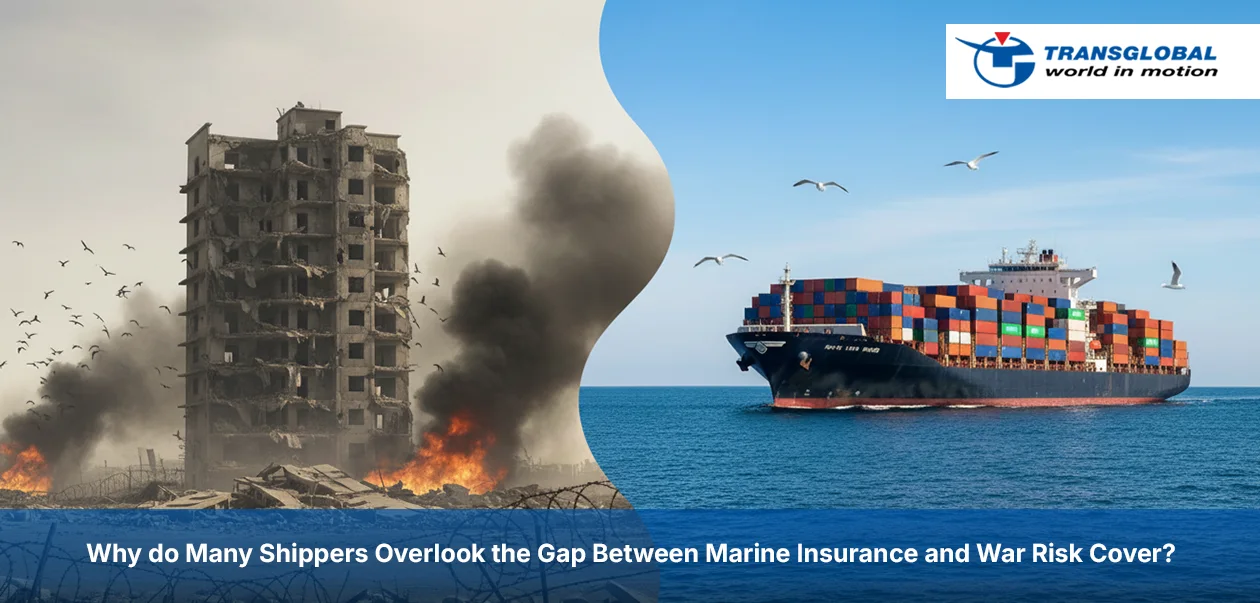
Cargo insurance often feels like a safety net that covers everything once goods leave the warehouse. A shipment is booked, a marine cargo policy is issued, and most shippers assume their cargo is protected from every major risk during transit.
But in reality, there is a quiet gap in many shipping strategies.
Marine cargo insurance protects against the traditional dangers of transport, storms, accidents, theft, and vessel incidents. Yet when geopolitical tensions rise, trade routes become unstable, or military conflicts affect shipping corridors, another category of risk emerges.
These risks are not always covered under standard marine insurance policies.
Understanding the difference between marine cargo insurance and war risk cover has become increasingly important in today’s global trade environment, where geopolitical risk can influence shipping routes, insurance pricing, and cargo security.
What Marine Cargo Insurance is Designed to Protect?
Marine cargo insurance is the most common form of protection used in international trade. It is designed to cover losses that occur due to the normal hazards associated with transportation by sea, air, or land.
Under a standard marine cargo policy, shippers are typically protected against operational and environmental risks such as:
- Heavy weather damage
- Vessel sinking or grounding
- Fire onboard a vessel
- Theft or non-delivery of cargo
- Accidental damage during loading or transit
- General Average contributions
General Average is particularly significant in maritime shipping. When a shipowner sacrifices part of the cargo or incurs extraordinary expenses to save the vessel and remaining cargo, all cargo owners share the cost proportionally. Marine insurance normally protects against this financial exposure.
For most routine shipping operations, this coverage provides adequate protection.
However, marine cargo insurance is not designed to cover every possible risk that may affect a shipment.
The Risks Marine Insurance Often Excludes
Standard marine cargo policies typically exclude risks related to geopolitical instability and conflict.
These exclusions can include:
- War or civil war
- Acts of hostile forces
- Terrorism
- Strikes, riots, or civil commotion
- Government seizure or confiscation of cargo
- Political detention of goods
- Military conflict affecting trade routes
These exposures fall into a separate category of insurance protection known as war risk cover, usually governed by Institute War Clauses.
Because these clauses are not automatically included in most marine cargo policies, many shippers unknowingly operate without coverage for these risks.
In periods of geopolitical stability, this gap may seem insignificant. But when tensions rise in critical trade regions, the implications become very real.
Why War Risk Insurance Exists?
Global trade routes pass through several politically sensitive regions.
Key maritime corridors such as the Red Sea, Black Sea, Strait of Hormuz, and parts of the Asia-Pacific can occasionally face geopolitical tensions or military activity. Even if vessels are not directly targeted, insurers may classify these areas as high-risk zones.
War risk insurance exists to protect cargo owners against losses resulting from these types of events.
It is typically provided as an endorsement added to a marine cargo policy for an additional premium.
The cost of adding war risk cover is often relatively small compared to the potential financial exposure if a conflict-related event disrupts a shipment.
Understanding Additional War Risk Premiums (AWR)
When vessels pass through regions considered politically unstable, insurers may apply an Additional War Risk Premium (AWR).
This surcharge reflects the increased probability of disruption or damage during transit through high-risk waters.
Shippers should understand several important aspects of AWR:
- It is typically charged when vessels enter designated high-risk zones
- It may apply only while the cargo is onboard the vessel
- It often does not extend to inland transportation or storage
- It can be withdrawn or adjusted quickly depending on geopolitical developments
In volatile situations, insurers may update risk assessments frequently, which means premiums and coverage conditions can change with little notice.
For logistics planners, this reinforces the importance of maintaining close communication with insurance brokers and freight partners.
Even War Risk Policies Have Limitations
While adding war clauses significantly improves coverage, it is important to understand that war risk insurance still includes exclusions.
Common limitations may involve:
- Nuclear events or radioactive contamination
- Sanctions-related confiscation of goods
- Certain named territories or restricted regions
- Deliberate misconduct or illegal activity
- Cyber warfare or digital disruption is linked to geopolitical conflict
This is why reading the policy wording carefully is essential. The presence of war risk cover does not automatically mean that every geopolitical scenario is insured.
A detailed understanding of policy terms ensures that cargo owners know exactly where their protection begins and ends.
Why does this Issue Matter More Today?
For many years, global shipping lanes operated under relatively stable geopolitical conditions. Marine cargo insurance often felt comprehensive because the risks excluded under war clauses rarely materialized.
However, the current global environment has changed.
Recent developments in regions such as:
- The Red Sea shipping corridor
- The Black Sea trade routes
- The Middle East maritime zone
- Parts of the Asia-Pacific
have demonstrated how quickly geopolitical tensions can influence shipping operations.
Even when vessels are not physically attacked, the perception of risk can trigger higher insurance premiums, rerouted vessels, and stricter security requirements.
For exporters, importers, and freight forwarders, these developments make war risk coverage a more relevant consideration.
A Practical Risk Management Step for Shippers
Before sending cargo through sensitive regions, shippers should have a clear discussion with their insurance broker or logistics partner.
A simple question can clarify potential exposure:
“Does my marine cargo policy include Institute War Clauses, and what exactly do they cover?”
Understanding the answer helps ensure that cargo value, contractual obligations, and supply chain commitments remain protected even when geopolitical uncertainty increases.
Effective risk management in logistics is not about anticipating every possible crisis. It is about understanding where exposure exists and ensuring appropriate protection is in place.
Conclusion
Marine cargo insurance remains one of the most important safeguards in international trade. It protects shipments against traditional hazardous transportation and provides financial stability when unexpected events occur at sea.
But in today’s geopolitical environment, relying solely on standard marine coverage may leave important risks unprotected.
War risk insurance fills this gap by addressing threats related to conflict, political instability, and hostile acts that can disrupt global shipping routes.
Marine insurance protects against the sea.
War risk insurance protects against the world.
Working with the best freight forwarder ensures that cargo movement, insurance coverage, and risk management strategies are aligned from the start. If you want expert guidance on protecting your shipments and navigating complex global logistics routes, contact us today.
Frequently Asked Questions
Is war risk coverage automatically included in marine cargo insurance?
No. War risk coverage is typically added separately through Institute War Clauses and must usually be requested as an endorsement to the marine cargo policy.
When are Additional War Risk Premiums charged?
Additional War Risk Premiums are applied when vessels pass through designated high-risk zones where geopolitical tensions or conflict increase the likelihood of disruption.
Should all international shipments include war risk insurance?
Not necessarily, but shipments traveling through politically sensitive regions or critical maritime corridors may benefit significantly from war risk coverage to reduce exposure to conflict-related disruptions.
Comments