

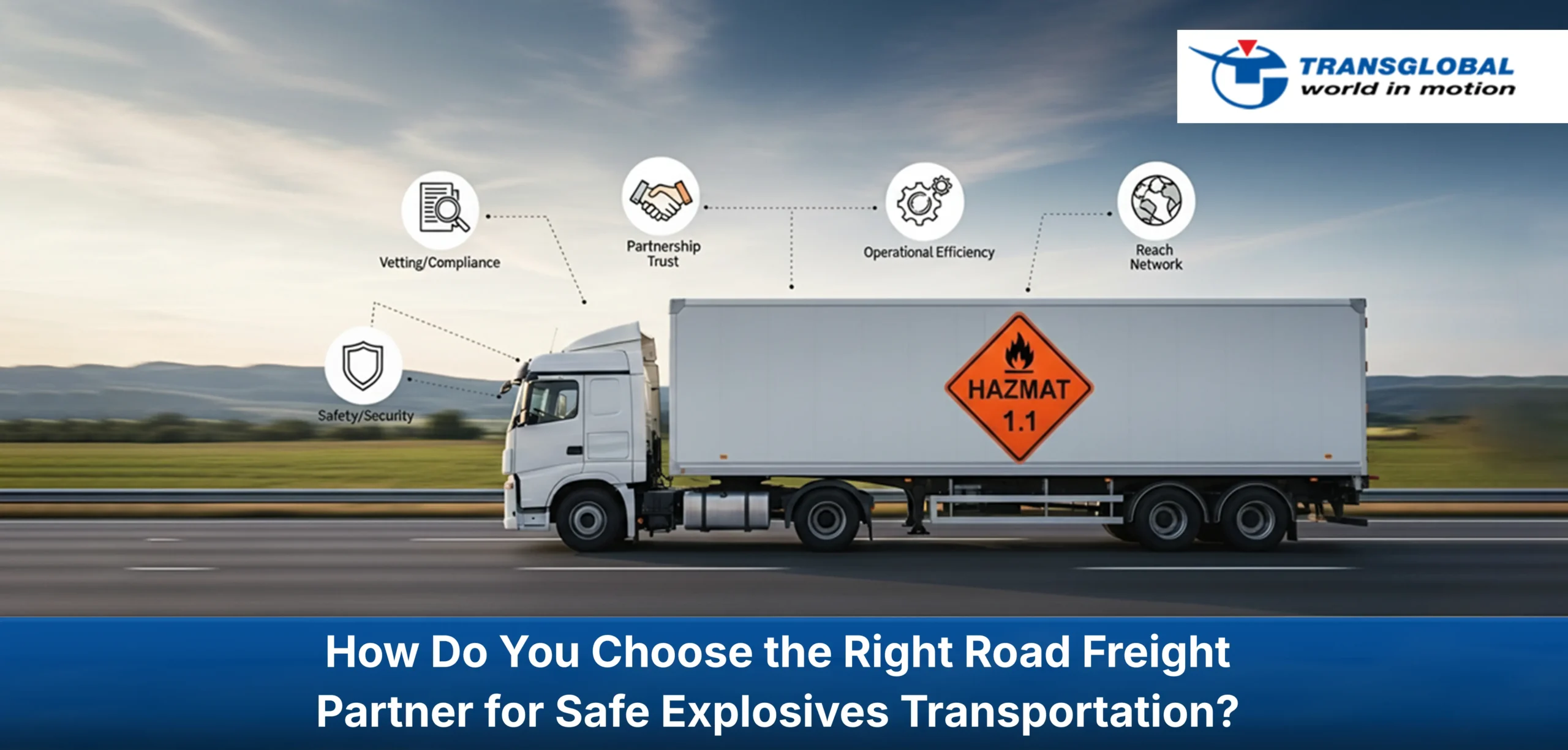
Moving explosives is not just another logistics task, it is one of the most sensitive and regulated operations in the global supply chain. A single delay, compliance gap, or handling error can lead to serious consequences, not only operationally but also legally and financially.
For industries such as mining, defence, construction, and energy, the question is no longer who can move cargo, but who can move it safely, compliantly, and without risk. Choosing the right road freight partner for explosives is a decision that directly impacts business continuity, safety standards, and regulatory compliance.
Why does Explosives Transportation Require a Different Level of Expertise?
Explosives fall under Class 1 explosives, which means they are subject to strict international and local transport regulations. Unlike standard cargo, these shipments demand specialized handling, trained personnel, and precise documentation at every stage.
Transporting explosives is not just about moving goods from one location to another. It involves route planning, risk assessment, security coordination, and adherence to compliance frameworks such as ADR regulations and local authority requirements.
Even small oversights, such as incorrect labeling, improper packaging, or documentation errors, can lead to shipment rejection, fines, or operational shutdowns. This is why businesses cannot afford to work with general freight providers when handling such high-risk cargo.
What are the Key Challenges in Road Freight for Explosives?
Explosives logistics comes with a unique set of challenges that go beyond traditional transportation concerns.
One of the primary challenges is regulatory compliance. Different regions have varying rules for transporting hazardous materials, and these rules are frequently updated. Staying compliant requires constant monitoring and deep industry knowledge.
Another major concern is security risk. Explosive shipments must be protected against theft, misuse, or unauthorized access. This requires secure vehicles, vetted drivers, and controlled movement throughout the journey.
Route restrictions also play a critical role. Certain roads, tunnels, and urban areas may have restrictions on hazardous cargo. This makes route planning more complex and time-sensitive.
In addition, coordination with authorities is often required, including permits, escorts, and checkpoints. Delays in approvals or miscommunication can impact delivery timelines significantly.
What Defines the Best Road Freight Partner for Explosives?
When selecting a logistics partner for explosives, the focus should be on capability, compliance, and control, not just cost.
A reliable partner demonstrates deep expertise in handling Class 1 cargo. This includes understanding the classification, packaging standards, and compatibility requirements for different types of explosives.
They also ensure that every shipment is supported by properly trained and certified personnel. Drivers, handlers, and operations teams must be fully aware of safety protocols and emergency response procedures.
The use of specialized vehicles is another key factor. Explosives cannot be transported in standard trucks. Vehicles must be equipped with safety features, tracking systems, and compliance certifications specific to hazardous materials.
A strong partner also prioritizes real-time visibility. Knowing where your cargo is at all times, along with updates on delays or risks, is essential for maintaining control over operations.
Most importantly, the best partners take a proactive approach. They anticipate potential risks, plan contingencies, and ensure that every aspect of the shipment is aligned with regulatory and operational requirements.
How Compliance and Safety Impact Business Performance?
In explosives logistics, compliance is not just a regulatory requirement, it is a business necessity.
Failure to meet compliance standards can result in shipment delays, financial penalties, and reputational damage. In high-risk industries, even a single incident can disrupt operations and impact long-term business relationships.
On the other hand, working with a compliant and experienced logistics partner ensures smoother operations. It reduces the risk of delays, improves delivery reliability, and enhances overall supply chain performance.
Safety also plays a direct role in cost management. Proper handling and planning minimize the chances of damage, loss, or emergency incidents, which can otherwise lead to significant financial impact.
Transglobal’s Role Goes Beyond Moving Cargo
When it comes to transporting explosives, execution alone is not enough. What businesses need is a partner who understands the risks, regulations, and operational complexities involved.
At Transglobal, the approach is built on experience, precision, and proactive planning. With decades of expertise in handling dangerous goods and high-risk cargo, the focus is always on safety, compliance, and reliability.
Every shipment is carefully planned, starting from documentation and packaging to route optimization and delivery coordination. The team works closely with regulatory authorities to ensure all permits and approvals are in place before movement begins.
Security is treated as a priority, not an afterthought. From vehicle selection to driver training and cargo monitoring, every step is designed to protect the shipment and maintain control throughout the journey.
Transparency is another key element. Clients are kept informed at every stage, allowing them to make informed decisions and maintain visibility over their operations.
This level of attention ensures that explosives are not just transported, but transported with confidence.
Why Strategic Logistics Planning Matters for Explosives?
In high-risk cargo transportation, success is defined by preparation. Strategic planning ensures that every potential challenge is addressed before it becomes a problem.
This includes selecting the right routes, preparing for regulatory inspections, aligning documentation, and ensuring that all safety measures are in place. It also involves contingency planning to handle unexpected disruptions without impacting delivery timelines.
Businesses that invest in strategic logistics planning are better equipped to manage risks, maintain compliance, and achieve consistent performance.
Conclusion
Transporting explosives is not an area where compromises can be made. It requires expertise, precision, and a deep understanding of risk management.
In today’s complex logistics environment, businesses need more than a service provider. Contact us if you need a partner who can ensure safe, compliant, and efficient movement of high-risk cargo.
If you are looking for a reliable and experienced team to handle your explosives transportation, partner with a trusted freight forwarder who understands every aspect of dangerous goods logistics.
Frequently Asked Questions
What makes explosives transportation different from regular freight?
Explosives require strict compliance, specialized handling, trained personnel, and secure transport due to their high-risk nature.
How do you ensure safety in road transport of explosives?
Safety is ensured through proper documentation, certified drivers, secure vehicles, route planning, and adherence to dangerous goods regulations.
Why is choosing an experienced freight partner important for explosives?
An experienced partner reduces risk, ensures compliance, and guarantees safe, timely delivery of high-risk cargo.


Comments