

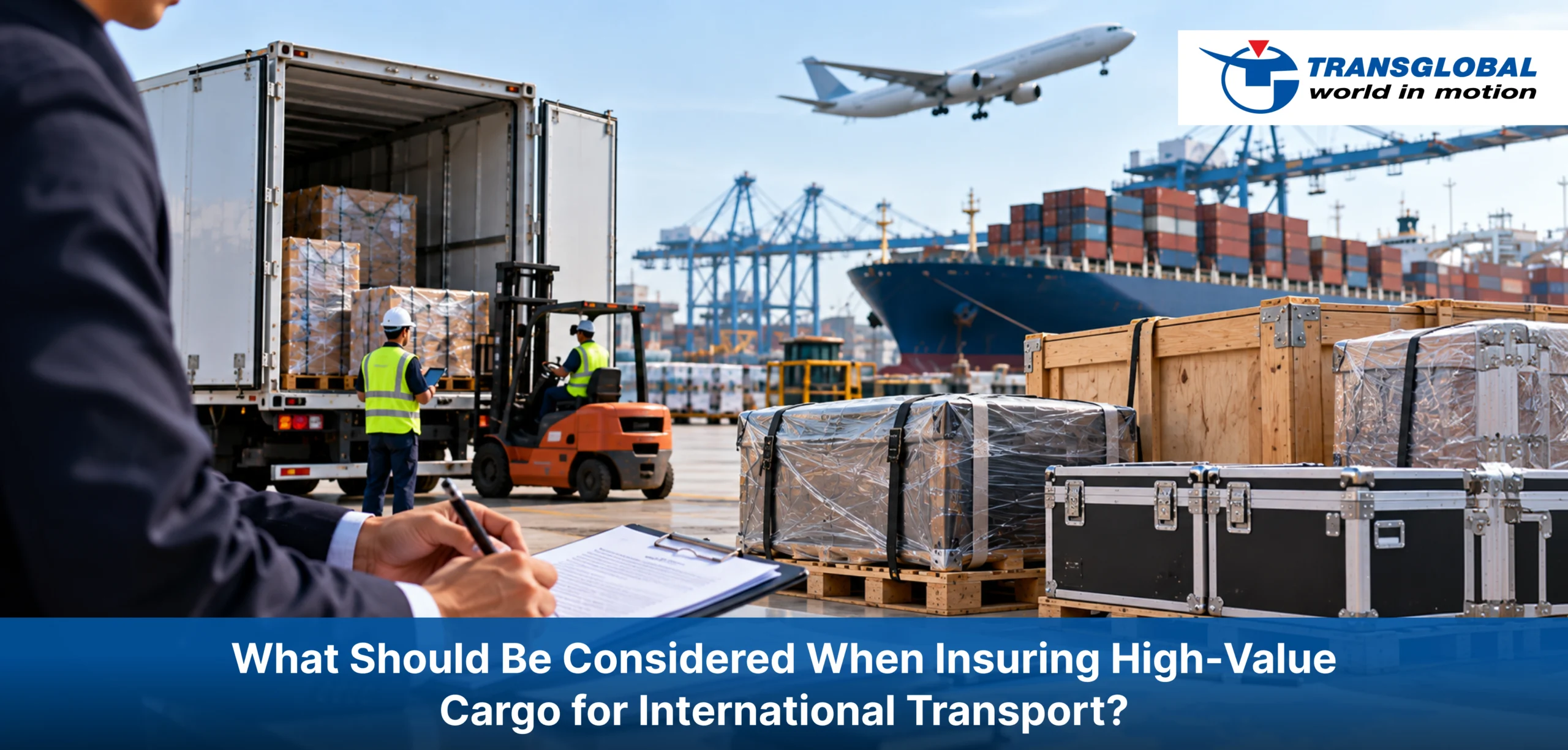
A shipment worth millions can be packed securely, handled carefully, and booked with a reliable carrier.
But what happens if it is damaged during transit?
For businesses moving valuable cargo, the financial consequences can extend well beyond the cost of transportation.
A precision machine may take months to replace. A collector’s vehicle may have a market value far above its original purchase price. A rare artwork may be difficult to value because no identical replacement exists.
These are situations where high value cargo insurance needs closer attention.
Insuring expensive goods is not simply about selecting the highest coverage amount. The declared value, cargo characteristics, handling arrangements, transport journey, policy conditions, and evidence of loss can all influence the protection available.
Before international transport begins, importers and exporters need to understand what they are insuring, which risks are covered, and how the policy would respond if something happened.
Why Should the Insured Value Reflect the Cargo’s Actual Exposure?
The first consideration is how much the shipment should be insured for.
For ordinary commercial goods, the invoice may provide a straightforward starting point. High-value cargo can be more complicated.
Consider a specialised industrial machine purchased several years ago. Its original invoice may not reflect its current replacement cost.
Similarly, an antique, artwork, or rare vehicle may require a professional valuation because its market value is not determined by a standard retail price.
The appropriate insured value depends on the valuation basis accepted under the policy.
Depending on the insurance arrangement, this may consider the commercial value, freight charges, insurance costs, and other allowable expenses.
For businesses transporting high-value cargo, it is important to establish a defensible valuation before requesting cover.
Underinsurance can leave the cargo owner responsible for part of a loss. Declaring an unsupported higher amount does not guarantee a larger settlement either.
The value should be accurate, supported by evidence, and consistent with the agreed insurance terms.
How Cargo Characteristics Influence Insurance Requirements?
Two shipments with the same declared value may need very different insurance arrangements.
A precision instrument, luxury vehicle, valuable painting, and industrial turbine do not face identical risks during transport.
Their materials, construction, sensitivity, and handling requirements influence the likelihood and nature of damage.
For example, an expensive electronic instrument may be vulnerable to shock or moisture. A collector’s vehicle may require careful loading and condition documentation. A large industrial machine may need specialist lifting equipment and suitable securing arrangements.
These differences matter to insurers.
The insurer may ask about packaging, protective measures, transport equipment, security arrangements, previous condition, and whether specialist handlers will be involved.
For collectors and museum consignments, condition reports and specialist packing can provide important evidence of how an object was prepared and protected before movement.
This is where cargo protection and insurance planning meet.
Appropriate packing reduces physical exposure, while accurate handling information allows the insurer to assess the declared risk.
A policy should be arranged around the actual consignment rather than assuming that every valuable shipment requires identical cover.
Where Does Insurance Protection Begin and End?
International shipments rarely move through one uninterrupted transport stage.
Cargo may leave a factory, enter temporary storage, travel by road to a port, move by sea, pass through a destination terminal, and continue inland before reaching the receiver.
The important question is whether the insurance covers the intended journey.
Some policies provide warehouse-to-warehouse protection, subject to their wording. Others may have specific limits relating to storage, transit interruptions, loading, unloading, or the point at which cover terminates.
For example, a valuable machine may be discharged at Durban and held at a warehouse before being transported to a manufacturing facility.
The cargo owner should establish whether that temporary holding period falls within the insured transit.
The same consideration applies when shipments are transferred between carriers or when the planned destination changes.
Transglobal’s cargo insurance service considers the commodity, declared value, transport mode, and journey when arranging suitable cover.
Before departure, businesses should confirm the insured origin and destination, permitted transit stages, and any conditions affecting intermediate storage.
The movement may continue beyond the port, but insurance protection must be checked against the actual policy boundaries.
Why Do Policy Exclusions and Trade Terms Need Careful Review?
An insurance certificate confirms that cover has been arranged, but it does not mean every possible loss is insured.
Policy wording determines which events are covered, which conditions apply, and what remains excluded.
For high-value shipments, the distinction is important.
Depending on the policy, exclusions or limitations may concern inadequate packing, inherent defects, ordinary wear, delay, war-related events, or certain security exposures.
Businesses should also understand the deductible, sometimes called an excess. This is the amount the insured party must bear when a covered claim is settled, subject to the policy terms.
For cargo moving through politically sensitive trade routes, the distinction between marine insurance and war risk cover deserves particular attention.
Trade terms also affect who must arrange insurance.
Under Incoterms 2020, CIF and CIP require the seller to obtain cargo insurance, although their minimum coverage requirements differ. Other Incoterms do not generally impose the same obligation to arrange insurance.
Importers and exporters should therefore understand the risk and cost responsibilities established by their agreed trade terms.
Even where insurance is contractually required, the minimum cover may not provide the level of protection the cargo owner wants.
For valuable cargo, the right question is not simply whether insurance exists.
It is whether the arranged policy addresses the shipment’s actual financial exposure.
What Evidence Matters if High-Value Cargo is Damaged?
Insurance planning should also consider what happens after a loss.
Imagine a valuable industrial machine arriving with visible damage to its outer packaging.
The receiver discovers that a precision component inside has been affected.
The next steps matter because an insurance claim depends on evidence of the loss, the circumstances, and the applicable policy conditions.
A useful shipment record may include:
- Commercial invoices or independent valuations
- Pre-shipment condition photographs
- Packing and inspection records
- Transport documents and delivery receipts
- Photographs showing the damage
- Surveyor reports, where required
- Repair estimates or replacement assessments
The cargo owner should notify the relevant insurer or claims representative promptly, preserve available evidence, and follow the reporting requirements in the policy.
Damage should also be recorded appropriately at delivery, and the cargo should be protected from further loss.
For particularly valuable shipments, independent surveys may be arranged before dispatch or after an incident to establish condition and assess damage.
These records help distinguish pre-existing defects from damage that may have occurred during the insured movement.
They do not guarantee that a claim will be accepted, but they provide the evidence needed for a proper assessment.
Good insurance preparation considers the claims process before anything goes wrong.
Conclusion: High-Value Cargo Insurance Should Match the Shipment’s Real Risk
Insuring high-value cargo requires more consideration than the price shown on a commercial invoice.
The cargo’s actual value, physical characteristics, transport journey, policy exclusions, contractual responsibilities, and claims evidence all influence the protection available.
A suitable insurance arrangement should reflect the nature of the goods and the risks associated with their movement.
For importers, exporters, manufacturers, collectors, and industrial businesses, this means reviewing cover before the shipment leaves origin rather than discovering limitations after a loss.
The objective is not simply to purchase insurance.
It is to understand the financial protection being arranged and ensure it is appropriate for the cargo being transported.
Planning international transport for valuable or specialist cargo? Contact us to discuss the shipment value, transport arrangements, insurance requirements, and available coverage options before dispatch.
Protect your valuable shipments with leading freight forwarders who understand high-value cargo insurance, specialist cargo handling, and international transport risks.
Frequently Asked Questions
Does an independent valuation help when insuring valuable cargo?
Yes. An independent valuation can provide supporting evidence of an item's worth, particularly for antiques, rare vehicles, and specialist equipment. The insured value must still be agreed according to the applicable policy terms.
Is temporary storage automatically covered by cargo insurance?
Not always. Temporary storage may be covered when it forms part of the insured transit, but this depends on the policy wording and circumstances. The planned storage arrangement should be declared before shipment.
What is a deductible in high-value cargo insurance?
A deductible is the amount the insured party must bear towards a covered loss. For example, if a policy has a deductible of R20,000, that amount would normally be deducted from an otherwise payable claim, subject to the policy terms.
Comments