

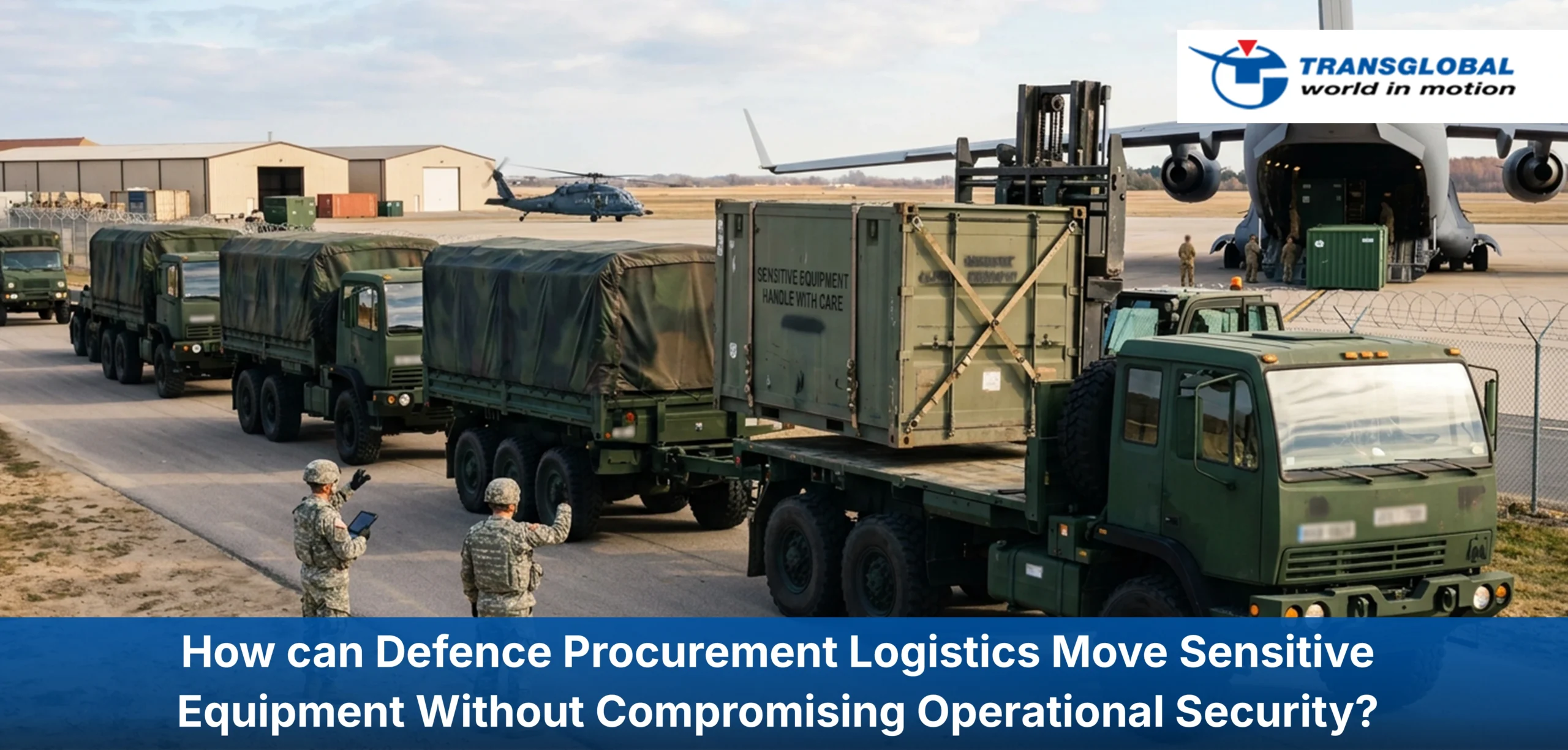
In defence logistics, a shipment delay is not just a supply chain issue, it can become a national security concern.
Unlike commercial cargo, defence procurement shipments involve highly sensitive equipment, controlled materials, military assets, and operationally critical goods that demand far more than standard freight handling. Every movement must balance speed, compliance, confidentiality, and security without exposing operational information or increasing risk.
As global defence supply chains become more interconnected and geopolitical tensions continue to reshape international trade, defence procurement logistics has evolved into one of the most specialized areas of freight forwarding.
For governments, defence contractors, military suppliers, and procurement agencies, the challenge is no longer simply transporting cargo. The real challenge is moving sensitive equipment securely while protecting operational integrity at every stage.
Why Defence Procurement Logistics Requires a Different Approach?
Standard logistics models are not designed for defence cargo.
Military equipment, armaments, tactical systems, hazardous materials, and controlled technologies often fall under strict national and international regulations. These shipments may involve export controls, security clearances, restricted routing, and classified documentation requirements.
In many cases, even basic shipment information cannot be openly shared due to operational sensitivity.
This means defence procurement logistics requires a highly controlled environment where visibility is carefully managed, risks are minimized, and every movement is aligned with security protocols.
Unlike traditional freight operations focused mainly on efficiency and cost, defence logistics prioritizes operational security, compliance, and continuity.
What Makes Defence Cargo High-Risk?
Defence cargo carries a level of sensitivity that extends beyond financial value.
These shipments may include:
- Military equipment
- Defence systems
- Armaments and ammunition
- Tactical communication systems
- Controlled hazardous materials
- Specialized project cargo
- Explosives and dangerous goods
The risks associated with moving such cargo include theft, unauthorized access, geopolitical disruption, cyber threats, compliance violations, and operational exposure.
A single documentation error, routing issue, or security lapse can create serious legal and operational consequences.
This is why defence logistics operations require specialized planning, trained personnel, and strict execution protocols.
How Operational Security Shapes Defence Logistics Planning?
Operational security, often referred to as OPSEC, is one of the most critical elements in defence procurement logistics.
The objective is simple: ensure sensitive information about cargo, routing, schedules, and operations does not become exposed to unauthorized parties.
This affects every stage of the shipment process.
Transport routes are selected carefully to reduce exposure and avoid high-risk regions where possible. Cargo details are tightly controlled, and access to shipment information is restricted to authorized personnel only.
In some cases, shipments may require secure escorts, restricted warehouse access, or controlled transfer points to maintain security integrity throughout transit.
Digital systems must also be protected. As logistics operations become more technology-driven, cybersecurity has become a critical part of defence logistics management. Shipment data, tracking systems, and operational communications all require secure handling to prevent cyber intrusion or information leaks.
Why Compliance is Critical in Defence Procurement Logistics?
Defence cargo movements are heavily regulated across global markets.
Different countries apply strict export controls, customs procedures, sanctions regulations, and dangerous goods requirements. Moving military or dual-use cargo without proper compliance can lead to cargo seizure, penalties, shipment delays, or legal action.
Documentation must be precise and aligned across all authorities involved in the shipment process.
This often includes:
- Export permits
- Import authorizations
- Dangerous goods declarations
- Security clearances
- End-user certificates
- Military cargo approvals
Managing these requirements requires deep industry knowledge and continuous coordination between logistics providers, authorities, and defence stakeholders.
How Multi-Modal Transport Supports Defence Operations?
Defence procurement logistics often involves multiple transport modes depending on urgency, cargo sensitivity, and operational requirements.
Air Freight for Time-Critical Defence Cargo
Air freight is commonly used for urgent military equipment, tactical systems, or mission-critical spare parts where speed is essential.
These operations require strict aviation compliance, secure handling, and controlled access throughout airport operations.
Sea Freight for Large-Scale Defence Shipments
Sea freight is often used for heavy military equipment, project cargo, armoured systems, and bulk defence movements.
Because these shipments are typically oversized or high-value, careful route planning, port coordination, and cargo security become essential.
Road Freight for Regional and Cross-Border Defence Logistics
Road freight supports domestic and regional defence operations by connecting ports, airports, bases, and operational facilities.
For dangerous goods, explosives, and military cargo, road transport requires specialized vehicles, trained operators, and secure route management.
Why Risk Management is Central to Defence Logistics?
Defence logistics operates in environments where risk cannot be eliminated, but it must be controlled.
This means risk management strategies are built into every stage of the operation.
This includes:
- Route risk assessment
- Cargo security planning
- Regulatory compliance checks
- Contingency planning
- Shipment visibility controls
- Cybersecurity measures
- Secure cargo handling procedures
The goal is not only to move cargo successfully, but to maintain operational continuity without compromising sensitive information or mission readiness.
Transglobal’s Role Goes Beyond Moving Cargo
Defence procurement logistics requires more than transportation capability. It requires operational discipline, compliance expertise, and a deep understanding of high-risk cargo environments.
At Transglobal, specialized logistics solutions are designed around secure and compliant cargo movement across sea freight, air freight, and road freight operations.
The team has extensive experience handling:
- Military logistics
- Defence cargo
- Armaments transport
- Dangerous goods
- Hazardous materials
- Explosives logistics
- Specialized project cargo
Every shipment is managed with a strong focus on operational security, route planning, compliance alignment, and controlled execution.
From documentation management and permit coordination to secure handling procedures and cargo visibility, every aspect of the operation is planned carefully to reduce exposure and maintain control.
Because in defence logistics, reliability is not just about delivery, it is about protecting operational integrity at every step.
Why Defence Supply Chains Need Specialized Freight Partners?
Modern defence procurement operations are becoming more global, complex, and time-sensitive.
Governments and defence contractors increasingly rely on freight partners that understand:
- Military cargo compliance
- Dangerous goods regulations
- High-risk route planning
- Multi-modal defence logistics
- Security-focused cargo handling
- Operational continuity requirements
Choosing a logistics partner without these capabilities can introduce unnecessary operational and security risk.
In today’s environment, defence logistics is no longer simply about transportation, it is about secure supply chain management.
Conclusion
Moving sensitive defence equipment requires a logistics strategy built around operational security, compliance, and risk management.
As global supply chains face increasing geopolitical, cyber, and regulatory challenges, defence procurement logistics have become more complex than ever.
Success depends on working with experienced logistics specialists who understand how to move high-risk cargo securely while maintaining complete operational control. If your operations involve military cargo, armaments, explosives, or sensitive defence equipment, partner with a freight forwarder that delivers secure, compliant, and strategically managed logistics solutions across air, sea, and road freight. Contact our team, which understands that in defence logistics, security is not optional, it is mission-critical.
Frequently Asked Questions
Why is defence procurement logistics different from standard freight forwarding?
Defence logistics involves sensitive cargo, strict compliance requirements, operational security, and controlled handling procedures.
What transport modes are used in defence logistics?
Defence cargo is transported through air freight, sea freight, and road freight depending on urgency, cargo type, and security requirements.
Why is operational security important in defence cargo transport?
Operational security helps protect sensitive shipment information, prevent unauthorized access, and reduce security risks during cargo movement.

Why Sensitive Defence Cargo Needs Tighter Control?
22h[…] is why defence procurement requires more than a normal freight booking. The cargo may be connected to government supply, […]