

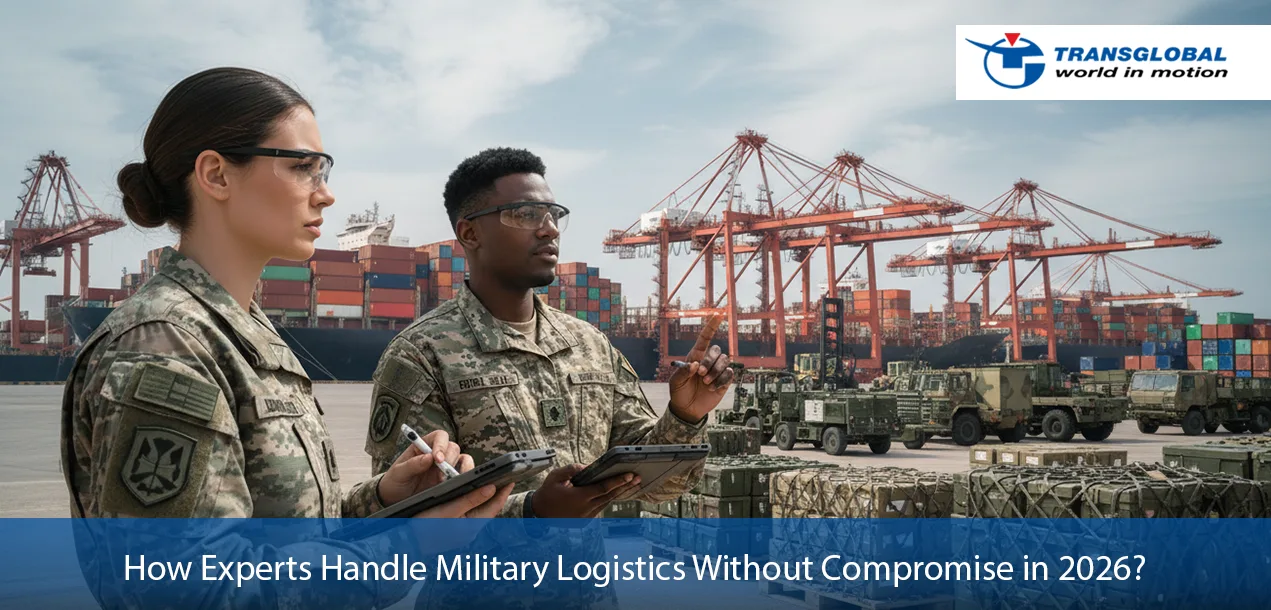
Military logistics is no longer just about transporting equipment. In today’s volatile global environment, it’s about readiness, precision, and strict control over every link in the supply chain. Whether moving armaments across continents, setting up temporary bases, or coordinating multi-phase deployments, the success of military missions now depends as much on logistics execution as it does on tactical planning.
As global tensions rise, compliance frameworks tighten, and supply chains stretch further, military logistics has entered a new era, one where specialized expertise and operational discipline are critical. Let’s take a closer look at what defines modern military logistics and why freight forwarders must be more than just transport providers.
Why Military Logistics Requires a Different Approach?
Military logistics isn’t ordinary freight. It includes:
- Classified equipment
- Armaments and ammunition
- Communication systems
- Dual-use components
- High-value, time-sensitive consignments
What makes military logistics different is not just the cargo itself, but the ecosystem it moves through. Military logistics involves coordination between governments, customs authorities, ministries of defense, private suppliers, and international treaty regulators.
Every movement is high-stakes. One documentation mistake, compliance lapse, or delay can trigger regulatory fines, diplomatic friction, or mission failure.
That’s why this space demands logistics partners who understand more than trucks, planes, and containers, they must understand defense priorities, security mandates, and geopolitical risk.
What Makes Military Logistics Complex in 2026?
The global logistics landscape for military cargo is now shaped by four key challenges:
Compliance Pressure
- Military cargo is governed by strict export control regimes (ITAR, EAR, NCACC).
- Clearance delays, permit issues, and trade restrictions can stall movements.
- Non-compliance may trigger cargo seizure or even legal investigation.
Multi-Modal, Multi-Phase Deployments
- Military projects often involve multiple destinations, routes, and timelines.
- Some cargo must move via air, others by sea or specialized road convoys.
- Timing must align with exercises, contracts, or diplomatic agreements.
Security & Chain-of-Custody
- Military consignments require sealed movements, real-time visibility, and 24/7 tracking.
- Theft, diversion, or tampering is not just financial loss, it’s a national security risk.
Dynamic Geopolitical Environment
- Trade routes shift as conflicts escalate or diplomatic tensions rise.
- Forwarders must adapt quickly, reroute safely, and maintain permit validity across changing scenarios.
What are the Core Components of Military Logistics?
To succeed in this environment, military logistics operations must build around the following pillars:
1. Regulatory Intelligence and Export Compliance
Every military shipment must be cleared under the appropriate local and international laws. This includes:
- Identifying controlled items under national arms control lists.
- Securing export licenses, End-Use Certificates (EUC), and NCACC approval.
- Classifying goods under UN codes, IATA DGR, or IMDG codes, where required.
- Coordinating with customs brokers who understand military cargo requirements.
Forwarders without military compliance expertise can’t be trusted in this space. It’s not optional. It’s operational.
2. Documentation and Traceability
Every item must be accounted for, from the time it leaves a base or supplier until it reaches the final destination. Key documentation includes:
- Commercial and pro forma invoices with correct classification
- Packing lists with technical specifications
- Bill of Lading/Air Waybill with end-to-end tracking
Military-specific documentation, such as:
- Arms Transport Permits
- Letters of Authority
- Diplomatic Exemptions (if applicable)
These documents must be accurate, digitally shareable, and securely stored. Missing paperwork at customs for military cargo is not a delay, it’s a disruption to national security.
3. Security-Driven Transport Planning
Military logistics involves special transportation protocols. This includes:
- Pre-vetted drivers and staff with security clearance
- Escort vehicles or armed convoy support
- Movement tracking with GPS and geofencing
- Non-disclosure routing with hidden identity or carrier masking
- Secure warehouse storage and cross-docking with restricted access
Whether it’s an ammunition shipment or surveillance systems, transport can’t rely on regular planning. It must be handled through secure channels with full visibility and chain-of-custody assurance.
4. Multi-Phase Project Logistics
Often, military logistics operations don’t happen all at once. A single program may involve:
- Initial shipment of equipment
- Follow-up deliveries of parts and accessories
- Set-up of temporary military bases or logistics hubs
- Return shipments after missions
Each phase requires fresh documentation, permit renewals, inspection readiness, and transport reconfiguration. Military forwarders must think long-term and plan project logistics like military operations, precise, risk-aware, and accountable.
Digital Evolution: How Technology is Shaping Military Logistics?
In 2026, military logistics teams are not relying on spreadsheets and phone calls. They expect:
- Real-time dashboards showing location, status, and exceptions
- AI-based route and permit risk forecasting
- Secure digital documentation sharing for customs and ministries
- Automated alerts for license expirations or compliance gaps
A military forwarder must now be a digital enabler, not just a transporter. Transglobal Cargo embraces this shift, using advanced technology to secure, streamline, and de-risk military cargo movements.
Why Transglobal Cargo is the Right Partner for Military Logistics?
At Transglobal Cargo, we’ve been trusted with military logistics for over 30 years. We serve across air, sea, and road freight with full-spectrum compliance and security.
Here’s what we bring:
- Certified Class 1–9 DG Handling
- Military-Grade Route Planning
- NCACC Compliance & Arms Permit Expertise
- Global Customs Clearance for military Goods
- Bonded Warehousing & White-Glove Handling
- 24/7 Visibility for military Consignments
- Secure Handling of Government and Dual-Use Cargo
From sensitive museum artefacts and armored vehicles to dangerous goods and project-based military rollouts, we don’t just deliver, we protect, validate, and secure every mile.
Conclusion: Military Logistics is Built on Trust, Compliance, and Precision
Military logistics is not a business of shortcuts. It’s a domain where performance, responsibility, and attention to detail determine mission success. In this complex world, you need more than just a freight forwarder, you need a logistics ally that understands military, speaks compliance fluently, and delivers with security and speed.
Contact Transglobal Cargo today to discuss your military logistics requirements.
We’re ready to move what matters, safely, legally, and reliably.
Frequently Asked Questions
What certifications are essential for military logistics partners?
At minimum, forwarders should be certified in Dangerous Goods Handling (Class 1–9), hold appropriate arms control permits, and have documented experience in government or military cargo movement.
Can military cargo be shipped internationally?
Yes, but it requires detailed coordination between origin and destination authorities, proper licenses, and documented end-use. Export control compliance is mandatory.
What makes Transglobal Cargo different from regular forwarders?
We specialize in complex, compliance-heavy cargo. With over three decades of military logistics experience, we offer security-first, regulation-aligned solutions that commercial forwarders cannot match.
Comments