

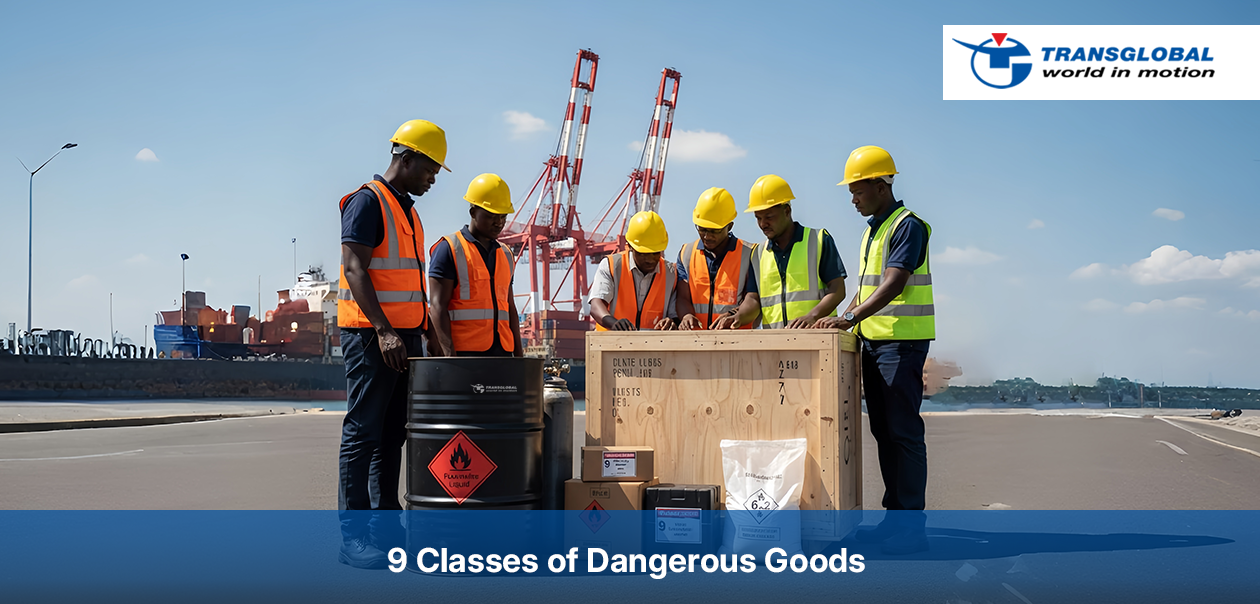
Imagine shipping a container of lithium batteries through a rural border post in East Africa, or transporting ammonium nitrate through South Africa’s mining belt. Without proper classification and compliance, the consequences can range from customs delays to life-threatening accidents.
For logistics professionals operating across the African continent, understanding the 9 classes of Dangerous Goods (DG) is not optional, it’s fundamental. With industries such as mining, energy, manufacturing, and pharmaceuticals driving regional trade, the movement of hazardous cargo is not only frequent but complex.
So, what are these 9 classes? And how do they apply in the context of African supply chains?
Let’s explore.
Dangerous Goods: More Than Just Chemicals
Dangerous goods (sometimes called hazmat) refer to substances or items that could pose a threat to people, property, or the environment when transported. The United Nations has established a classification system, recognized globally and adopted across Africa, to ensure that these goods are moved safely and responsibly.
Africa’s logistics ecosystem, spanning everything from congested ports to underdeveloped border posts, adds extra layers of risk. That’s why understanding these 9 categories is key to staying compliant and safe.
1. Explosives (Class 1)
Explosives are among the most tightly regulated cargo types. This includes everything from military ammunition to industrial blasting agents used in mining, a major sector across South Africa, Zambia, and the DRC.
Each type of explosive falls under different sub-divisions (1.1 to 1.6), with specific requirements for packaging, labeling, routing, and escort services.
In Africa, especially in countries like South Africa and Zambia, these materials are crucial to the mining and construction industries. However, border clearances, limited storage infrastructure, and compliance with safety protocols present ongoing challenges.
2. Gases (Class 2)
Whether liquefied, compressed, or dissolved under pressure, gases like LPG, oxygen, and acetylene are common across the continent’s energy and healthcare sectors.
Handling these requires approved cylinder specifications, pressure testing, and ventilation-friendly transport.
One of the main challenges in Africa is ensuring safe transportation of gases under extreme heat conditions and over long, poorly maintained road routes, where leaks can pose serious hazards.
3. Flammable Liquids (Class 3)
Flammable liquids include gasoline, paint thinners, ethanol, and other solvents. These products are vital to industrial growth in countries like Nigeria, Kenya, and Angola.
They are highly combustible and require certified containers, flameproof signage, and specific separation during multi-cargo shipments.
In Africa, these substances often move through congested ports or urban centers, where fire hazards are elevated, making proper labeling, segregation, and routing critical.
4. Flammable Solids and Reactive Substances (Class 4)
Class 4 includes materials that can ignite on contact with air or moisture, like magnesium, sulfur, and certain types of phosphorus.
African transporters must be especially careful in humid and high-temperature zones where spontaneous combustion is more likely.
Industries such as chemical manufacturing and match production rely on these materials, but African warehouses and transit hubs often struggle with climate control, increasing the risk of fire outbreaks.
5. Oxidizing Substances and Organic Peroxides (Class 5)
Oxidizers like ammonium nitrate are essential in fertilizers and mining. Peroxides, often used in plastics and resins, can intensify fires if not handled correctly.
In the African market, these goods often face clearance delays due to missing permits or misclassification.
Across the continent, mislabeling or incomplete documentation often delays shipments, while improper packaging can lead to fire or intensified chemical reactions.
6. Toxic and Infectious Substances (Class 6)
From medical samples to pesticide containers, toxic substances pose serious risks if spilled or inhaled.
Shipments through urban centers must be labeled clearly, and transit teams should be trained in emergency protocols.
In Africa, managing these materials poses safety risks for handlers and the public, especially when there’s limited training or inadequate spill containment infrastructure.
7. Radioactive Materials (Class 7)
Radioactive cargo includes nuclear medicine, scientific samples, and materials used in mining and exploration.
Due to Africa’s growing energy and healthcare sectors, handling radioactive items demands country-specific clearance, route approvals, and tight documentation.
Countries across Africa face strict regulations, but inconsistencies between borders and lack of clear protocols often complicate cross-country movements of these goods.
8. Corrosives (Class 8)
These are substances that can corrode metal, human tissue, or infrastructure. Acids and alkalis, like sulfuric acid and sodium hydroxide, fall in this category.
In Southern Africa, many of these are shipped for use in batteries, water treatment, or manufacturing.
In many African nations, challenges arise from poor container conditions, increasing the risk of leaks and environmental damage during transit.
9. Miscellaneous Dangerous Goods (Class 9)
Class 9 covers cargo that doesn’t fit neatly into the other categories but still poses risk, such as lithium batteries, dry ice, or genetically modified organisms.
With Africa’s tech growth and solar adoption, the transport of lithium-ion batteries is increasing, and so are the regulatory challenges.
As Africa’s e-commerce and tech sectors expand, so does the demand for these products. Unfortunately, enforcement of global handling regulations is often uneven, increasing compliance risks.
Why Classification Matters for African Logistics?
Dangerous goods in Africa often move through a patchwork of ports, railways, rural roads, and air corridors. Without proper classification and compliance:
- Shipments may be rejected at border posts
- Incorrectly packed cargo could cause spills, fires, or explosions
- Carriers could face legal penalties or loss of license
- Public safety may be jeopardized
The classification system isn’t just paperwork, it’s protection. For logistics providers and exporters, understanding these classes can reduce costs, save time, and build trust with customs and regulators.
Getting Dangerous Goods Right with the Right Partner
At Transglobal Cargo, we specialize in moving high-risk cargo across Africa with care and compliance. Whether you’re handling Class 1 explosives, Class 3 flammables, or Class 9 lithium batteries, we provide:
- Accurate classification using UN/ADR/IMDG/IATA codes
- Certified packaging and hazard labeling
- Trained personnel and fleet compliance
- Route planning that avoids high-risk zones
- Real-time tracking and documentation support
Conclusion
Africa’s economic growth depends on the safe and seamless movement of all cargo types, including those that pose risks. Whether you’re shipping across Johannesburg, Lusaka, or Mombasa, knowing the 9 classes of dangerous goods helps protect your team, your shipment, and your reputation.
Need help moving hazardous cargo? Let Transglobal Cargo handle your compliance, transport, and safety, end-to-end.
Contact us today to speak with a certified DG logistics explosives expert.
Frequently Asked Questions
Do all dangerous goods require special permits in Africa?
Yes, most classes require specific permits or documentation depending on the country and transport mode. Always check with your local authority or licensed freight forwarder.
How do I classify my cargo correctly?
Use the UN Dangerous Goods List and consult a certified DG expert. Each substance has a UN number and class code.
Can I ship dangerous goods by air within Africa?
Yes, but only through airlines and freight forwarders certified under IATA’s DGR (Dangerous Goods Regulations). Some classes are restricted from air transport.


Comments