

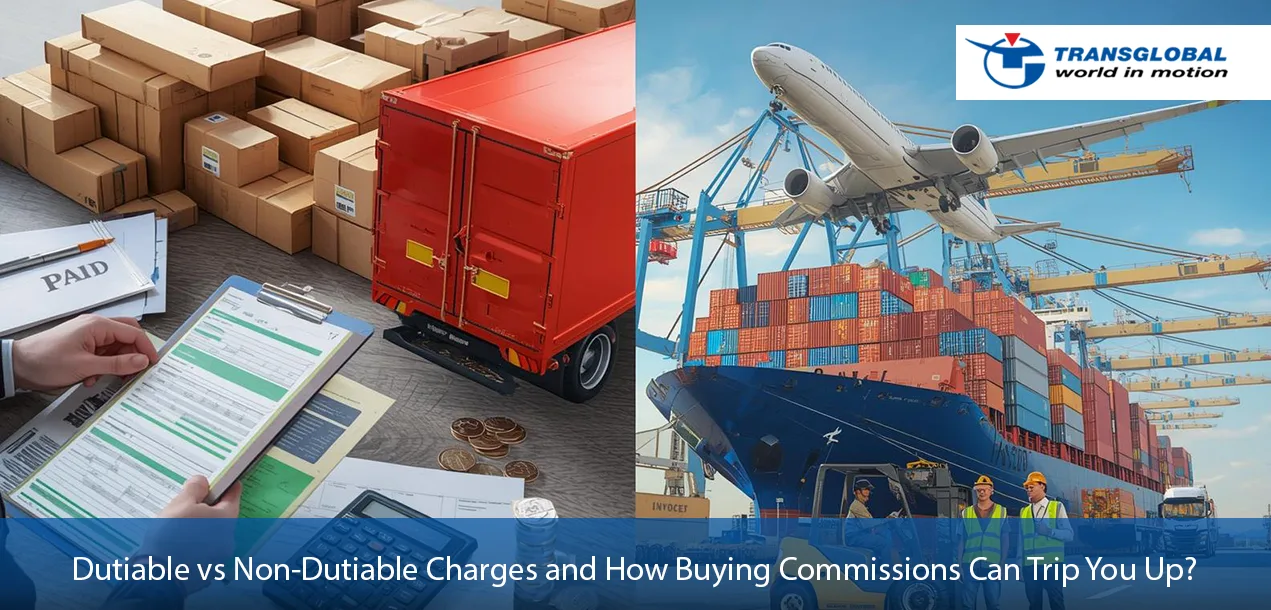
Customs valuation is never just about the invoice total. In fact, even with all six SARS methods covered, the biggest mistakes often happen in the smallest details, like how freight forwarders treat commissions, packing, design fees, or insurance costs. That’s why we’ve saved this final bonus post in our 7-part series to tackle the grey zone where most importers get stuck: knowing what costs must be added to your declared value, what can be safely deducted, and when buying commissions become a compliance risk.
Understanding these charges is critical, not just for correct SARS submissions but also to maintain duty savings, avoid clearance delays, and prepare for customs audits.
What Counts as a Dutiable Addition?
According to SARS and international WTO valuation rules, certain costs must be included in your customs value, even if they are not part of the commercial invoice total. These costs are considered directly connected to getting the product ready for export, and failing to declare them can lead to penalties or valuation rejections.
Here are the common dutiable additions:
- Packing costs and any labor associated with preparing the goods for shipment.
- Assists, which include tools, moulds, dies, engineering, or design work provided by the importer to the foreign supplier.
- Royalties and license fees related to the goods, especially in branded or tech-heavy products.
- Selling commissions paid to agents who work for or on behalf of the seller.
Inland freight and loading charges incurred in the country of export, from the supplier’s warehouse to the foreign port (e.g., inland trucking in China).
Proceeds of resale or payments the importer agrees to make back to the seller after selling the goods locally.
Local design or engineering work done in South Africa for the production of the goods (if not invoiced separately).
These charges should be declared explicitly when calculating the customs value, and if your invoice excludes them, you’ll need to submit supporting documentation to SARS.
What Charges Can Be Legally Deducted?
Not every cost associated with the goods needs to be added to the customs value. Several charges are considered non-dutiable and can be excluded if they are clearly documented and not part of the product’s value at export.
Typical non-dutiable costs include:
- International freight from a foreign port to South Africa.
- Marine insurance on goods during international transport.
- South African inland transport, warehousing, or handling after the goods arrive at the port of entry.
- Storage fees are charged post-clearance.
- Buying commissions — provided they meet the required criteria (more on this below).
- Duties and VAT — as these are calculated after the customs value is determined.
- Interest charges on late payments under deferred payment terms.
However, SARS often queries these costs when invoices are vague or combined. That’s why it’s critical to separate each cost line clearly and justify all deductions with supporting documents.
The Buying Commission Trap: Are You Declaring it Right?
Buying commissions are one of the most commonly disputed areas during SARS audits. Many freight forwarders assume that any fee paid to an overseas agent is automatically non-dutiable, but SARS sees it differently.
A true buying commission must meet specific criteria:
- The agent must act exclusively on behalf of the importer.
- The importer must directly pay the agent, not via the seller.
- The agent must not influence the sale price of the goods.
- The agent must not also represent the seller in any way.
There must be a written buying agency agreement in place, clearly defining the agent’s role and responsibilities.
If these conditions are met, SARS will typically accept the commission as a non-dutiable charge.
But if the agent operates in a dual capacity, or if the commission is embedded into the product price or paid through the supplier, SARS will treat it as a selling commission, which is fully dutiable.
This is where many importers get caught. A logistics coordinator or procurement agent based in the supplier country might also be representing the seller, even indirectly. Without proper documentation or clear commercial separation, the commission may end up increasing your customs value.
Practical Example to Bring It Together
Let’s say you’re importing automotive parts from Germany. You work with an agent based in Hamburg who helps locate the right suppliers and manages quality checks. You also have a South African design firm that provided technical specifications during the product development phase.
Your invoice shows:
- Product cost: €80,000
- Packing: €1,500
- Design fee (in SA): Not listed
- Commission: €4,000
- Freight (Germany to Durban): €5,000
If the €4,000 commission was paid to an independent agent you hired, with a contract, and who only works for you, it could be non-dutiable. But if that agent also helps the supplier negotiate sales or receives payment through the supplier, SARS may reject the deduction.
On top of that, you’ll need to add the packing and local design work (if proven linked to production), but you can deduct the freight from Germany and exclude insurance costs, assuming they’re separated.
Why these Rules Matter for African Freight and Compliance?
In Africa, customs compliance plays a major role in how fast and affordably you can get goods to market, especially in sectors like defense, chemicals, or project cargo, where each line item counts. With e-invoicing standards tightening globally (such as PEPPOL in the EU), and more customs authorities using data analytics to audit declarations, the way you classify charges can impact your reputation, costs, and clearance timelines.
Missteps in buying commission handling or failure to account for assists can lead to red flags with SARS, repeat inspections, and even delays at port. Freight forwarders must stay sharp.
Conclusion
This final blog brings everything together. SARS customs valuation isn’t just about what’s on the invoice, it’s about what’s behind the scenes, too. Declaring the correct dutiable additions and confidently deducting valid exclusions isn’t just good practice, it’s smart business.
At Transglobal Cargo, we support importers across Africa with customs valuation guidance, high-risk commodity handling, and documentation best practices that ensure compliance and speed. If your operation deals with complex products, regulatory cargo, or high-volume imports, we’ll help you get it right, every time. Need help with SARS declarations? Contact the best freight forwarder in Africa — Transglobal Cargo.
Frequently Asked Questions
If my buying agent helps me negotiate prices, is the commission still non-dutiable?
No. If the agent influences the price or also works with the seller, SARS will treat it as a selling commission, making it dutiable.
What documentation proves a buying commission is valid?
You’ll need a signed buying agency agreement, proof of direct payment, and communication records showing the agent works only for you.
Can I exclude South African warehousing fees from customs value?
Yes, if those fees are incurred after the goods are discharged at port and are not linked to the sale. Be sure to document timelines clearly.

Comments