

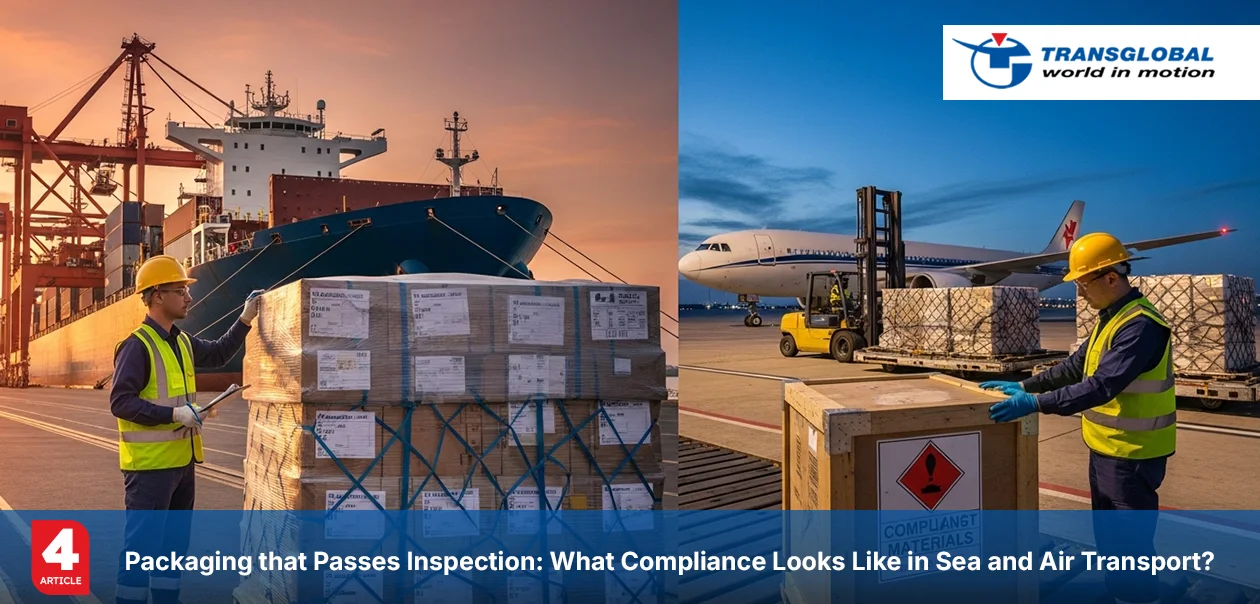
Packaging is often treated as a warehouse detail.
Something to be sorted out once the paperwork is done and the booking is confirmed.
In Dangerous Goods logistics, that thinking causes more shipment rejections than almost any other mistake.
Packaging is not a box.
It is a compliance control.
It is the physical line between a safe, approved shipment and a rejected, delayed, or legally exposed one.
In today’s logistics environment, where inspections are stricter, carrier liability is tighter, and tolerance for risk is shrinking, packaging is no longer about convenience. It is about risk containment across time, distance, and transport mode.
Why Packaging is a Compliance Decision, Not an Operational Task?
Dangerous Goods regulations don’t ask, “Can you pack this?”
They ask, “Can this package survive the journey without failure?”
Packaging must protect against:
- Leakage and spillage
- Impact, vibration, and handling shocks
- Pressure changes (especially by air)
- Crushing and shifting inside containers
- Containment failure over long transit times
A package that looks fine at dispatch can become non-compliant halfway through the journey. That is why inspections focus less on appearance and more on design, testing, and closure integrity.
What are the Regulations in fact Demand?
Across both air and sea transport, Dangerous Goods packaging is built on a few non-negotiable principles.
At its core, compliant packaging must demonstrate:
- Proper containment of the substance
- Structural strength for the mode of transport
- Use of tested standards where required
- Correct markings and hazard communication
- Correct inner packaging and closure systems
If any one of these elements is missing, the shipment may be rejected, even if the documents are perfect.
Packaging is assessed as a system, not as individual components.
Sea Freight Packaging: Built for Endurance
Sea transport is slow, exposed, and unforgiving. Containers move through multiple handling points, face constant motion, and remain sealed for weeks.
For sea freight under IMDG rules, packaging typically focuses on endurance rather than restriction.
Key packaging considerations for sea transport include:
- Strong outer packaging that resists crushing
- Secure bracing and blocking inside containers
- Compatibility and segregation between substances
- Resistance to humidity, salt air, and corrosion
- Long-term containment without monitoring
Sea packaging must assume that no one will intervene mid-voyage. Once the container is sealed, the packaging must hold, no matter how rough the journey becomes.
This is why packaging failures at sea often result in container damage, cargo contamination, or port-level rejection on arrival.
Air Freight Packaging: Built for Precision
Air freight operates under a completely different risk model.
Shorter transit times do not reduce risk, they increase sensitivity.
Under the IATA Dangerous Goods Regulations, packaging must be managed:
- Pressure changes during ascent and descent
- Vibration and handling intensity
- Temperature variation
- Strict aircraft safety thresholds
Air freight packaging often requires:
- UN specification packaging was mandated
- Exact packing instructions (inner and outer)
- Strict quantity limits per package
- Closure systems tested against pressure loss
- Clear distinction between passenger and cargo aircraft allowances
A package that is acceptable by sea can be automatically rejected by air, even for the same UN number and commodity.
This is not inconsistency, it is risk management.
Where Many Shipments Fail in Practice?
Most packaging failures do not come from bad intent. They come from assumptions.
Common real-world rejection triggers include:
- Using sea-approved packaging for air shipments
- Ignoring quantity limits per package
- Incorrect or untested closures
- Missing or incorrect UN markings
- Inner packaging that is not pressure-resistant
Assuming “it shipped last time” means “it’s compliant now.”
In inspections, regulators and airlines don’t assess intent. They assess physical compliance at the moment of acceptance.
Specialist Cargo: Where Packaging is Non-Negotiable?
For certain Dangerous Goods classes, packaging is not flexible, it is prescribed.
Explosives (Class 1)
Explosive packaging is controlled at the highest level and aligned with:
- Division (1.1, 1.2, 1.3, etc.)
- Compatibility group
- Approved packaging types
- Quantity and configuration limits
Packaging is tested, certified, and approved for specific explosive articles. Substitution is not permitted.
Even small deviations can result in regulatory breaches, not just shipment delays.
Radioactive Material (Class 7)
Radioactive packaging depends on:
- Category of material
- Package type design
- Shielding and containment requirements
- Dose rate limits
Packaging here is about controlled exposure, not just containment. Labels, markings, and documentation must match the physical package exactly.
Packaging Inspections: What Inspectors Seek Out?
Inspections are rarely about paperwork alone. Physical checks typically include:
- Package integrity and closure condition
- Presence and accuracy of UN markings
- Compatibility between inner and outer packaging
- Evidence of leakage or stress
- Compliance with packing instructions
- Aircraft or vessel suitability
Once a package fails inspection, correction is rarely immediate. Repacking often requires new approvals, delays bookings, and increases costs significantly.
Why Experienced Forwarders Plan Packaging First?
In compliant Dangerous Goods logistics, packaging is addressed before booking, not after rejection.
A compliance-first freight forwarder will:
- Confirm packaging requirements by mode
- Validate packing instructions before dispatch
- Align packaging with aircraft or vessel selection
- Prevent mismatches between documentation and physical cargo
- Reduce inspection risk at acceptance points
This approach saves time, cost, and reputational risk for the shipper.
Conclusion
Documents explain the shipment.
Packaging proves it.
If documentation is the legal story, packaging is the evidence. And evidence must hold up under inspection, pressure, time, and movement.
In Dangerous Goods logistics, packaging is not a warehouse activity, it is risk control in physical form.
Need Support with DG Packaging That Passes Inspection?
At Transglobal Cargo, we manage Dangerous Goods packaging as part of the compliance strategy, not as an afterthought.
If you’re looking for the best freight forwarder to handle complex DG shipments across air and sea with confidence, contact us today. We’ll help you get it right before inspection, not after rejection.
Stay tuned for the Final Article in the Series Coming Next: Why are Some Dangerous Goods Forbidden to Move and Why Compliance Leaves No Room for Debate?
Frequently Asked Questions
Can the same packaging be used for both sea and air transport?
In many cases, no. Air transport often requires stricter packaging, tested closures, and lower quantity limits than sea transport.
Who is responsible for packaging compliance, the shipper or the forwarder?
The shipper is legally responsible, but experienced freight forwarders play a critical role in verifying compliance before booking.
What causes the most packaging rejections?
Incorrect closures, quantity exceedance, missing UN markings, and using sea packaging for air shipments are the most common causes.

Comments