

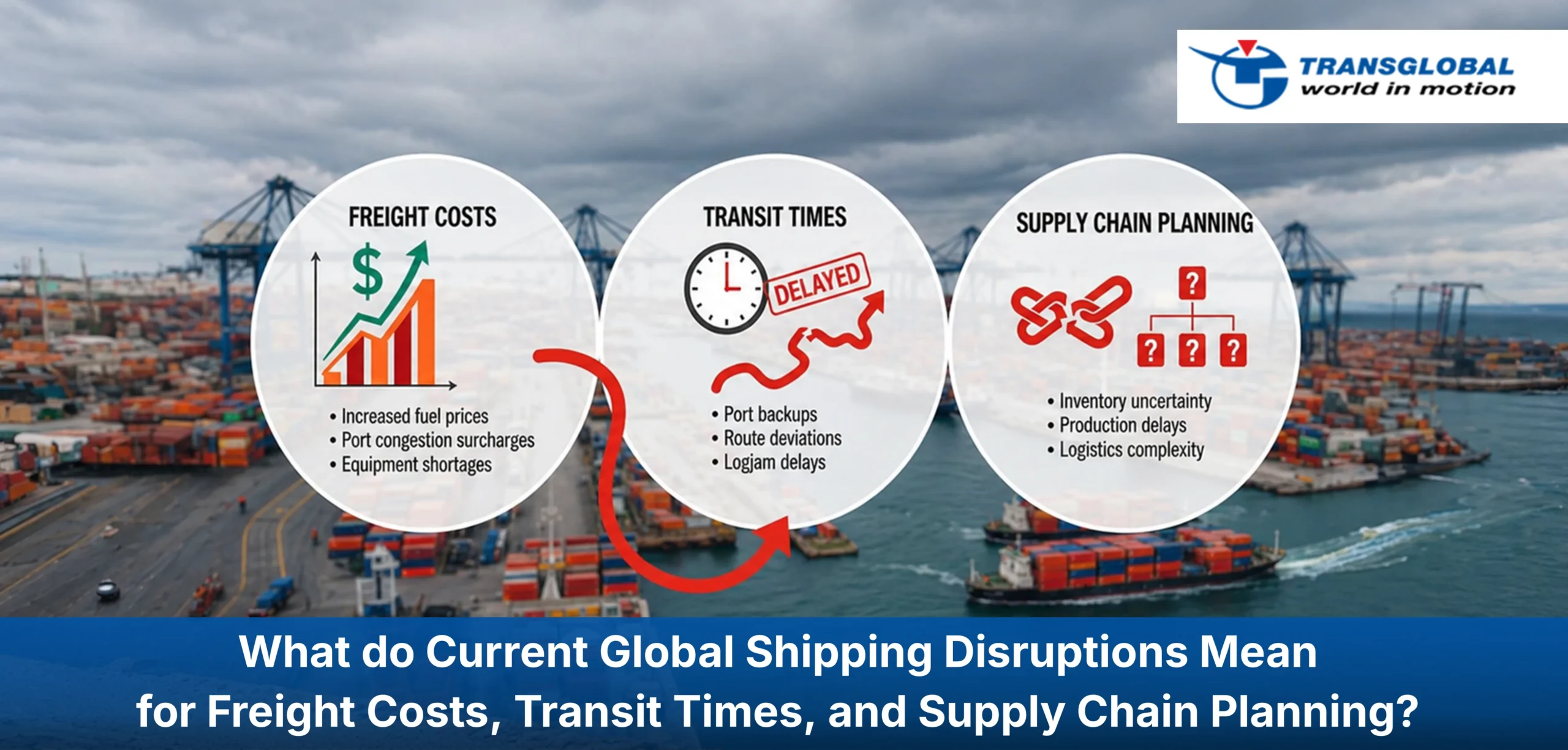
A major shipping route reopens, and for a moment, the global trade community breathes easier. Cargo begins to move, vessels resume journeys, and supply chains appear to regain rhythm.
But experienced logistics professionals know this is not a return to normal, it is a shift into a different kind of challenge.
The reopening of the Strait of Hormuz following recent geopolitical easing does not signal stability. Instead, it marks the beginning of a transition phase where uncertainty still exists, only now it is being managed rather than halted. For freight forwarders, importers, and exporters, the key question is no longer about disruption, it is about how to operate effectively within ongoing volatility.
Why the Strait of Hormuz Still Holds Global Trade on Edge?
The Strait of Hormuz remains one of the most critical chokepoints in global logistics. A large share of the world’s oil shipments and a significant volume of container cargo pass through this narrow corridor. When movement here is disrupted, the impact is immediate and widespread.
Even a temporary halt can throw vessel schedules off track, drive freight rates upward, increase insurance costs, and reduce overall predictability across supply chains. Now that the route has reopened, many expect operations to stabilize quickly. However, global shipping networks do not reset overnight. They require time to rebalance, and during this period, inefficiencies become unavoidable.
What is Happening Across Logistics Networks Right Now?
As vessels begin to pass through the Strait again, the system is dealing with a sudden surge of activity. Cargo that was delayed is now entering ports and terminals simultaneously, creating congestion across key hubs. Ships are waiting longer for berthing, cargo handling times have increased, and inland transportation networks are under pressure to keep up.
At the same time, shipping lines are repositioning their fleets to correct earlier disruptions. This process is creating inconsistencies in sailing schedules, with some routes experiencing delays while others face unexpected capacity. For businesses, this means that even though shipments are moving, reliability has not yet returned.
Adding to this complexity, war-risk insurance and security protocols remain firmly in place. Insurers have not reduced premiums significantly, and compliance requirements continue to influence operational costs. As a result, freight rates remain elevated, even though physical movement has resumed.
Airfreight, which initially faced restrictions due to airspace concerns, is slowly stabilizing. However, it is still operating under constraints. Capacity is limited in certain corridors, routing options remain sensitive to geopolitical developments, and pricing continues to fluctuate.
Short-Term Reality: Movement Without Stability
In the immediate term, logistics operations are active, but they are far from predictable. Businesses are experiencing improvements in cargo flow, but those improvements come with conditions.
Transit times may appear to recover in some lanes, but they remain inconsistent overall. Schedule changes can happen with little notice, and costs continue to reflect the heightened risk environment. This is not a period where businesses can rely on fixed planning. Instead, it requires constant adjustment and close monitoring of developments.
Medium-Term Outlook: A Gradual and Uneven Recovery
Looking ahead, the recovery will not be immediate or uniform across all modes of transport. Ocean freight is likely to take longer to stabilize due to ongoing congestion, equipment imbalances, and adjustments in carrier capacity. Even as ports clear backlogs, the ripple effects of earlier disruptions will continue to influence operations.
Air freight may recover at a faster pace, but its stability is closely tied to regional security conditions. Any change in geopolitical dynamics could quickly affect capacity and routing, making it a sensitive option despite its speed.
Cost structures will also take time to normalize. Even as operations improve, factors such as insurance premiums, fuel prices, and operational inefficiencies will continue to influence pricing. This means businesses may see improvements in transit times before they see any meaningful reduction in costs.
What does this Mean for Importers and Exporters?
For businesses involved in global trade, this phase demands a shift in approach. Waiting for stability is no longer a viable strategy. Instead, success depends on the ability to operate effectively within uncertainty.
This means rethinking how supply chains are structured. Companies are increasingly exploring alternative routing options to reduce dependency on single trade lanes. Multimodal transport solutions are gaining attention, allowing businesses to combine different modes of transport for greater flexibility.
At the same time, insurance coverage is becoming a critical area of focus. Traditional policies may not fully address current risks, making it important for businesses to reassess their exposure and ensure adequate protection.
Planning also needs to evolve. Fixed timelines are giving way to more flexible schedules, with businesses building buffer time into their operations. Maintaining safety stock and adjusting delivery expectations are becoming necessary steps to manage unpredictability.
Visibility has also become a priority. Real-time tracking and clear communication with logistics partners are essential for responding quickly to changes and minimizing disruption.
Transglobal’s Role Goes Beyond Moving Cargo
In a logistics environment shaped by uncertainty, the role of a freight forwarder has expanded significantly. It is no longer just about executing shipments, it is about guiding clients through complexity.
At Transglobal, the focus is on staying ahead of risk rather than reacting to it. This approach is especially important when handling high-risk and specialized cargo such as hazardous materials, explosives, and project shipments, where precision and compliance are critical.
The team continuously monitors geopolitical developments, providing clients with timely insights into how changes may affect routing, costs, and operations. Every solution is aligned not just with efficiency, but with compliance, insurance considerations, and real-world logistics challenges.
Transparency is also a key part of this approach. In a market where conditions can change rapidly, keeping clients informed allows them to make better decisions and maintain control over their supply chains.
Why Strategic Planning is Now a Competitive Advantage?
The current logistics environment rewards businesses that are proactive rather than reactive. Those who plan ahead, secure capacity early, and build flexibility into their operations are better positioned to manage disruption.
Working with the right logistics partner also plays a crucial role. A forwarder who understands global risks, regulatory requirements, and operational realities can make a significant difference in how effectively shipments are managed.
In this phase, logistics is not just an operational function, it is a strategic advantage.
Conclusion
The reopening of the Strait of Hormuz is a positive development for global trade, but it does not mark the end of disruption. Instead, it introduces a new phase where movement resumes under complex and evolving conditions.
Businesses that recognize this shift and adapt their strategies accordingly will be better equipped to navigate what lies ahead. Those who continue to rely on outdated assumptions may face ongoing challenges.
If your supply chain depends on reliability, compliance, and careful planning, now is the time to work with experts who understand both the risks and the opportunities in today’s logistics landscape.
Contact the trusted and experienced team that can guide your cargo through uncertainty with confidence. Choose a freight forwarder who goes beyond rates and delivers strategic, secure, and dependable solutions across global trade routes.
Frequently Asked Questions
How do shipping disruptions affect costs and transit times?
They increase freight costs due to insurance and capacity issues, while also causing delays from congestion and schedule changes.
How can businesses manage supply chain disruptions?
By using flexible routing, reviewing insurance, building buffer time, and working with reliable logistics partners.
Why is a freight forwarder important during disruptions?
A good freight forwarder helps manage risks, optimize routes, ensure compliance, and keep shipments moving efficiently.

Comments