

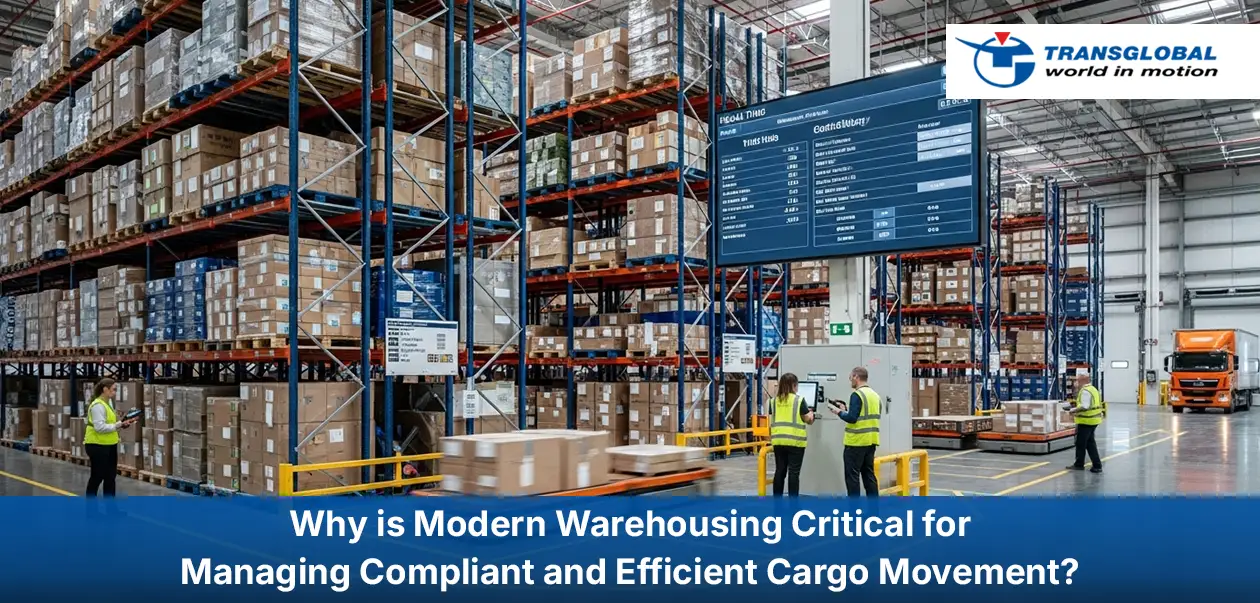
Cargo does not move in a straight line.
It pauses. It waits for clearance. It gets consolidated, unpacked, sorted, and prepared for the next stage of its journey. In many cases, what happens inside the warehouse determines whether a shipment moves smoothly or becomes delayed, costly, and difficult to manage.
Today’s supply chains are more complex than ever. Customs regulations are tighter, customer expectations are higher, and inventory cycles are faster. In this environment, warehousing is no longer just about storing goods.
It is about control.
And businesses that understand this are shifting from basic storage solutions to structured, compliance-driven warehousing strategies.
The Changing Role of Warehousing in Global Supply Chains
Traditionally, warehouses were seen as static spaces, places where goods were stored until needed. That model no longer works in modern logistics.
Warehousing has evolved into a dynamic operational hub that supports:
- Customs compliance
- Inventory control
- Order fulfillment
- Distribution planning
- Real-time visibility
For importers, exporters, and freight forwarders, warehousing now plays a critical role in managing cargo flow across international borders.
Delays in customs clearance, inaccurate stock handling, or poor visibility can disrupt entire supply chains. This is why modern warehousing must be structured, technology-driven, and aligned with regulatory requirements.
Bonded vs Free Store Warehousing: Why it Matters?
One of the most important distinctions in warehousing is between bonded storage and free storage.
Bonded Warehousing
Bonded warehouses are customs-controlled facilities where imported goods can be stored without immediate payment of duties and taxes.
This provides several strategic advantages:
- Deferred duty payments until goods are released
- Improved cash flow management
- Flexibility in distribution planning
- Secure storage under customs supervision
For businesses handling imports, bonded storage is particularly useful when goods need to be held before final clearance or re-export.
Free Store Warehousing
Free store warehouses are used for goods that have already cleared customs. These facilities support general cargo storage and distribution operations.
They are ideal for:
- Domestic distribution
- Inventory holding
- Order fulfillment processes
- Bulk storage before dispatch
Having access to both bonded and free store options allows businesses to manage cargo efficiently at different stages of the supply chain.
The Importance of Safe and Structured Unpacking Services
When containers arrive at a warehouse, the first critical step is unpacking.
This stage may seem straightforward, but it carries significant operational risk. Improper unloading can lead to cargo damage, inventory discrepancies, or delays in processing.
Professional unpacking services ensure that:
- Full container loads (FCL) and part loads (LCL) are handled safely
- Goods are checked against documentation
- Damages are identified early
- Inventory is accurately recorded
This step sets the foundation for everything that follows in the warehouse process.
A well-managed unpacking operation reduces errors and ensures that cargo is ready for efficient storage or distribution.
Pick and Pack: The Core of Order Fulfillment
As supply chains become more customer-driven, the demand for accurate and timely order fulfillment has increased significantly.
Pick and pack operations play a central role in meeting these expectations.
This process involves:
- Selecting the correct items from the inventory
- Preparing goods based on order requirements
- Packing shipments for dispatch
Accuracy at this stage is critical.
Errors in picking or packing can lead to:
- Incorrect deliveries
- Customer dissatisfaction
- Return logistics costs
- Operational inefficiencies
Modern pick and pack solutions focus on precision and speed, ensuring that orders are fulfilled correctly and dispatched without delay.
Why Live Tracking and Visibility are No Longer Optional?
One of the biggest challenges in logistics is the lack of visibility.
Without real-time insights, businesses struggle to answer key questions:
- Where is my cargo?
- What is my current stock level?
- Which orders are ready for dispatch?
- Are there delays in processing?
This is where warehouse tracking systems become essential.
Live tracking and control systems provide:
- Real-time cargo visibility
- Accurate inventory management
- Status updates on inbound and outbound shipments
- Better decision-making for logistics planning
Full visibility transforms warehousing from a passive function into an active control center.
It allows businesses to respond quickly, manage risks, and maintain operational efficiency.
Managing Cargo Movement from Receiving to Release
Modern warehousing is not just about storage, it is about managing cargo movement with precision.
From the moment goods arrive at the warehouse to the point they are dispatched, every step must be coordinated and controlled.
This includes:
- Receiving and inspection
- Documentation verification
- Storage allocation
- Inventory tracking
- Order processing
- Dispatch coordination
A structured approach ensures that cargo flows seamlessly through the warehouse without unnecessary delays or errors.
Whether dealing with bonded goods, fragile imports, or bulk shipments, end-to-end process management is essential.
Addressing Common Warehousing Challenges
Businesses today face several challenges in warehousing operations:
- Lack of visibility over inventory
- Delays in customs clearance
- Inefficient order processing
- Damage during handling
- Poor coordination between storage and transport
Modern warehousing solutions are designed to address these issues through:
- Technology-driven tracking systems
- Compliance-focused storage facilities
- Structured operational processes
- Integration with logistics networks
By solving these challenges, businesses can improve efficiency, reduce costs, and enhance customer satisfaction.
Transglobal: Your Trusted Freight Partner for End-to-End Warehousing
At Transglobal, warehousing is more than storage, it is a controlled, structured process designed to support efficient cargo movement.
We offer:
- Bonded and free store storage solutions for all import requirements
- Safe and professional unpacking services for full and part-load containers
- Accurate pick and pack solutions aligned with your order flow
- Live tracking and warehouse control systems for full cargo visibility
Our warehousing operations are built to handle:
- Bonded goods under customs control
- Fragile and sensitive cargo
- Bulk and project shipments
- High-volume distribution requirements
From receiving to release, we ensure that every step is managed with precision, compliance, and reliability.
Conclusion
Warehousing has become a strategic component of modern supply chains.
It is no longer enough to store goods and wait for dispatch. Businesses need visibility, control, and compliance at every stage of cargo handling.
From bonded storage to order fulfillment and real-time tracking, modern warehousing solutions enable companies to move goods efficiently while reducing risk.
Working with a trusted freight forwarder ensures that your warehousing and logistics operations are aligned, compliant, and optimized for performance.
If you are looking to improve your cargo management and streamline your supply chain operations, contact us today. Our team is ready to support your business with reliable, end-to-end warehousing solutions.
Frequently Asked Questions
What is the difference between bonded and free store warehousing?
Bonded warehouses allow goods to be stored without paying duties until release, while free store warehouses are used for goods that have already cleared customs.
Why is real-time warehouse tracking important?
It provides full visibility of cargo and inventory, helping businesses manage stock levels, track shipments, and make informed logistics decisions.
How do pick and pack services improve supply chain efficiency?
They ensure accurate order fulfillment, reduce errors, speed up dispatch, and improve overall customer satisfaction.

Comments