

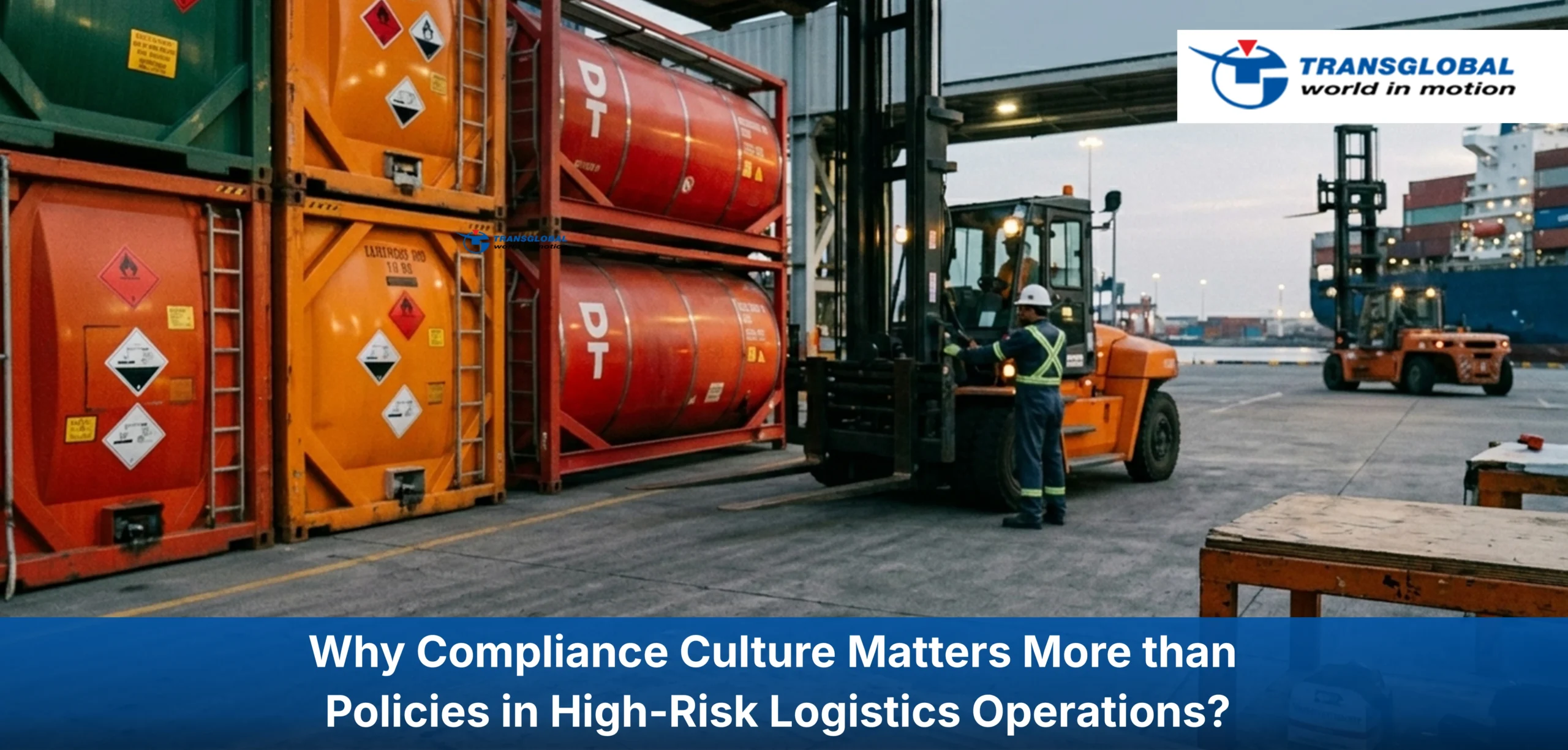
A company can have every compliance certificate on the wall, every checklist completed, and every policy documented perfectly, yet still fail operationally when pressure hits the supply chain.
That is the uncomfortable reality many industries are beginning to recognize.
In highly regulated logistics environments, compliance is no longer just about passing audits or satisfying regulators. The real challenge is ensuring that safety, accountability, and operational responsibility continue even when nobody is monitoring the process directly.
Because in logistics, one shortcut can move far beyond paperwork.
It can delay cargo, compromise safety, damage reputations, trigger regulatory penalties, or, in extreme situations, put lives at risk.
This is especially true in industries handling dangerous goods, hazardous cargo, explosives, military logistics, defence equipment, armaments transport, and other high-risk supply chain operations where compliance failures carry serious operational consequences.
Today, the most resilient logistics organizations are no longer relying on enforcement alone. They are building something much stronger: a culture of compliance.
Why is Compliance Becoming More Important Across Global Logistics?
The global logistics environment has become significantly more complex over the last few years.
Supply chains are now operating under increasing pressure from:
- Stricter international regulations
- Higher security expectations
- Customs scrutiny
- Dangerous goods compliance requirements
- ESG and governance demands
- Digital audit trails
- Cross-border trade enforcement
- Operational risk exposure
At the same time, logistics businesses are moving more regulated and high-risk cargo across global trade routes than ever before.
This includes:
- Dangerous goods
- Hazardous materials
- Explosives logistics
- Military cargo
- Defence equipment
- Industrial chemicals
- Specialized project cargo
As operational complexity increases, regulators and customers expect more than procedural compliance. They expect businesses to demonstrate operational accountability and risk awareness at every level of the organization.
That shift is changing how compliance is viewed across modern logistics operations.
Why Compliance by Enforcement Alone Often Fails?
Many organizations still approach compliance as a policing exercise.
Rules are documented. Procedures are issued. Audits are conducted. Staff are expected to follow processes because policies say so.
But operational reality is often very different.
Under pressure from deadlines, operational targets, staffing shortages, customer demands, and cargo urgency, people may begin taking shortcuts if they do not fully understand the importance of the rules.
This is where compliance systems often fail.
A policy may exist on paper, but without cultural alignment, employees may see compliance as an obstacle rather than an operational responsibility.
In logistics environments involving dangerous goods, explosives, or defence cargo, that mindset creates serious operational risk.
Because in highly regulated logistics, small shortcuts can create major consequences.
What a Strong Compliance Culture Actually Looks Like?
A true compliance culture goes beyond formal procedures.
It means employees understand that compliance is directly connected to safety, operational continuity, customer trust, and business integrity.
In organizations with strong compliance cultures, people do the right thing even when nobody is watching.
That includes:
- Reporting operational risks early
- Following dangerous goods procedures carefully
- Verifying shipment documentation accurately
- Escalating safety concerns immediately
- Maintaining operational discipline under pressure
- Understanding the impact of shortcuts
This mindset creates consistency across logistics operations, even in fast-moving or high-pressure environments.
Most importantly, it transforms compliance from a mandatory task into a shared operational responsibility.
Why High-Risk Logistics Require a Stronger Compliance Culture?
Certain sectors operate with significantly higher compliance exposure than standard freight operations.
This includes:
- Explosives logistics
- Dangerous goods transportation
- Hazardous materials handling
- Military logistics
- Defence cargo movement
- Armaments transport
- Specialized industrial project cargo
These operations often involve strict regulatory frameworks, security protocols, route restrictions, permits, and multi-agency coordination.
A single operational failure can lead to:
- Cargo detention
- Regulatory penalties
- Safety incidents
- Security breaches
- Operational shutdowns
- Reputational damage
In these environments, compliance cannot rely only on management oversight or audits. It must become part of daily operational behavior.
That is why culture becomes just as important as process.
Why does Leadership Plays a Critical Role in Compliance Culture?
Compliance culture is rarely built through documentation alone.
It is built through leadership behavior.
Employees observe operational priorities closely. If leadership treats compliance as secondary to speed or cost reduction, that mindset eventually spreads across the organization.
Strong compliance cultures emerge when leadership consistently reinforces:
- Accountability
- Operational discipline
- Ethical decision-making
- Safety-first thinking
- Transparent communication
- Long-term responsibility over short-term convenience
This creates an environment where employees understand that compliance is not optional or situational.
It becomes part of how the business operates every day.
Why Training and Communication Matter More than Ever?
Modern logistics operations evolve constantly.
Regulations change. Dangerous goods classifications are updated. Customs systems become more digital. Security expectations increase.
Without continuous training and communication, even experienced logistics teams can fall behind compliance requirements.
Businesses operating in regulated sectors now need ongoing operational education covering:
- Dangerous goods regulations
- Customs compliance
- Cargo handling procedures
- Documentation accuracy
- Security protocols
- Incident reporting
- Cybersecurity awareness
Training is no longer simply a compliance exercise. It has become an operational risk reduction strategy.
How Technology is Reshaping Compliance Management?
Technology is also changing how compliance is monitored across logistics operations.
Digital systems now provide:
- Real-time cargo visibility
- Electronic audit trails
- Automated compliance verification
- Shipment monitoring
- Documentation tracking
- Risk reporting tools
While technology improves oversight, it cannot replace operational mindset and accountability.
Even the best systems still depend on people making responsible decisions consistently.
That is why culture remains critical.
Transglobal’s Role Goes Beyond Moving Cargo
At Transglobal, compliance is viewed as far more than a regulatory requirement.
Operating across sea freight, air freight, and road freight environments, particularly in dangerous goods, hazardous materials, explosives logistics, military cargo, defence equipment, and armaments transport, requires strong operational discipline at every stage of the supply chain.
The focus is not only on meeting regulations but on building operational consistency, accountability, and proactive risk management throughout logistics operations.
This includes:
- Compliance-driven shipment planning
- Dangerous goods verification processes
- Operational risk awareness
- Secure cargo handling procedures
- Documentation accuracy controls
- Continuous operational oversight
The objective is simple: ensure cargo moves safely, compliantly, and responsibly while protecting customers, operations, and long-term business integrity.
Because in highly regulated logistics, compliance is not just about passing inspections. It is about building trust.
Why Businesses Should Evaluate Compliance Culture Before Choosing a Logistics Partner?
Many businesses evaluate freight providers based mainly on rates, transit times, or transport capacity.
But for regulated cargo and high-risk operations, compliance culture should be one of the most important evaluation factors.
A logistics partner with a strong compliance culture helps businesses reduce:
- Operational disruption
- Customs delays
- Safety incidents
- Regulatory exposure
- Cargo handling risk
- Reputational damage
In today’s global logistics environment, this creates long-term operational value far beyond freight pricing alone.
Conclusion
Policies, audits, certifications, and procedures remain essential in modern logistics.
But sustainable compliance happens when accountability becomes part of operational behavior, not just documentation.
As global logistics becomes more regulated, digital, and high-risk, businesses need logistics partners who understand that compliance is ultimately driven by culture.
Because in dangerous goods, hazardous cargo, explosives logistics, military operations, and defence supply chains, operational discipline cannot rely on enforcement alone.
It must become part of the organization itself.
If your business requires secure, compliant, and operationally disciplined logistics support across sea freight, air freight, road freight, dangerous goods, defence cargo, or specialized project logistics, partner with a freight forwarder that understands compliance beyond policies. Contact our team that builds operational trust through accountability, consistency, and real-world expertise.
Frequently Asked Questions
What is a compliance culture in logistics?
A compliance culture means employees consistently follow safety, regulatory, and operational standards as part of daily decision-making, not just during audits.
Why is compliance important in dangerous goods and defence logistics?
These sectors involve strict regulations, high-risk cargo, and operational safety requirements where non-compliance can lead to delays, penalties, or serious incidents.
How can logistics companies improve compliance culture?
Through leadership commitment, continuous training, operational accountability, communication, and proactive risk management practices.

Comments