

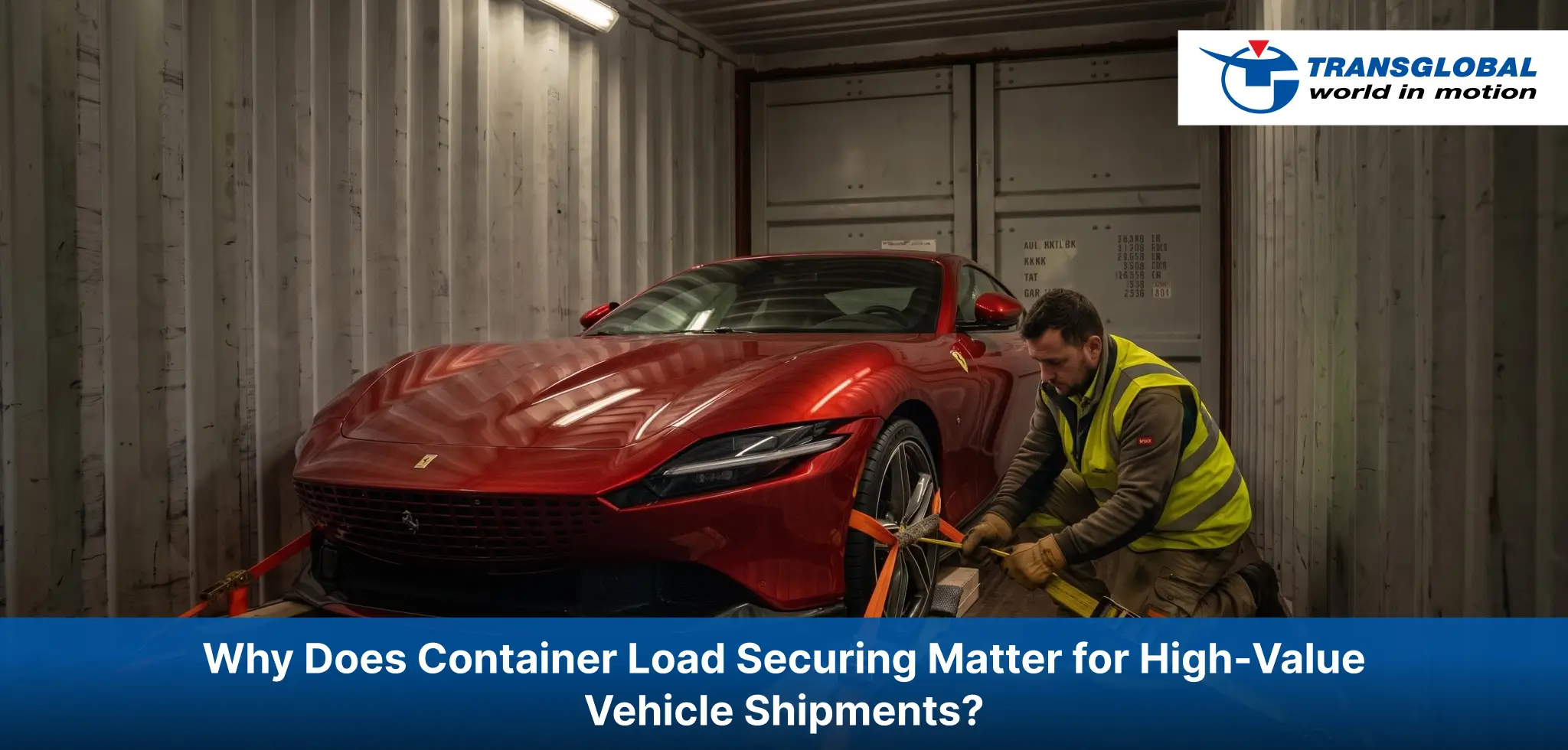
A high-value vehicle may look protected once it is placed inside a container.
The doors are closed. The seal is fitted. The shipping plan is already moving forward.
But what happens inside the container during transport matters just as much as what happens outside it.
A vehicle may travel by road, wait at a terminal, move through port handling, load onto a vessel, cross international waters, and continue inland after arrival.
During that journey, the container may face vibration, braking force, lifting movement, vessel motion, and handling pressure.
If the vehicle is not secured correctly, even a small movement inside the container can affect tyres, suspension, bodywork, underbody parts, mirrors, sensors, trims, or specialist fittings.
For high-value vehicle shipments, container load securing is not only about keeping the vehicle in place. It is about protecting the asset, supporting insurance records, reducing handling risk, and giving every party confidence that the vehicle has been prepared for international movement.
Why High-Value Vehicles Need More than Basic Container Loading?
A high-value vehicle cannot be loaded into a container like ordinary cargo.
It may have low ground clearance, sensitive paintwork, custom body panels, exposed underbody parts, lightweight materials, or specialist accessories.
Some vehicles are designed for display, racing, testing, collection, defence use, mining support, or limited production. Others may be prototypes, chassis units, luxury cars, classic vehicles, or modified commercial units.
Each vehicle has its own handling risk.
Before loading begins, the logistics team should understand the vehicle’s dimensions, weight, clearance, running condition, tyre position, lashing points, and body sensitivity.
The loading method should be chosen around the vehicle, not around convenience.
A ramp angle that works for one vehicle may not suit another. A tie-down point that looks suitable may not be approved for securing. A non-running vehicle may need winching or lifting support instead of being pushed into position.
For high-value vehicle movements, early shipment coordination helps connect the condition record, loading plan, carrier requirements, and final delivery process.
When the loading plan reflects the vehicle’s actual condition, the shipment begins with better control.
How Load Movement can Affect the Vehicle During Transit?
A container does not remain still during transport.
It moves through several stages before reaching the consignee.
The container may be lifted by crane, moved by truck, placed at a terminal, loaded onto a vessel, exposed to sea motion, discharged at destination, and moved again before final delivery.
Inside the container, the vehicle must remain stable through all of this movement.
If the securing arrangement is weak, uneven, or placed at the wrong point, the vehicle may shift. That movement can place pressure on tyres, suspension, steering components, bumpers, side panels, mirrors, or specialist fittings.
The risk is higher when the vehicle has low clearance, soft suspension, unusual weight distribution, or delicate bodywork.
Load securing should control forward, backward, sideways, and vertical movement.
This may involve wheel chocks, lashings, straps, bracing, timber supports, tyre protection, and approved anchor points. The method should be suitable for the vehicle and the container.
For vehicle exports moving by vessel, sea freight planning should consider the loading method, container type, port handling, securing materials, and destination release process.
Good securing protects the vehicle even when the container itself is being handled, moved, and transported.
Why the Right Securing Materials and Lashing Points Matter?
The materials used for securing are just as important as the loading plan.
A high-value vehicle should not rely on improvised restraint.
The team should use suitable straps, wheel chocks, braces, soft protection, timber supports, and container anchor points that match the vehicle’s weight and movement risk.
The lashing points must be chosen carefully.
Securing should not damage suspension parts, brake lines, underbody panels, carbon fibre components, bumpers, wheels, or bodywork. Some vehicles have approved tie-down points, while others require a more cautious securing method.
The vehicle should also be protected from direct contact with sharp edges, hard surfaces, or unsuitable restraint materials.
Tyre straps may be useful for some vehicles. Wheel chocks may support position control. Timber blocking or bracing may be required when the vehicle cannot be secured through standard points.
The goal is not to over-tighten the vehicle.
The goal is to hold it correctly.
Too much pressure in the wrong area can create its own handling concern. The securing method should keep the vehicle stable while respecting how the vehicle is built.
For containerised vehicles, the securing method should also support shipping container documents, especially where container number, seal number, vehicle condition, and loading records need to match.
How Photos and Handover Records Support Secure Vehicle Shipping?
Load securing should be recorded, not only completed.
Photos are important before, during, and after loading.
They show the vehicle’s condition, container condition, loading position, tyre placement, securing materials, lashing points, seal number, and final container condition before closing.
This record helps the cargo owner, shipper, transporter, carrier, insurer, and consignee understand how the vehicle was prepared.
A proper handover record may include:
- Vehicle condition photos,
- VIN or chassis number,
- Odometer reading,
- Fuel level,
- Battery status,
- Key handover details,
- Accessories list,
- Lashing photos,
- Container number, and
- Seal number.
These details support accountability across the full journey.
They also help if the vehicle passes through several service providers before reaching the final receiver.
For high-value shipments, sea freight documents should connect with the physical loading record so that the paperwork, container details, and vehicle condition record all describe the same shipment.
A secured vehicle with clear records gives the consignee a stronger basis for inspection at destination.
Why Final Delivery Planning Starts Before the Container Moves?
Load securing should also consider what happens at destination.
The vehicle will eventually need to be unpacked, inspected, and handed over.
If the receiving site is not ready, the vehicle may remain inside the container longer than planned. If the unloading equipment is unsuitable, the risk increases during the final stage.
Destination planning should confirm access, ramps, lifting equipment, trained personnel, inspection space, and authorised receivers.
The team should also know whether the vehicle can be driven, winched, pushed, or lifted.
For containerised high-value vehicles, unpacking must be controlled carefully. Lashings should be removed in the correct order. The vehicle should be checked before movement. The condition report should be compared with the loading photos.
For inland delivery after port release, road freight may need to consider enclosed transport, low-clearance loading, secure parking, site access, and handover timing.
A vehicle is not fully protected until it is safely received, inspected, and accepted at destination.
Conclusion: Strong Load Securing Protects the Vehicle Throughout the Journey
Container load securing plays a major role in high-value vehicle shipping.
It protects the vehicle while the container moves through road transport, port handling, vessel movement, destination release, and final delivery.
The vehicle must be loaded with the right method, secured at suitable points, supported with the right materials, recorded with clear photos, and delivered to a prepared receiving site.
For luxury cars, classic vehicles, prototypes, racing units, chassis, specialist commercial vehicles, and sensitive project vehicles, this preparation protects more than the asset.
It protects the shipment record, insurance position, customer confidence, and final delivery experience.
Preparing a high-value vehicle for containerised transport? Contact us before loading to review the vehicle details, securing method, documents, and delivery requirements.
Move high-value vehicles with experienced freight forwarders who understand vehicle securing, container loading, international shipping, and controlled handover planning.
Frequently Asked Questions
Why is load securing important for vehicle shipments?
It helps keep the vehicle stable inside the container during road movement, port handling, vessel transport, and final delivery.
What should be recorded during vehicle loading?
Condition photos, VIN or chassis number, lashing points, container number, seal number, keys, accessories, and loading position should be recorded.
How should high-value vehicles be secured inside containers?
They should be secured using suitable straps, chocks, braces, protection materials, and approved points based on the vehicle’s weight, clearance, and condition.

Comments