

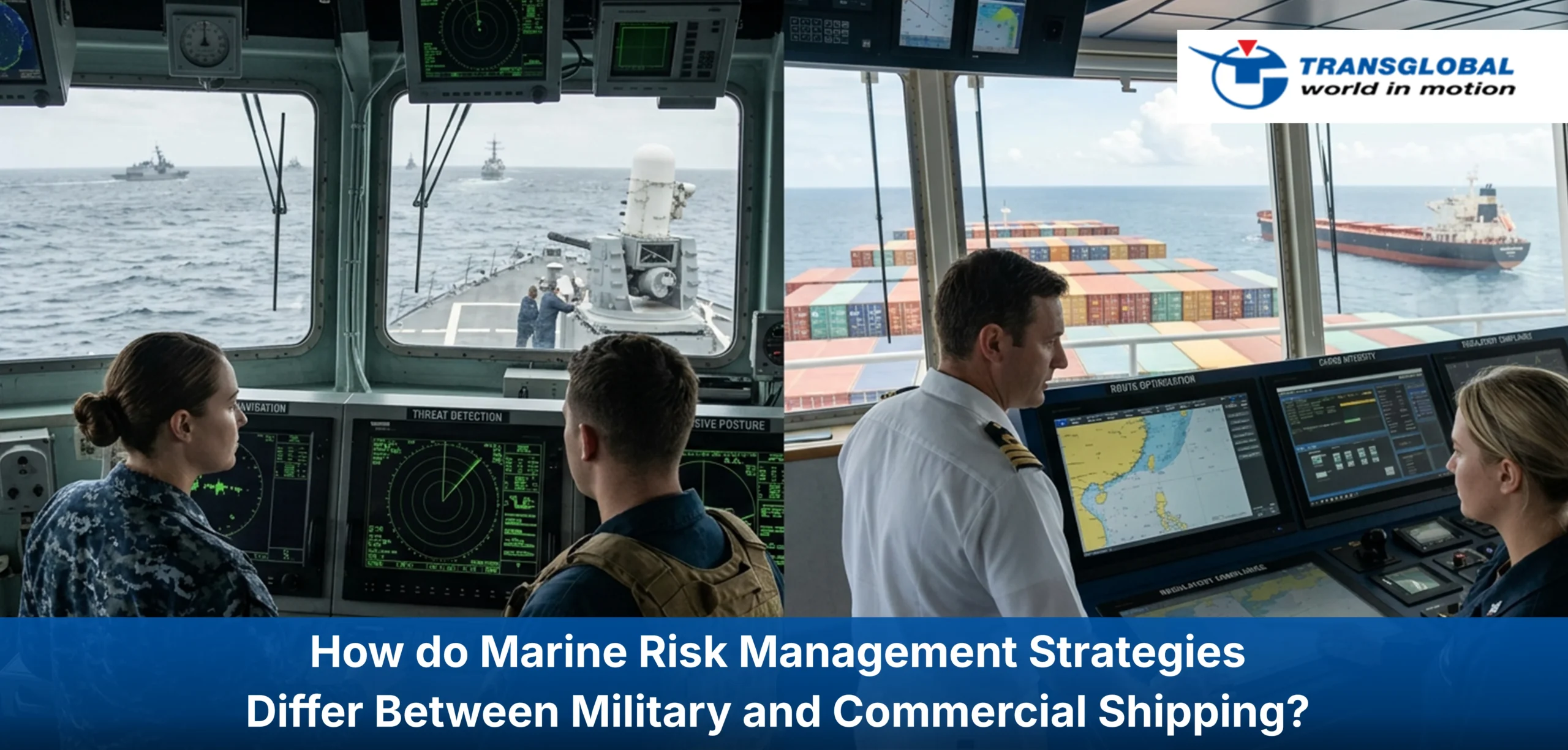
Two vessels may sail through the same waters, face the same weather, and navigate the same ports, yet the way risk is managed on each can be completely different.
That’s the reality when comparing military and commercial shipping.
While both sectors operate in high-risk maritime environments, their priorities, protocols, and decision-making frameworks are fundamentally different. For logistics professionals, especially those handling defence cargo, hazardous materials, or high-value shipments, understanding these differences is critical.
Because when risk is misunderstood, the consequences are not just delays, they can be operational, financial, or even strategic.
Why Marine Risk Management Matters More Today?
Global shipping is no longer just about efficiency. It is about resilience.
From geopolitical tensions and piracy risks to port congestion and regulatory scrutiny, today’s maritime environment demands structured risk management. However, the approach to managing these risks depends heavily on the nature of the cargo and the purpose of the shipment.
Military shipping focuses on mission success and national security. Commercial shipping focuses on cost efficiency, compliance, and delivery performance.
This difference shapes how risk is identified, evaluated, and managed.
What Defines Risk in Military vs Commercial Shipping?
In military shipping, risk is often linked to security threats, operational secrecy, and mission-critical timelines. The cargo may include defence equipment, armaments, or sensitive materials that require strict confidentiality and protection.
In commercial shipping, risk is more aligned with financial impact. This includes delays, damage, compliance issues, and cost overruns. While safety remains important, the focus is on maintaining operational efficiency and minimizing business disruption.
This difference in risk perception drives completely different strategies.
How Risk Assessment Approaches Differ?
Military shipping follows a highly structured and intelligence-driven risk assessment model. Before a vessel moves, risks are evaluated based on real-time intelligence, geopolitical conditions, and threat analysis. Routes are selected not just for efficiency, but for security.
Decisions are often centralized, with strict protocols and limited flexibility once a plan is in place.
In contrast, commercial shipping uses a more dynamic and cost-based approach. Risk assessments are influenced by factors such as freight rates, transit times, port efficiency, and regulatory requirements. Routes may be adjusted frequently based on market conditions and operational convenience.
This flexibility allows commercial operators to optimize costs, but it also exposes them to higher variability.
How do Security Measures Vary Across Both Sectors?
Security is one of the most significant differences between military and commercial shipping.
Military vessels and shipments operate under strict security protocols. This includes armed escorts, restricted access zones, classified routing, and continuous monitoring. The objective is to eliminate risk as much as possible.
Commercial shipping, on the other hand, balances security with cost. While measures such as vessel tracking, insurance coverage, and port security checks are in place, they are designed to manage risk rather than eliminate it entirely.
For high-risk commercial cargo such as dangerous goods, explosives, or hazardous materials, additional security layers are implemented. However, these still differ from the level of control seen in military operations.
How Compliance and Regulations Differ?
Military shipping often operates under government-controlled frameworks, with specific exemptions or dedicated regulations for defence logistics. Documentation, approvals, and compliance processes are highly controlled and may involve classified elements.
Commercial shipping must comply with international regulations such as IMO standards, customs requirements, and trade laws. Compliance is transparent, standardized, and subject to regular audits.
For businesses handling specialized cargo like DG goods, hazardous materials, or armaments, commercial compliance can become just as complex as military protocols, requiring deep expertise and careful coordination.
How Operational Flexibility Impacts Risk Management?
Military logistics prioritizes control over flexibility. Once a plan is executed, changes are minimal and only made under strict authority. This ensures consistency and security but limits adaptability.
Commercial logistics, however, relies on flexibility. Routes can be changed, carriers switched, and schedules adjusted to respond to disruptions. This adaptability is essential in managing cost and efficiency, but requires constant monitoring.
In volatile environments, this difference becomes critical. Military operations remain stable but rigid, while commercial operations are flexible but exposed to fluctuation.
Transglobal’s Role Goes Beyond Moving Cargo
Bridging the gap between military-level precision and commercial efficiency requires a specialized approach.
At Transglobal, marine risk management is built on understanding both worlds. Whether handling sea freight, air freight, or road freight, the focus is always on aligning risk strategies with the nature of the cargo.
For standard commercial shipments, the priority is efficiency, compliance, and cost control. But for high-risk cargo such as explosives, hazardous materials, dangerous goods, and project cargo, the approach becomes more structured and security-focused.
With experience in military logistics, defence shipments, and armaments transport, Transglobal applies enhanced risk management protocols, including detailed route planning, compliance alignment, and coordination with authorities.
Every shipment is assessed not just for operational feasibility, but for risk exposure. This ensures that cargo moves safely, securely, and without unnecessary disruption.
Transparency and real-time communication further strengthen this approach, allowing clients to stay informed and make confident decisions.
Why Understanding these Differences Matters for Businesses?
For businesses operating in global trade, especially those dealing with sensitive or high-value cargo, understanding marine risk strategies is more than theoretical, it is practical.
Choosing the wrong approach can lead to underestimating risks or overpaying for unnecessary controls.
Companies that align their logistics strategy with the right level of risk management are better positioned to:
- Protect high-value shipments
- Maintain compliance across regions
- Avoid delays and operational disruptions
- Optimize cost without compromising safety
In today’s environment, risk management is not just about avoiding problems, it is about enabling consistent performance.
Conclusion
Military and commercial shipping operate under the same oceans, but their approach to risk could not be more different.
One focuses on eliminating risk through control and security. The other manages risk through flexibility and efficiency.
For businesses navigating global logistics, the challenge is finding the right balance, ensuring safety and compliance without losing operational agility.
That is where the right logistics partner makes all the difference. If your shipments involve high-risk, sensitive, or specialized cargo, partner with a trusted freight forwarder who understands both military-grade precision and commercial efficiency.
Contact us and choose a team that can manage risk strategically while keeping your cargo moving smoothly across global trade routes.
Frequently Asked Questions
What is the main difference between military and commercial shipping risk management?
Military focuses on security and mission success, while commercial shipping focuses on cost, efficiency, and compliance.
Do commercial shipments require high-level security like military cargo?
Only high-risk cargo, such as explosives or hazardous materials, requires enhanced security measures in commercial shipping.
Why is risk management important in marine logistics?
It helps prevent delays, ensures safety, reduces costs, and protects cargo throughout the shipping process.

Comments