

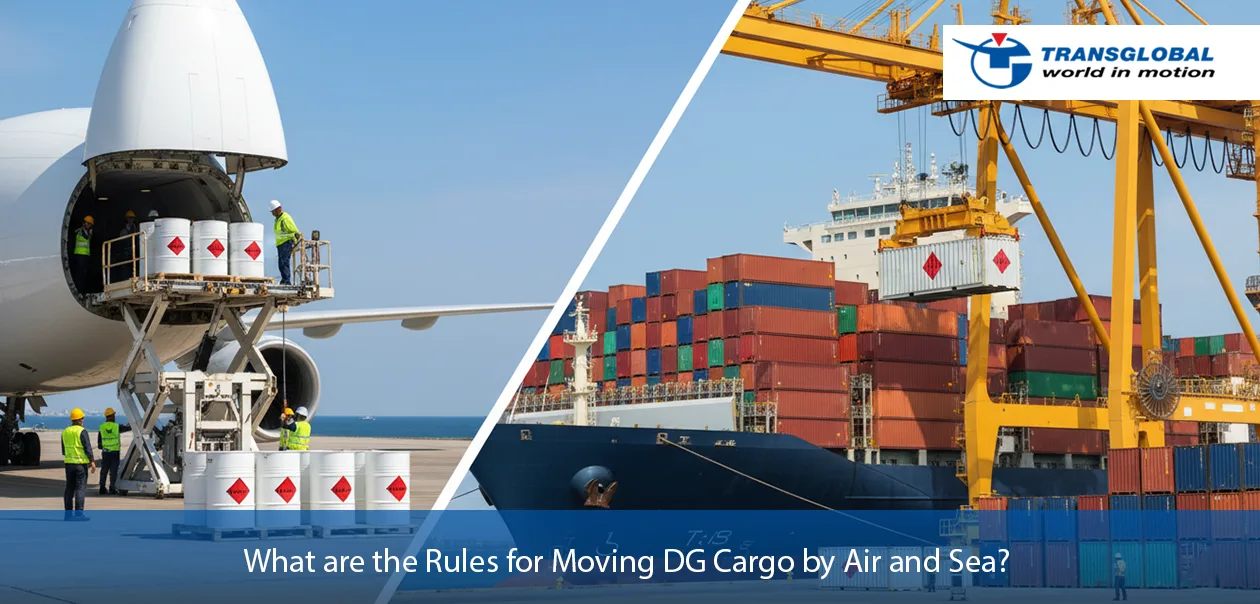
Transporting dangerous goods (DG) is not just about moving cargo, it’s about safeguarding people, property, and the environment. Whether you’re shipping lithium batteries, flammable liquids, explosives, or chemicals, there are strict international rules and regional regulations you must follow. This guide covers everything you need to know about shipping DG cargo by air and sea, from classification and packaging to documentation and compliance.
At Transglobal Cargo, we specialize in DG logistics. Our team understands the complexities and risks involved and ensures every movement is compliant, safe, and smooth.
Why Dangerous Goods Require Specialized Transport?
Dangerous goods are substances or materials that can pose a risk to health, safety, property, or the environment during transport. These goods include:
- Flammable liquids (like gasoline)
- Explosives (like ammunition)
- Corrosives (like battery acid)
- Gases (like propane)
- Oxidizers and radioactive materials
Transporting DG is not the same as regular cargo. Special handling, documentation, packaging, and regulatory approval are required. One small error, like incorrect labeling or improper stowage, can lead to severe accidents or fines.
Understanding the Nine Classes of Dangerous Goods
All DG cargo is classified into nine categories as per international standards (IATA for air, IMDG for sea):
- Explosives (Class 1): Fireworks, ammunition
- Gases (Class 2): Propane, oxygen
- Flammable Liquids (Class 3): Paint, fuel
- Flammable Solids (Class 4): Matches, magnesium
- Oxidizing Substances & Organic Peroxides (Class 5): Hydrogen peroxide
- Toxic & Infectious Substances (Class 6): Medical waste, pesticides
- Radioactive Material (Class 7): Uranium, medical isotopes
- Corrosives (Class 8): Acids, batteries
- Miscellaneous Dangerous Goods (Class 9): Lithium batteries, dry ice
Each class has its own handling, labeling, and transport guidelines.
Rules Around Packaging and Labeling
Proper packaging is a non-negotiable part of DG compliance. Your packaging must:
- Be tested and certified for your specific DG class
- Withstand rough handling and environmental conditions
- Prevent leaks or reactions
For example:
- Inner containers must be tightly sealed.
- Cushioning materials must be non-reactive.
- Labels must display hazard symbols, UN number, handling instructions, and orientation arrows.
For air cargo, IATA regulations are more stringent due to in-flight risk. Sea freight allows larger volumes but still requires IMDG-approved packaging.
Documentation You Must Provide
When shipping DG cargo, the paperwork must be 100% accurate. You’ll typically need:
- Shipper’s Declaration for Dangerous Goods (IATA/IMDG format)
- Material Safety Data Sheet (MSDS)
- Commercial Invoice and Packing List
- Transport Emergency Card (TREM Card) — for Europe
- Permits or approvals (such as NCACC for South Africa)
Any mistakes in documentation can lead to cargo being stopped, delayed, or fined.
Stowage, Segregation, and Safety Measures
Onboard a vessel or aircraft, DG cargo must be:
- Stored away from crew areas or ignition sources
- Segregated from incompatible goods (e.g., oxidizers and flammables must not be stored together)
- Secured to prevent movement, spillage, or leaks
- Accompanied by emergency response tools, like spill kits and fire extinguishers
Shipping lines and airlines may apply their own safety surcharges or require route-specific approvals, especially when transiting volatile regions.
What to Do in Case of Emergencies?
Transporters must be prepared for potential emergencies like leaks, fires, or explosions.
Best practices include:
- Emergency contact numbers on all documentation
- Training drivers and warehouse staff on first response protocols
- Carrying fire suppression equipment onboard
- Keeping spill kits and PPE accessible
We, the Transglobal Cargo, offer 24/7 control room monitoring and Webfleet TMS to track DG cargo movements in real time, essential for time-critical or high-risk shipments.
Regional Compliance Considerations
When shipping across Africa, the Middle East, or Europe, you’ll need to meet not only international rules (like IATA/IMDG), but also regional regulations:
South Africa: Must comply with the Explosives Act, Draft Explosives Regulations 2024, and NCACC approvals for military-grade cargo.
European Union: Follows ADR (road) and RID (rail) standards alongside IMDG (sea) and IATA (air).
Gulf Countries: Require DG documentation in Arabic and often request extra customs clearance steps.
East Africa: Local port restrictions may apply, and DG cargo may only be permitted at designated terminals.
DG Cargo by Sea: Safer in Bulk, Governed by the IMDG Code
Shipping dangerous goods by sea is ideal for high-volume or heavy cargo such as chemicals, batteries, and explosives. The International Maritime Dangerous Goods (IMDG) Code outlines the classification, labeling, stowage, and documentation rules for such shipments.
Ports have strict handling protocols, and DG containers must be segregated to avoid chemical reactions. It’s critical to pre-alert carriers, provide Material Safety Data Sheets (MSDS), and ensure packaging meets seaworthiness standards.
DG Cargo by Air: Speed Comes with Stricter Controls
Air transport is preferred for time-sensitive DG cargo, like medical samples or lithium batteries, but it’s governed by the International Air Transport Association (IATA) regulations, which are far stricter than sea freight.
Airlines have quantity limits, packaging standards, and require a valid Dangerous Goods Declaration (DGD). Only trained personnel should handle DG air shipments, and pre-approval from the airline is often mandatory.
Why Partnering with Transglobal Cargo Helps You Stay Compliant?
With decades of DG cargo handling experience, Transglobal Cargo ensures your shipments are fully compliant, secured, and delivered without delays.
Here’s what we offer:
- End-to-end DG compliance support (air and sea)
- NCACC and CIE-approved transporters for explosives and high-risk cargo
- White-glove and climate-controlled options for sensitive goods
- Real-time shipment visibility via our TMS platform
- Smooth coordination across African borders and into MENA & EU
Conclusion: Let’s Move Your DG Cargo, the Right Way
Transporting dangerous goods is serious business, and you need a partner who treats it that way. With Transglobal Cargo, you get more than freight movement, you get peace of mind.
Looking for the best freight forwarder to move your DG cargo across Africa, the Middle East, or Europe? Contact Transglobal Cargo today.
Frequently Asked Questions
Can all dangerous goods be shipped by air and sea?
No. Some highly reactive or toxic items are prohibited from air freight and require special approval or restricted routes for sea freight.
What training does my staff need for handling DG cargo?
Personnel involved in packing, labeling, or transporting DG must complete certified IATA/IMDG DG training courses and refreshers.
Do I need different permits for different countries?
Yes. Each country has its own import/export laws and may require additional permits, especially for explosives or dual-use items.

Comments