

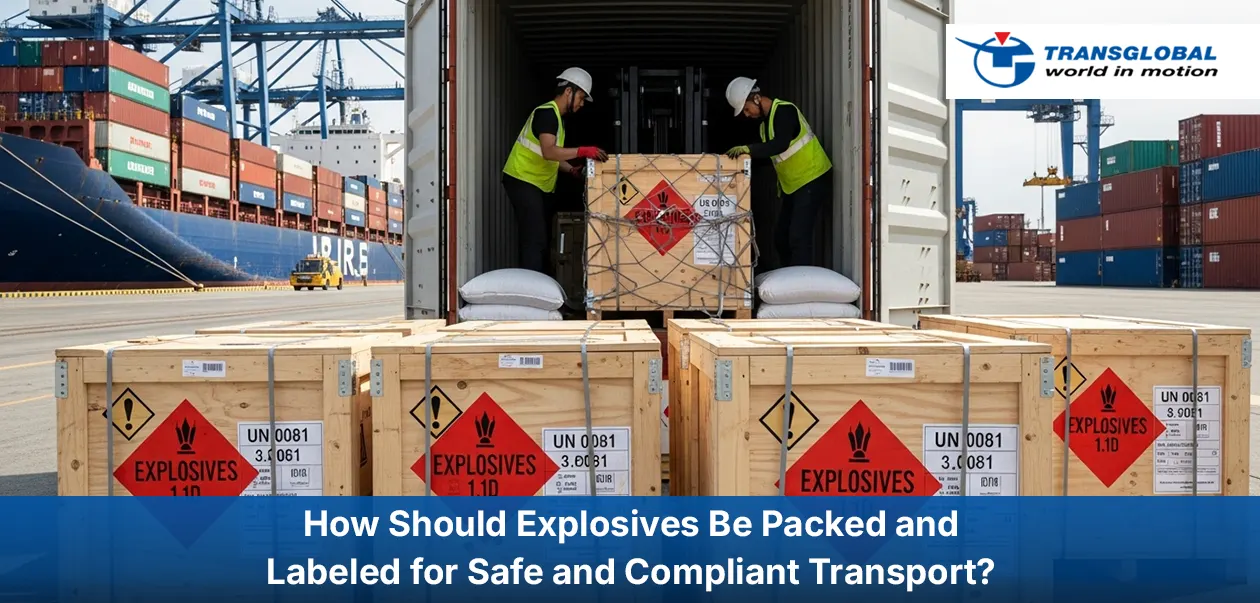
A shipment of explosives does not allow room for guesswork. Every box, label, and document must be correct, not just for compliance, but for safety.
Unlike general cargo, explosives fall under the highest level of regulatory scrutiny in global logistics. From mining operations to defence shipments, these materials must move through a tightly controlled supply chain where packaging, labeling, and documentation are non-negotiable.
Yet many disruptions in dangerous goods logistics do not happen because of major incidents. They happen because of small oversights, incorrect labeling, weak packaging, or missing documentation.
In today’s regulated logistics environment, getting these fundamentals right is critical.
Why Proper Packing and Labeling of Explosives Matters?
Explosives are classified under Class 1 Dangerous Goods and are governed by strict international regulations such as IMDG (sea freight), IATA (air freight), and ADR (road transport in certain regions).
These regulations are designed to:
- Prevent accidental ignition or reaction
- Ensure safe handling during transport
- Provide a clear identification of risk
- Enable emergency response teams to act quickly
Improper packing or labeling can lead to:
- Shipment rejection at ports or terminals
- Regulatory penalties and compliance violations
- Increased insurance risks
- Safety hazards during handling and transit
For logistics professionals, this is not just about compliance, it is about protecting lives, cargo, and operations.
How Explosives Should Be Packed for Transport?
Packing explosives requires more than just placing them in a container. It involves using certified packaging that meets international safety standards.
Explosives must be packed in approved, durable containers that are specifically designed for hazardous materials. These containers are tested to withstand pressure, impact, and environmental conditions.
Key packing requirements include:
- Use of UN-certified packaging suitable for Class 1 materials
- Strong outer packaging to prevent physical damage
- Internal cushioning to avoid movement during transit
- Moisture-resistant materials to protect against environmental exposure
- Secure sealing to prevent tampering or leakage
Moisture protection is particularly important. Even slight exposure to humidity can affect the stability of certain explosive materials.
Proper packing ensures that the cargo remains stable throughout its journey, whether it is transported by road, sea, or air.
The Importance of Correct Hazard Labeling
Once explosives are packed, the next critical step is labeling.
Hazard labels are not just regulatory requirements, they are communication tools. They inform handlers, transport operators, and emergency responders about the nature of the cargo.
Each package must display:
- The correct Class 1 hazard label
- Division and compatibility group markings
- UN number identifying the specific substance
- Proper shipping name
- Handling instructions were required
These labels must be clearly visible, durable, and placed on the outer packaging.
Incorrect or missing labels can result in immediate shipment rejection or detention during inspection. More importantly, it increases the risk of mishandling during transit.
Documentation: The Backbone of Dangerous Goods Transport
Even when packaging and labeling are correct, a shipment cannot move without proper documentation.
Explosives shipments require detailed paperwork to ensure regulatory compliance and safe handling.
Essential documents include:
- Safety Data Sheets (SDS) outlining material properties and hazards
- Dangerous Goods Declaration confirming compliance with regulations
- Transport documents with accurate cargo descriptions
- Permits or approvals where required (especially for defence or controlled goods)
These documents must match the physical shipment exactly. Any mismatch between documentation and cargo can trigger inspections, delays, or penalties.
Accurate documentation ensures that all stakeholders, from customs authorities to transport operators, have the information they need to handle the shipment safely.
The Role of Compliance and Certifications
Handling explosives is not something every logistics provider can do. It requires specialized licensing, trained personnel, and strict adherence to regulations.
Certified operators typically follow:
- IMDG Code for sea transport
- IATA Dangerous Goods Regulations for air shipments
- National hazardous goods transport laws
- Defence and security regulations where applicable
Compliance is not a one-time requirement. It must be maintained through continuous training, audits, and operational discipline.
Working with a certified and compliant logistics partner ensures that your shipment meets all regulatory standards from origin to destination.
Common Mistakes that Lead to Shipment Delays
In real-world logistics operations, many issues arise from simple but critical mistakes.
Common errors include:
- Using non-certified packaging
- Incorrect hazard labels or missing markings
- Incomplete or inaccurate documentation
- Poor moisture protection
- Mismatch between declared and actual cargo
These mistakes often result in shipment delays, additional costs, or rejection at ports and terminals.
Avoiding them requires attention to detail and experienced handling.
The Role of Warehousing in Explosives Logistics
Warehousing plays an important role in managing dangerous goods before and after transport.
Explosives must be stored in facilities that are compliant with safety and regulatory standards. This includes proper segregation, controlled environments, and secure handling processes.
Modern warehousing solutions support explosives logistics through:
- Accurate picking and packing processes
- Controlled storage conditions
- Safe unloading and handling of containers
- Real-time tracking of cargo movement
- Full visibility of inventory and shipment status
Having full cargo visibility ensures that every movement is tracked and controlled, reducing the risk of errors and improving operational efficiency.
Transglobal: Your Trusted Freight Partner for Explosives and Hazardous Cargo
At Transglobal, we understand that handling explosives requires more than logistics expertise, it requires precision, compliance, and accountability.
We are a trusted freight partner specializing in high-risk and regulated cargo, including:
- Explosives transport and Class 1 hazardous cargo
- Defence and military logistics
- Industrial explosives and mining shipments
- Project and bulk cargo handling
Our operations are built around:
- Licensed and compliant transport solutions
- Certified packaging and handling standards
- Accurate documentation and regulatory alignment
- 24/7 operational capability
- Secure and fully insured cargo movement
From packing and labeling to transport and delivery, we ensure that every step is handled professionally and in full compliance with global regulations.
Conclusion
Transporting explosives is one of the most sensitive areas in logistics. It requires strict adherence to packaging standards, accurate labeling, and complete documentation.
Every detail matters.
When done correctly, these measures ensure safety, compliance, and smooth cargo movement. When overlooked, they can lead to serious operational and regulatory consequences.
Working with a trusted freight forwarder ensures that your explosives shipments are handled with the highest level of care and expertise.
If you need reliable support for dangerous goods transport, contact us today. Our team is ready to help you move high-risk cargo safely and compliantly across global supply chains.
Frequently Asked Questions
What type of packaging is required for explosives?
Explosives must be packed in UN-certified, durable containers with proper cushioning and moisture protection to ensure stability during transport.
Why is hazard labeling important for explosives shipments?
Hazard labels provide critical information about the cargo, helping ensure safe handling and compliance with international regulations.
What documents are required for transporting explosives?
Key documents include Safety Data Sheets (SDS), Dangerous Goods Declarations, transport documents, and any required permits or approvals.


Comments