

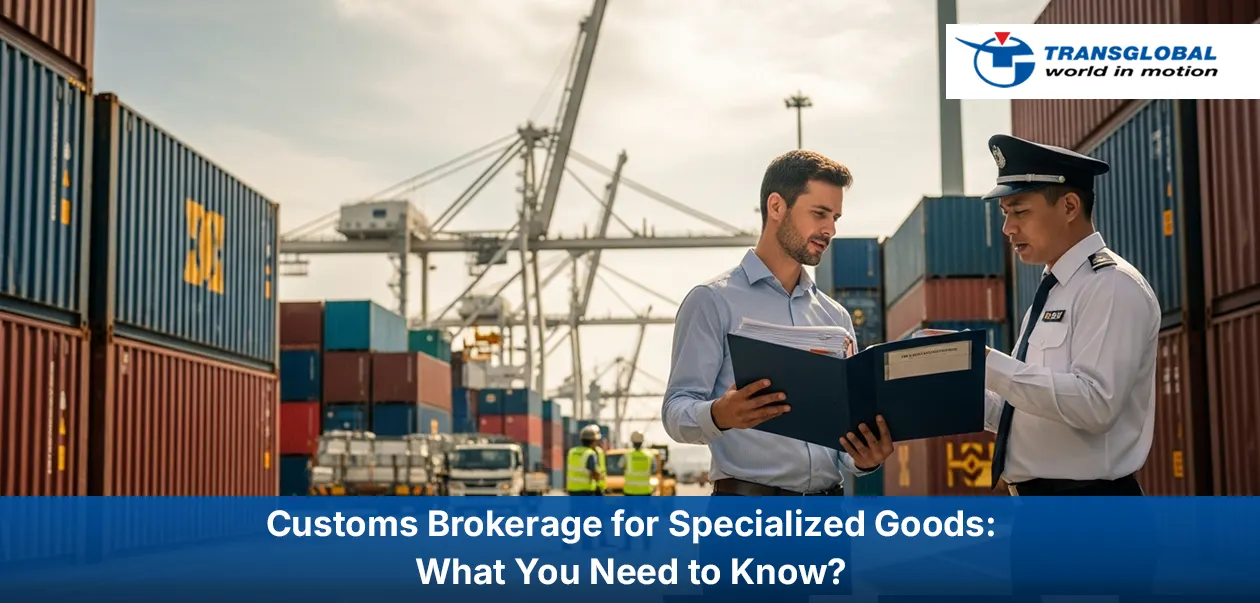
Moving specialized cargo, whether military equipment, hazardous chemicals, explosives, or oversized project freight, is not like shipping standard commercial goods. One missing permit, one incorrect classification, one overlooked regulation can bring your entire shipment to a halt. Worse, it can result in seizure, fines, or criminal liability.
At Transglobal Cargo, we handle these shipments every day across the Middle East, Europe, and Africa. Let’s break down what you actually need to know, practically and plainly.
Why is Specialized Cargo Different?
Standard customs brokerage is largely about tariff classification, duties, and documentation. Specialized cargo adds layers on top of that: security clearances, ministry approvals, safety compliance, transport permits, and in many cases, coordination between multiple government agencies across multiple countries, before the cargo even moves.
The rules are stricter. The documentation is heavier. The consequences of errors are far more serious. And the timelines for obtaining permits can stretch from weeks to months.
This is why specialized cargo requires a broker who does this specifically, not one who handles it occasionally alongside general freight.
Military & Defence Cargo
Defence shipments like arms, military vehicles, communications equipment, and spare parts for defence forces are among the most regulated goods in international trade.
Every defence shipment must comply with the export laws of the country it is leaving. If it originates from the US, that means ITAR (International Traffic in Arms Regulations) and EAR (Export Administration Regulations). From the UK or EU, similar national licensing frameworks apply. The exporter must hold the appropriate licence, and the receiving party must be verified through an End-User Certificate (EUC), a government-certified document confirming who will use the goods and for what purpose.
Beyond the export side, the destination country has its own import requirements. In the GCC UAE, Saudi Arabia, Qatar, defence imports are typically controlled by the Ministry of Defence or Interior. In Africa, national arms control authorities such as South Africa’s NCACC manage approvals, while in many other African countries, the process requires direct engagement with government procurement offices.
Every party involved, buyer, seller, freight agent, carrier, must also be screened against international sanctions lists: UN, EU, OFAC (US), and HMT (UK).
Hazardous & Dangerous Goods
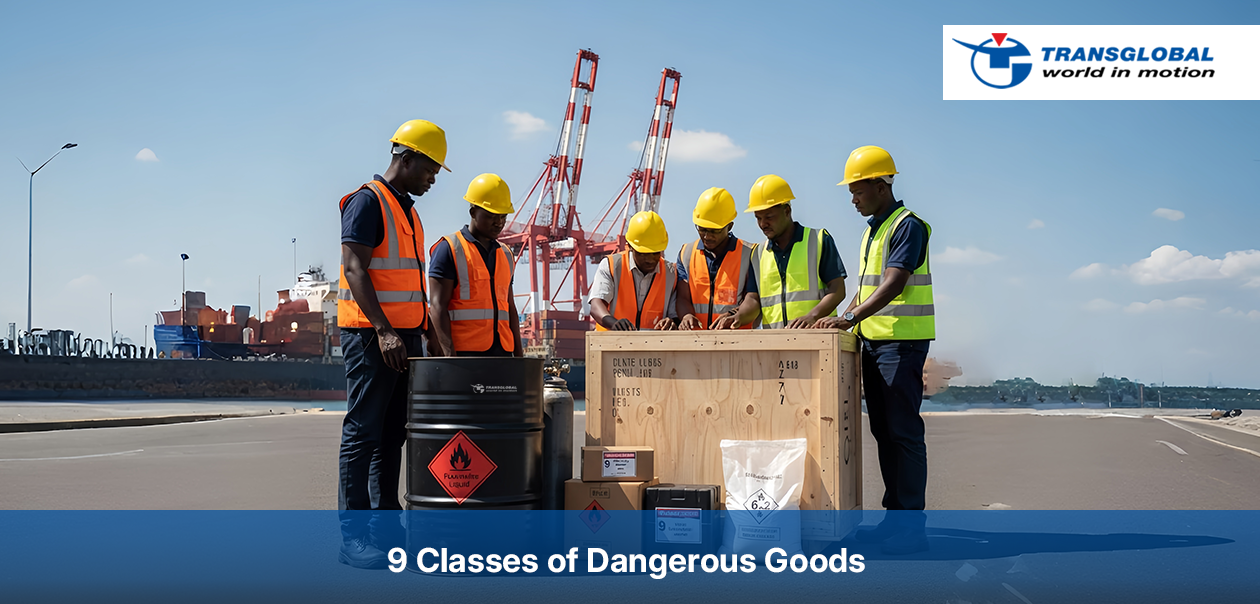
Chemicals, gases, flammable liquids, corrosives, toxic substances, these are classified as Dangerous Goods (DG) and are regulated under internationally agreed frameworks: IMDG for sea freight, IATA DGR for air freight, and ADR for road transport in Europe.
Every dangerous goods shipment starts with classification. Each substance must be assigned a UN Number, a Hazard Class (1 through 9), and a Packing Group (I, II, or III). Get this wrong and everything downstream, your declaration, your bill of lading, your customs entry, is wrong too.
A Safety Data Sheet (SDS) must accompany every shipment and must be in a language the receiving country accepts. Packaging must meet the spec for the packing group. Labels must be correctly applied. The carrier must be approved to carry that specific DG class.
In the Middle East, countries like the UAE and Saudi Arabia follow IMDG and IATA standards, but add national requirements on top, the UAE, for instance, requires pre-notification for certain chemical classes entering Jebel Ali. In Africa, larger ports like Durban and Mombasa have solid DG infrastructure, but smaller entry points need closer management.
Explosives
Commercial explosives, mining charges, detonators, demolition materials, and pyrotechnics fall under Hazard Class 1, the most controlled cargo category in existence. They combine all the complexity of dangerous goods with the security scrutiny of defence cargo.
You need permits from both ends: an export licence from the country of origin and an import permit from the destination country. In Saudi Arabia, that means Ministry of Interior approval. In the UAE, it goes through local police licensing authorities. In Kenya, you need clearance from the Mines and Geology Department. Each country has its own process, its own timeline, and its own documentation requirements.
Transport must follow approved secure routes. Road movements often require GPS-tracked vehicles and police or military escort. Storage at the destination must be in a licensed magazine, and that approval must be in place before the cargo departs. Most airlines will not accept Class 1 cargo at all. Sea freight under IMDG Class 1 has strict stowage requirements.
Project Cargo
Project cargo covers oversized, heavy, or high-value industrial equipment, power plant components, oil and gas machinery, mining equipment, and wind turbines. The pieces are often too big for standard containers, too heavy for normal roads, and too valuable to leave anything to chance.
The customs challenge here is primarily around temporary importation and transport permits. Much project cargo is brought into a country temporarily, for a construction project or a plant installation, and will eventually be re-exported. If you don’t use the right temporary import mechanism (such as an ATA Carnet or a country-specific Temporary Admission scheme), you could face full import duty on equipment you never intended to keep in the country.
Oversized cargo requires special transport permits from multiple agencies in each country it passes through. Route surveys must be completed to check bridge weight limits, road widths, and overhead clearances. In some countries, oversized loads can only move at night or on weekends. Port authorities need advance notice for heavy-lift operations.
In the Middle East, free zones in the UAE, Qatar, and Bahrain offer excellent duty-suspension frameworks for project cargo. In Africa, temporary import regimes vary significantly, some countries handle it efficiently, others require negotiation and patience.
What to Look for in a Specialized Customs Broker?
Not every broker is equipped to handle these categories. When evaluating a partner, ask:
- Do they hold IATA Dangerous Goods certification for DG shipments?
- Do they have in-country contacts, not just agents, in your destination market?
- Can they manage the full permit chain, or will they hand off to someone else mid-process?
- Do they conduct sanctions screening as a standard step?
- Have they handled your specific cargo type in your specific destination before?
At Transglobal Cargo, specialized cargo is not a sideline, it is our core business across the Middle East, Europe, and Africa. We manage the full compliance chain: permits, classifications, screening, documentation, and coordination with authorities at every stage.
Conclusion
Specialized cargo demands specialized knowledge. The regulations are real, the risks are significant, and the margin for error is essentially zero. But with the right broker, one who knows the rules, knows the authorities, and knows the region, these shipments move safely, legally, and on schedule.
If you are planning a military, hazardous, explosives, or project cargo shipment across the Middle East, Europe, or Africa, contact Transglobal Cargo before you plan your timeline. The earlier we are involved, the smoother it goes.
Frequently Asked Questions
What makes specialized cargo different?
It requires strict permits, safety compliance, and accurate documentation. Even small errors can cause delays or penalties.
Why use a specialized broker?
They handle permits, compliance, and regulations correctly, reducing risk and ensuring smooth movement.
How can delays be avoided?
Plan early and involve an experienced logistics partner to manage approvals and documentation from the start.
Comments