

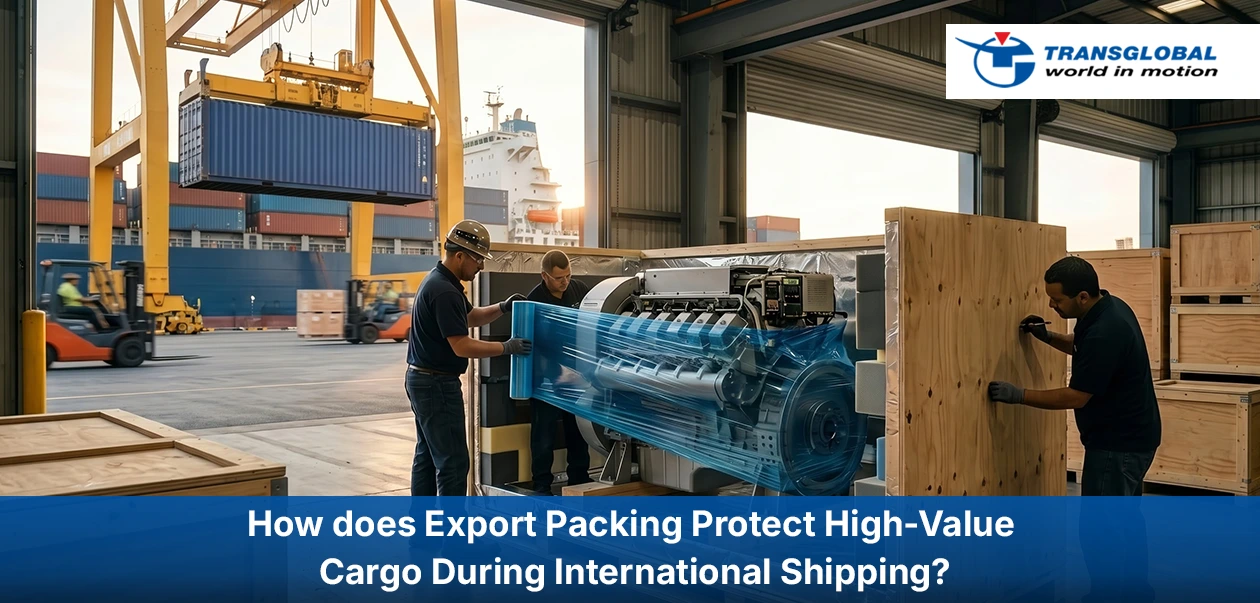
High-value cargo needs more than a shipping booking.
The product may be manufactured, tested, inspected, and ready for dispatch. The buyer may be waiting. The vessel schedule may already be planned.
But before the cargo leaves the site, one important question must be answered.
Is the cargo packed for the full international journey?
Export packing is not only about placing goods into a crate, box, pallet, or container. It is about preparing the cargo for handling, lifting, road movement, port activity, sea transit, customs inspection, storage, and final delivery.
A high-value shipment may pass through several hands before it reaches the receiver.
It may be lifted, stacked, secured, opened for inspection, moved between terminals, exposed to humidity, or delivered to a site with limited access.
For sensitive machinery, electronics, vehicle parts, instruments, project cargo, luxury goods, mining equipment, or specialist components, the packing method can affect how well the cargo travels.
This is why export packing plays such an important role in protecting high-value cargo during international shipping.
Why Export Packing Starts with Understanding the Cargo?
Good export packing begins before materials are selected.
The cargo itself decides what protection is needed.
A fragile instrument will not need the same packing as a heavy machine part. Electronics may need moisture control and anti-static protection. Polished surfaces may need soft wrapping. Industrial components may need timber support, bracing, or lifting access.
The packing plan should consider the cargo’s value, dimensions, weight, shape, surface finish, centre of gravity, lifting points, and sensitivity to vibration, pressure, moisture, or temperature.
Photos, drawings, handling instructions, and product data can help the logistics team understand how the cargo should be supported.
For machinery or project cargo, it is also important to know whether parts are removable, whether accessories need separate packing, and whether the cargo will be lifted by forklift, crane, pallet jack, or sling.
This early review helps avoid treating high-value cargo like standard freight.
For complex movements, freight forwarding helps connect packing, transport method, carrier requirements, documentation, and delivery planning.
When the packing plan reflects the actual cargo, the shipment begins with stronger protection.
How Packing Materials Support Cargo Protection?
Packing materials do more than cover the cargo.
They absorb movement, spread pressure, reduce contact, and support safe handling.
High-value cargo may require timber crates, plywood cases, pallets, skids, foam inserts, corner protection, stretch wrap, shrink wrap, moisture barriers, desiccants, VCI protection, cushioning, or custom supports.
The choice depends on the cargo and the journey.
Heavy cargo may need a strong base and reinforced lifting points. Sensitive cargo may need cushioning that reduces vibration. Metal parts may need corrosion protection. Items with polished surfaces may need soft wrapping before outer protection is added.
Export packing should also consider how the cargo will be moved.
Forklift pockets, lifting points, sling access, and centre-of-gravity markings can help handlers lift the cargo correctly.
For packed cargo moving by vessel, sea freight planning should consider container suitability, stacking limits, loading method, securing materials, and port handling.
The right materials help the cargo remain protected while it moves through each stage of the international shipping process.
Why Moisture, Movement, and Handling Need Special Attention?
International shipping exposes cargo to different conditions.
The shipment may begin in a factory, move by road, wait at a port, travel by vessel, pass through destination handling, and continue inland before delivery.
During that journey, cargo may face vibration, humidity, temperature changes, lifting pressure, container movement, and storage time.
Export packing helps manage these conditions.
Moisture protection may include barrier bags, desiccants, container lining, sealed wrapping, or corrosion protection. Movement control may include blocking, bracing, cushioning, strapping, and internal supports.
Handling protection may include edge guards, corner boards, pallet bases, lifting marks, fragile labels, and orientation marks.
For cargo that needs temporary holding before export or delivery, suitable warehousing support can also help keep packed goods stored, inspected, and prepared under better control.
High-value cargo should be packed for the full movement, not only for the first truck or first port.
That is what makes export packing a practical part of cargo protection.
How Export Packing Supports Documents and Inspection?
Packing also supports the paperwork behind the shipment.
The packing list, commercial invoice, shipping instructions, insurance records, container details, and inspection notes should all match how the cargo is physically prepared.
If the cargo is packed into crates, pallets, or cases, the documents should show the correct package count, weight, dimensions, marks, and contents.
This is important for carriers, customs, insurers, warehouses, and receivers.
Accurate shipping documents help connect the packed cargo with the records used for export, clearance, release, and delivery.
For high-value cargo, photographs can also support the shipment file.
Images of the cargo before packing, during packing, after sealing, and after marking can create a useful record for handover and insurance purposes.
If customs or another authority needs to inspect the shipment, clear packing records can help explain what is inside each package and how it has been prepared.
Well-documented packing gives every party a clearer view of the cargo before it moves further.
Why Marking and Handover Control Matter After Packing?
Once cargo is packed, the outside of the package becomes the main source of handling information.
Marks and labels guide the people who move it.
They may show package numbers, consignee details, lifting points, centre of gravity, gross weight, dimensions, fragile cargo, stack limits, orientation arrows, moisture sensitivity, or handling instructions.
These markings should match the packing list and shipping documents.
For international shipments, early container documents help ensure package marks, container details, seal numbers, and cargo records support the same movement.
Handover control is also important.
The cargo team should record who packed the cargo, when it was packed, how it was secured, which marks were applied, and what condition the packages were in before collection.
This is especially useful when high-value cargo moves through several service providers.
Strong handover records help protect the shipment from origin to final delivery.
Conclusion: Export Packing Gives High-Value Cargo a Safer Journey
Export packing protects high-value cargo before it enters the international shipping process.
It supports the cargo against movement, moisture, pressure, handling, storage, and inspection requirements.
The right packing method begins with understanding the cargo. The right materials provide protection. The right records connect the packed goods with the documents. The right markings guide handlers during each stage of the journey.
For cargo owners, export packing is not only a preparation step.
It is part of protecting the value of the shipment, supporting insurance records, and giving the receiver greater confidence in the condition of the cargo on arrival.
Preparing high-value cargo for export? Contact us to review the cargo type, packing method, documentation, and shipping requirements before dispatch.
Move high-value cargo with specialist freight forwarders who understand export packing, international shipping, cargo protection, and controlled delivery planning.
Frequently Asked Questions
What is export packing?
Export packing is the preparation of cargo using suitable materials, protection, markings, and records for safe international movement.
Why is export packing important for high-value cargo?
It helps protect cargo from movement, moisture, handling pressure, storage conditions, and inspection requirements during international shipping.
What should be checked before export packing?
Cargo value, dimensions, weight, sensitivity, lifting points, packing materials, moisture protection, handling marks, and documentation should be checked.


Comments