

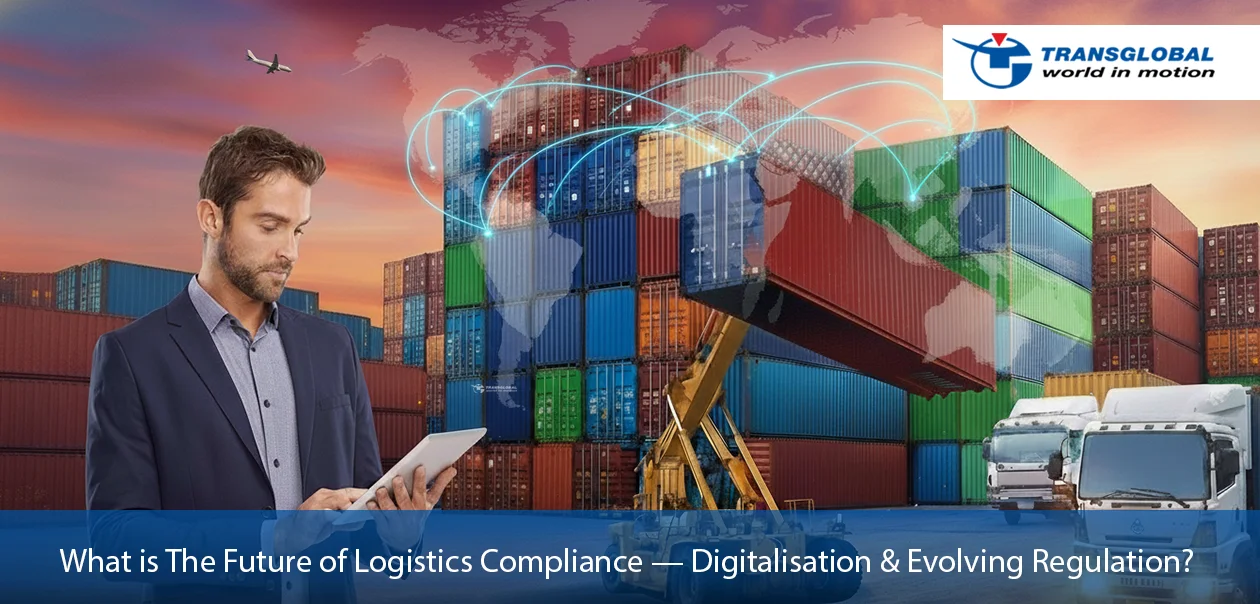
Logistics compliance is no longer just about checking boxes and filing permits. As regulation evolves and technology reshapes global supply chains, logistics companies are under increasing pressure to deliver not just cargo, but compliance transparency. This shift is especially true in sectors like defense, explosives, and controlled cargo, where national laws and global oversight converge.
At Transglobal Cargo and Defenlog, we see this not as a challenge, but as a roadmap. One that leads us from reactive processes to predictive, digital, and integrated compliance strategies.
Why Compliance Can’t Stay Static?
The pace of change is accelerating. Whether it’s the Draft Explosives Regulations 2024, stricter dual-use controls, or global transparency standards for arms-related trade, logistics providers cannot afford to be caught off guard.
Regulators are raising the bar. Clients are demanding proof of compliance, not just promises. And stakeholders, from governments to insurers, want real-time risk visibility.
In this environment, waiting for change is no longer an option. The future belongs to logistics partners who can lead with control and clarity.
How Technology is Redefining the Rules?
Let’s be clear, compliance is going digital. And it’s happening now.
At Transglobal, we’ve already embraced tools like Webfleet TMS, which gives us:
- Real-time vehicle tracking
- Route deviation alerts
- Incident logging directly from the road
- Centralized oversight of fleet movement
But that’s just the beginning.
What’s coming next?
- Blockchain-style cargo ledgers for tamper-proof documentation and traceability.
- AI-assisted risk profiling, where shipment, driver, and route data are analyzed to predict compliance issues before they happen.
- Digital permit integration, linking NCACC authorizations directly into transport management platforms.
- Client-access dashboards to monitor consignment status and compliance in real time.
These aren’t far-off concepts. They’re the next normal.
What Smart Oversight Looks Like?
The future of logistics compliance isn’t about adding more paperwork, it’s about creating smarter, leaner, more integrated systems.
Here’s what that could look like in everyday operations:
- A permit issued by NCACC is automatically pulled into your TMS platform.
- The route, cargo type, and vehicle are checked against the permit’s conditions.
- If anything’s out of alignment, vehicle class, rest stop proximity, or escort requirement, the system flags it before the truck leaves the yard.
- When the shipment is delivered, all data is logged automatically and backed up for audits.
This isn’t just efficiency. It’s defensible compliance, traceable, shareable, and provable.
Why People Still Matter in a Digital World?
With all the technology in place, one might think compliance becomes push-button simple.
It doesn’t.
Because systems don’t make decisions, people do.
A driver still needs to report a broken seal. A dispatcher must interpret risk reports. A controller has to decide whether to halt a journey mid-route.
That’s why, even as we invest in digital innovation, we continue to strengthen our human systems:
Continuous training on new regulations and technologies.
Simulations that prepare teams for decision-making under pressure.
Empowerment to act when compliance is in question, even if it delays a shipment.
In regulated logistics, ethics and situational awareness cannot be outsourced to an algorithm.
Conclusion: Precision + Integrity
So, what does the future hold for logistics compliance?
It’s not just more regulation. It’s a smarter way to meet those regulations, faster, cleaner, and with full visibility.
But tech alone isn’t the answer. The future belongs to logistics leaders who combine digital precision with human integrity.
At Transglobal and Defenlog, we’re building that future, one permit, one platform, one person at a time.
Contact us to stay updated on how we continue to raise the standard in regulated logistics across Africa and beyond.
Comments