

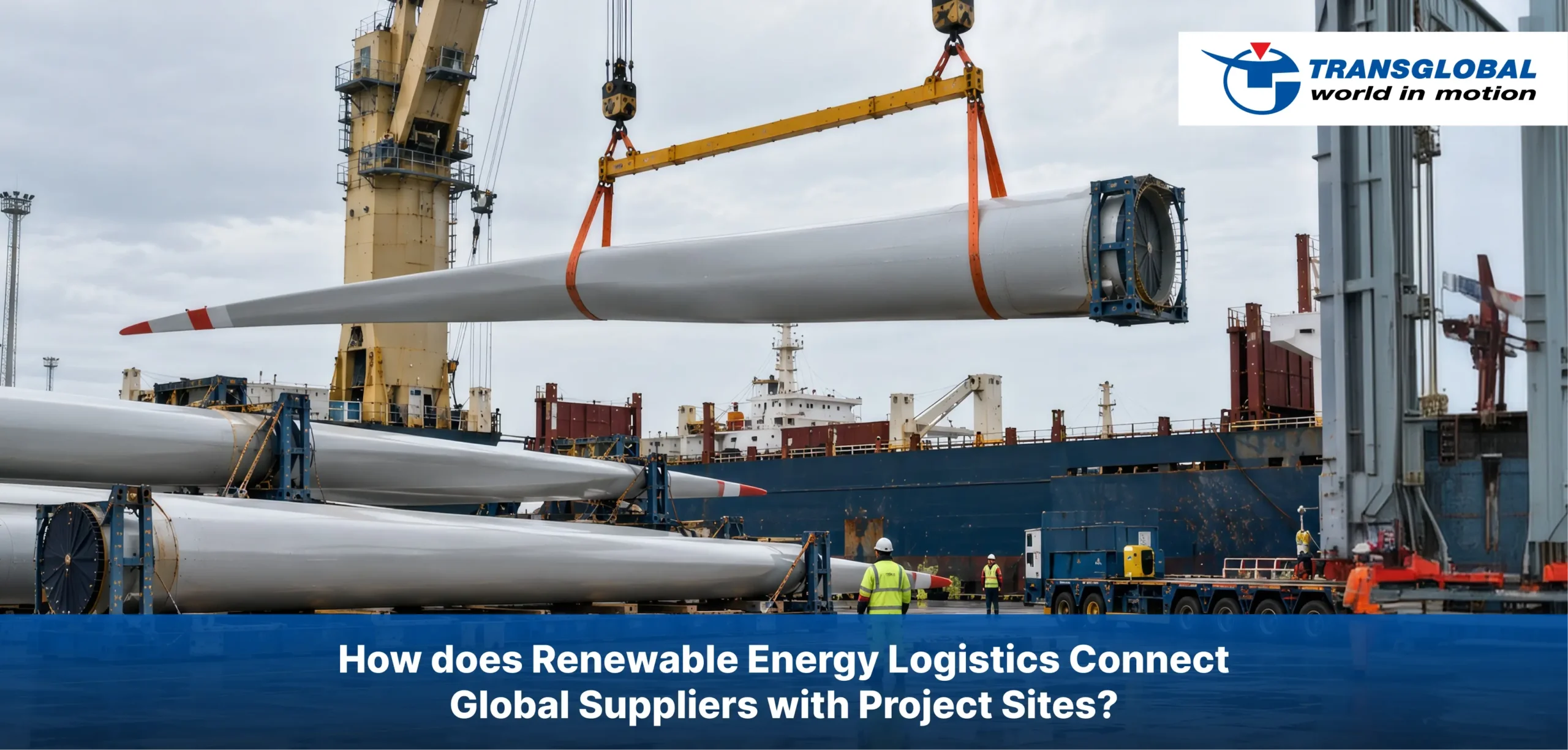
Renewable energy projects depend on equipment that often comes from different parts of the world.
Solar panels may come from one supplier. Inverters may come from another. Battery units, transformers, turbines, towers, cables, mounting systems, control units, and steel structures may all follow different supply routes.
Each item has its own size, value, handling requirement, document need, and delivery timeline.
By the time the equipment reaches the project site, everything must be ready for the next stage of work.
That is where renewable energy logistics becomes important.
Renewable energy logistics manages the movement of solar, wind, battery, grid, and energy infrastructure cargo from global suppliers to the places where the equipment will be stored, installed, or connected.
The work is not only about transport.
It includes supplier coordination, cargo readiness, packing, shipping, customs documents, inland movement, site access, and delivery timing.
For solar farms, wind farms, battery storage sites, grid upgrades, and energy infrastructure projects, logistics helps turn international supply into practical site progress.
What Renewable Energy Logistics Means?
Renewable energy logistics is the planning and movement of equipment used in clean energy and power infrastructure projects.
This can include solar panels, wind turbine parts, batteries, transformers, inverters, switchgear, cables, steel frames, mounting systems, and supporting project materials.
Some of these items move in standard containers.
Others need special handling because they are heavy, oversized, fragile, high-value, or sensitive to moisture, vibration, or rough handling.
The purpose of renewable energy logistics is to make sure each item moves from supplier to site in a way that supports the project schedule.
This means the logistics team must understand what is being shipped, where it is coming from, how it is packed, what documents are needed, and when the site can receive it.
For imported equipment, imports and exports planning helps explain how cargo moves across sea, air, and road before it reaches the final destination.
Renewable energy logistics gives project teams a clearer way to manage equipment movement from purchase order to site delivery.
Why Supplier Coordination Matters Before Shipping?
Renewable energy equipment is rarely supplied from one place.
A project may depend on several manufacturers, vendors, and technical suppliers across different countries.
One supplier may be ready to ship early. Another may still be waiting for production approval. A third may need additional packing, inspection, or export documents before release.
If these details are not managed early, cargo can move out of sequence.
That can create pressure at the port, warehouse, or project site.
Supplier coordination helps prevent this.
The logistics team should confirm cargo readiness dates, collection points, packing details, dimensions, weight, lifting needs, document status, and delivery priority before shipping is arranged.
This is especially important when equipment needs to arrive in a specific order.
Solar panels may need to arrive with mounting systems. Batteries may need site readiness before delivery. Transformers may need cranes and access planning before they can be received.
Good supplier coordination helps the project avoid unnecessary waiting, rework, storage pressure, and delivery confusion.
It gives every shipment a clearer role in the wider project timeline.
How International Shipping Moves Renewable Energy Equipment?
Once the supplier is ready, the right international shipping method must be selected.
The choice depends on the cargo type, size, urgency, destination, budget, and handling requirement.
Many renewable energy products move by sea because of their size and volume.
Solar panels, mounting systems, cables, steel structures, transformers, and battery systems may move in containers, flat racks, or other suitable shipping arrangements.
For larger equipment, sea freight can support international movement where capacity, route planning, port handling, and cost control are important.
Some urgent components may move by air when the project cannot wait.
This may include small technical parts, control units, replacement components, samples, or critical items needed to keep work moving.
The shipping plan should also consider packing strength, handling marks, container suitability, loading method, and insurance requirements.
Renewable energy equipment can be expensive and project-critical.
It should not be shipped only based on the cheapest route or earliest booking.
The shipping method should protect the cargo and support the project schedule.
Why Customs Documents and Clearance Need Early Review?
Imported renewable energy equipment depends on accurate documents.
The commercial invoice, packing list, bill of lading or airway bill, certificate of origin, technical description, product details, permits, and project references may all be required depending on the shipment.
The documents should match the cargo exactly.
If the invoice describes one item and the packing list gives different details, the shipment may be questioned. If the HS code, value, origin, or product description is unclear, clearance can take longer.
This can affect the project site.
Equipment may be ready overseas, but the site cannot use it until the cargo is released and delivered.
Customs review should therefore happen before the shipment reaches the port or airport.
The team should check the cargo description, tariff details, importer information, supporting certificates, and any approvals needed for electrical, battery, or specialised equipment.
Clear documents help renewable energy cargo move through import and export processes with fewer interruptions.
They also help project teams keep better records for procurement, finance, audit, and handover.
How Inland Transport Connects Ports with Project Sites?
The international journey is only part of renewable energy logistics.
Once cargo reaches the arrival country, it still needs to move inland.
This stage can be challenging because many project sites are outside major city centres, ports, or airports.
Solar farms, wind farms, battery storage sites, substations, and grid projects may be located in rural areas, industrial zones, mining regions, or developing infrastructure corridors.
For inland delivery, road freight planning helps move equipment from ports, depots, warehouses, or consolidation points to the project site.
The route must suit the cargo.
Large or heavy items may need route checks, permits, escorts, special trailers, crane planning, or delivery timing controls.
Site access also matters.
A project site may have narrow roads, soft ground, unfinished access routes, security checks, limited unloading space, or specific working hours.
For larger energy equipment, project cargo planning becomes useful because the movement may involve heavy components, route control, lifting arrangements, and site coordination.
The equipment is only useful when it can reach the site safely and be received by the right team.
Why Site Delivery Timing Affects Project Progress?
Renewable energy cargo should not arrive only because it is ready to ship.
It should arrive when the site is ready to receive it.
This is one of the most important parts of project logistics.
If panels arrive before storage is ready, they may take up space or need extra handling. If transformers arrive before cranes are available, unloading can become difficult. If cables or mounting systems arrive late, installation teams may have to wait.
Delivery timing should follow the work sequence.
The logistics team should understand which items are needed first, which can wait, and which must arrive together.
This requires coordination between suppliers, project managers, site teams, transporters, customs teams, and receivers.
Good delivery timing helps reduce congestion at the site.
It also protects equipment from unnecessary movement, long storage periods, and avoidable handling.
For renewable energy projects, logistics is not successful only when cargo reaches the country.
It is successful when the right equipment reaches the site at the right point in the project schedule.
Conclusion: Renewable Energy Logistics Turns Global Supply into Site Progress
Renewable energy logistics connects global suppliers with project sites by managing how equipment is sourced, shipped, cleared, transported, and delivered.
It starts with understanding what each supplier is sending and when the cargo will be ready.
It continues through shipping method selection, packing, customs documents, inland transport, site access, and delivery timing.
This is important because renewable energy projects depend on many moving parts.
Solar panels, wind components, batteries, transformers, cables, and control units may all come from different suppliers, but they must come together at the project site in a practical order.
That answers the main question.
Renewable energy logistics connects global suppliers with project sites by turning separate international shipments into a coordinated cargo flow that supports installation, construction, and project progress.
Planning renewable energy cargo movement? Contact us to review supplier readiness, cargo details, documents, route planning, and site delivery requirements.
Move renewable energy cargo with Leading freight forwarders who understand renewable energy logistics, international shipping, inland transport, and project site delivery.
Frequently Asked Questions
What is renewable energy logistics?
Renewable energy logistics is the planning and movement of solar, wind, battery, grid, and energy infrastructure equipment from suppliers to storage points, ports, and project sites.
What cargo is involved in renewable energy logistics?
Common cargo includes solar panels, inverters, batteries, transformers, wind turbine parts, towers, cables, mounting systems, steel structures, and control units.
Why is site delivery timing important?
Site delivery timing helps ensure equipment arrives when the project team is ready to unload, store, install, or use it without slowing down the work schedule.

Comments