

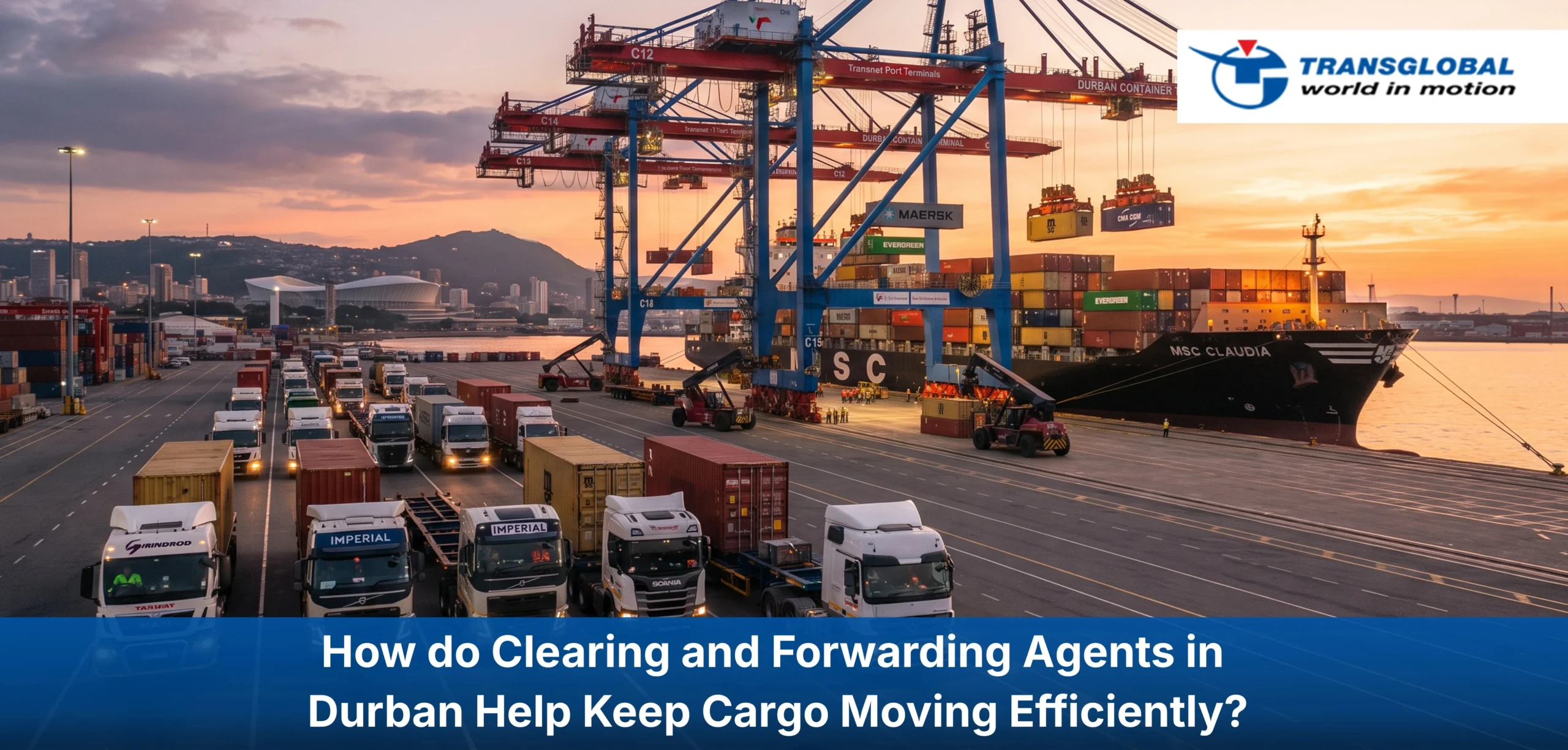
A shipment can arrive in Durban with everything appearing to be in place.
The vessel has berthed. The shipping documents have been submitted. The customer is already expecting delivery.
Then the movement slows down.
Customs requests another document. The shipping line has not issued the release. The transporter cannot confirm collection because the terminal slot is still unavailable.
For importers and exporters, these may appear to be separate issues.
But each one affects the same shipment.
This is where clearing and forwarding agents in Durban help bring the movement back under control. They coordinate customs requirements, shipping line procedures, port activities, transport arrangements, and delivery planning so the cargo can continue moving.
Why Durban Cargo Movements Need Clear Operational Coordination?
A shipment passing through Durban involves more than the cargo owner and the shipping line.
Customs authorities may be reviewing the declaration. The terminal may be controlling collection appointments. The road transporter may be waiting for release confirmation, while the consignee prepares labour and unloading equipment.
Each party manages one part of the shipment.
The challenge begins when those parties are working with different information.
The consignee may expect delivery while the cargo is still under customs control. A vehicle may be booked before the shipping line’s release is available. The terminal slot may change without the receiving team being informed.
Clearing and forwarding agents provide one point of operational coordination.
They follow the shipment position, identify what is still outstanding, and communicate the next action to the right party.
This reduces confusion for the cargo owner and helps prevent one missed update from affecting customs clearance, collection, or final delivery.
For businesses managing several imports or exports, that control becomes even more important. It provides a clearer view of every movement without requiring the cargo team to chase each service provider separately.
How Early Document Checks Help Prevent Customs Delays?
A customs problem does not always begin when the cargo arrives.
It may already exist in the commercial invoice, packing list, product description, tariff classification, permit, certificate, or importer information.
The shipment may continue towards Durban while that problem remains unnoticed.
Then customs reviews the declaration.
A vague cargo description may need clarification. A tariff code may not match the commodity. A permit may be missing. The declared value may not agree with the supporting documents.
By this stage, the container may already be at the port, and the delivery schedule may already be under pressure.
Early document review gives the importer more time to correct these issues.
Before arrival, an agent can check for:
- Unclear or inconsistent product descriptions,
- Tariff classifications that need confirmation,
- Missing permits or supporting certificates,
- Incorrect invoice values or quantities,
- Incomplete importer or consignee details, and
- Controlled goods that may require additional approval.
Accurate customs clearance is not only about submitting the declaration quickly. It is about making sure the declaration correctly represents the cargo.
When the information is checked early, preventable document errors are less likely to become the reason a shipment remains unavailable.
Why Every Shipment Needs the Right Clearing and Forwarding Approach?
Not every container entering Durban follows the same path.
One shipment may contain standard commercial goods for a local warehouse. Another may carry mining equipment, oversized machinery, hazardous materials, or goods moving across a regional border.
The requirements can be completely different.
Cargo type can influence permits, inspections, storage conditions, transport equipment, security arrangements, and delivery access.
Destination matters too.
A shipment delivered within Durban may need a straightforward local movement. Cargo travelling to Gauteng may require long-distance road transport and a fixed receiving schedule. Regional cargo may involve additional documents, permits, and border procedures.
Can one standard plan manage all these movements effectively?
Usually not.
For specialised cargo, the clearing and forwarding approach may need to consider handling restrictions, approved transport, route suitability, secure storage, and the receiving site’s ability to accept the goods safely.
Efficient cargo movement begins with understanding what the shipment actually needs.
The customs, storage, transport, and delivery arrangements should be built around the commodity and destination, not copied from the previous shipment.
How Durban-Based Agents Keep Cargo Moving When Plans Change?
Cargo movements do not always follow the original schedule.
A vessel may arrive late. Customs may request an inspection. The shipping line release may take longer than expected. The consignee may change the delivery date, or the booked vehicle may no longer be available.
One change can quickly affect several arrangements.
If customs selects the cargo for inspection, the transport booking may need to move. If the release is delayed, the terminal slot may be lost. If the consignee is not ready, direct delivery may no longer be practical.
What happens next depends on how quickly the movement can be reorganised.
A Durban-based agent can coordinate the revised collection, communicate with the consignee, arrange inspection attendance, or secure warehousing support until final delivery becomes possible.
This local coordination helps the importer avoid managing every issue separately.
The objective is not only to react to a delay. It is to understand what the delay changes and adjust the remaining shipment plan before additional costs or missed commitments begin to build.
Why Good Forwarding Decisions Help Control the Final Logistics Cost?
The cheapest individual service does not always produce the lowest total shipment cost.
A lower transport rate may offer little value if the vehicle misses the terminal collection slot. Late documentation may create storage charges that exceed the original freight savings. Direct delivery may become expensive if the receiving site cannot accept the cargo.
This is where commercial judgment becomes part of clearing and forwarding.
An experienced freight forwarding partner helps the cargo owner understand how customs timing, inspections, port availability, transport, storage, and delivery decisions affect one another.
The importer may need to decide whether to:
- Keep the original delivery schedule,
- Move the vehicle booking,
- Use temporary storage,
- Divide the shipment into smaller deliveries, or
- Adjust the route or receiving window.
The right decision is not always the fastest option.
It is the option that keeps the shipment moving while balancing cost, timing, cargo requirements, and customer commitments.
Conclusion: Efficient Clearing and Forwarding Creates a More Controlled Cargo Movement
Keeping cargo moving through Durban requires more than submitting customs documents and booking a truck.
It requires an accurate understanding of the shipment, early preparation, clear communication, and practical decisions when the original plan changes.
Clearing and forwarding agents give importers and exporters greater control over these decisions.
They help turn separate customs, port, transport, storage, and delivery activities into one organised movement.
That support becomes especially valuable when cargo is complex, delivery timelines are tight, or several service providers are involved.
Planning a shipment through Durban? Contact us before departure to review the documents, cargo requirements, and delivery arrangements.
Keep imports and exports moving with specialist freight forwarders who understand Durban port operations and the decisions required beyond customs release.
Frequently Asked Questions
What services do clearing and forwarding agents in Durban provide?
They coordinate customs clearance, cargo documents, port procedures, inspections, transport, storage, and delivery arrangements.
When should a clearing and forwarding agent receive the shipment documents?
Documents should be provided before departure so potential customs, permit, classification, and delivery issues can be identified early.
Can clearing and forwarding agents handle cross-border shipments?
Yes. They can coordinate customs requirements, transport, permits, border procedures, and delivery into neighbouring countries.

Comments