

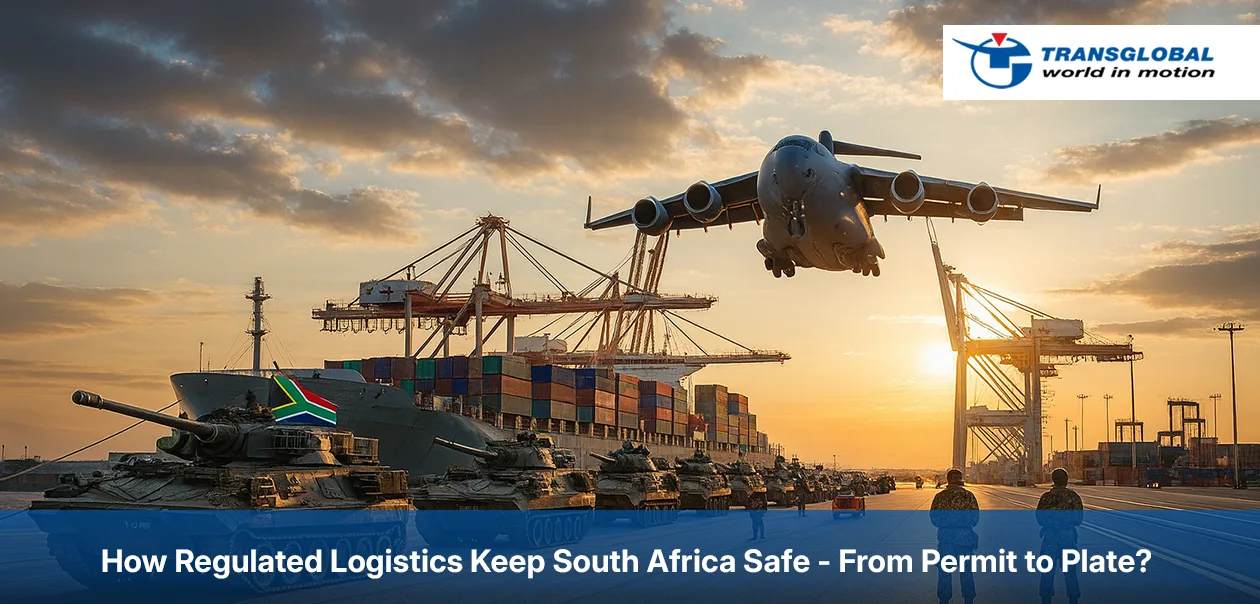
Transporting arms, explosives, and other high-risk materials isn’t just about moving cargo, it’s about upholding national safety standards at every touchpoint. At Transglobal Cargo (Pty) Ltd and Defenlog (Pty) Ltd, we operate in an environment where permits are not paperwork, they’re protection.
Each delivery of sensitive freight must follow a strict framework of checks, documentation, and authorizations that begin long before a driver starts their route. For regulated cargo, the true journey starts at the permit stage, a journey the public never sees, but one that defines the very integrity of our business.
The Journey No One Sees
When most people think of logistics, they picture trucks on highways, planes on runways, or ships at sea. But behind every legally compliant load of military goods, explosives, or dual-use items lies a quiet but powerful system of permits, safety checks, and operational controls.
These processes are not optional. They are the conditions that allow companies like Transglobal and Defenlog, both registered with the NCACC (National Conventional Arms Control Committee) and CIE (Chief Inspector of Explosives), to operate legally and ethically in one of South Africa’s most tightly regulated sectors.
Step by Step — From Permit to Plate
Every move we make is backed by a step-by-step process that ensures end-to-end compliance. Here’s what that journey looks like:
1. Cargo Identification
Before a shipment can be scheduled, our compliance team classifies the cargo to determine if it falls under NCACC, CIE, or other regulatory oversight. This step determines what level of permit or clearance is required.
2. Permit Verification
We check whether valid and specific permits have been issued, including registration numbers, shipment authorization, and license scope. No load is moved without this green light.
3. Vehicle and Driver Readiness
Transport vehicles are inspected to ensure full compliance with dangerous goods (DG) transport standards. Drivers must carry the correct license codes, DG endorsements, and undergo medical fitness assessments.
4. Route and Risk Planning
Every route is carefully analyzed for potential risk zones, border clearances, rest stops, and alternate pathways in case of emergencies. For high-risk freight, escort arrangements and real-time tracking are often deployed.
5. Transporter Alignment
We only partner with subcontractors registered with NCACC and CIE. This ensures accountability doesn’t stop at our gates, it extends throughout the supply chain.
6. Documentation and Chain of Custody
From loading to delivery, every consignment is documented, sealed, and tracked. Each signature and timestamp creates a traceable chain of custody, protecting not only the cargo but also the legal position of all parties involved.
Why do We Act in this Way?
In regulated logistics, one small oversight can lead to catastrophic outcomes, whether in safety, legal compliance, or reputation.
Our adherence to NCACC and CIE regulations isn’t just a matter of ticking boxes. It’s how we protect our personnel, safeguard our clients, and support South Africa’s commitment to ethical arms and explosives control.
These systems exist to prevent the misuse of materials that, in the wrong hands, could cause harm on a massive scale. By following the rules, we play our part in maintaining peace, order, and credibility on behalf of both the government and the industries we serve.
Building a Culture of Accountability
Compliance isn’t the job of a single person or department. It’s embedded into the daily culture of Transglobal and Defenlog.
We train our teams, from warehouse operators and planners to drivers and escorts, to understand how their actions connect to national and international regulations.
This includes:
- Regular refresher training on CIE and NCACC protocols
- Toolbox talks before each movement
- Internal audits and simulation exercises
- Performance reviews tied to safety and compliance adherence
By making regulatory awareness part of our DNA, we eliminate the mindset of “it’s someone else’s job.” Instead, every team member becomes a link in the chain of responsible arms logistics.
Conclusion
Safe logistics isn’t just about GPS tracking and route timing. It’s about the permits, planning, and people that make the movement of sensitive goods possible without incident.
At Transglobal and Defenlog, we view each signed permit, risk-assessed route, and approved load as a promise, a promise to do it right, every time.
In this sector, compliance is not just a legal necessity; it’s a moral one. As a trusted freight forwarder in Africa, this is how we help keep trade partners secure and respected on the global stage.
📣 Stay Tuned for the Next Article in the Series: How Can Freight Forwarders Ensure Compliance in Hazardous and Export Shipments?

Comments