

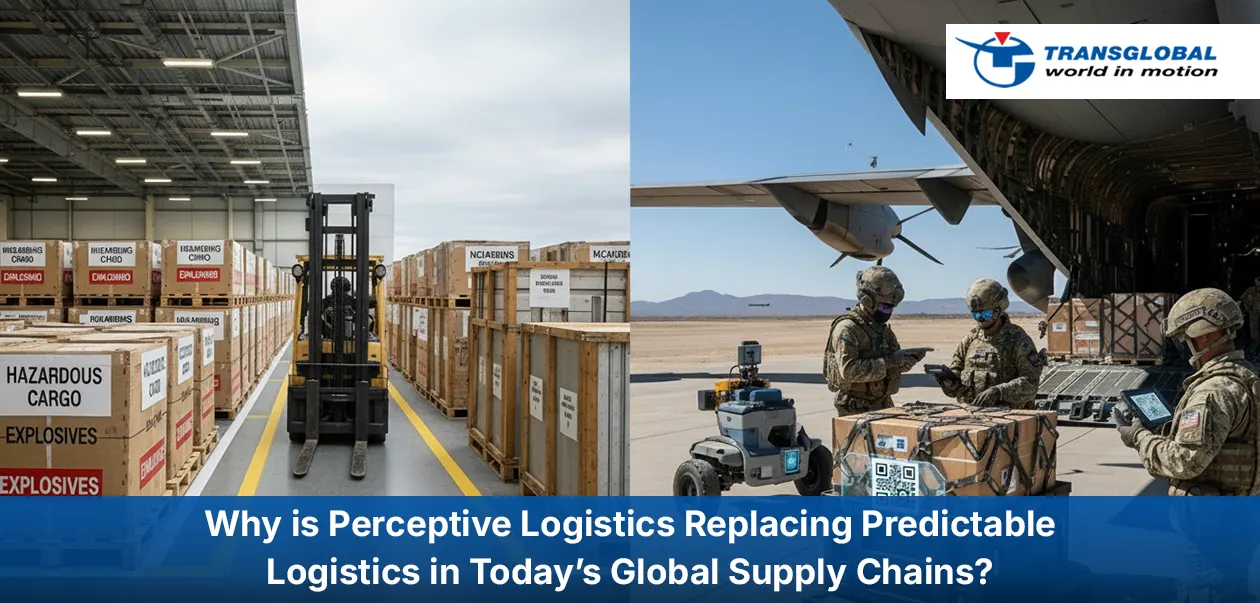
There was a time when logistics worked like a timetable.
Shipments followed fixed schedules. Rates were negotiated months in advance. Routes were stable, and planning ahead meant staying in control. Predictability was the foundation of every logistics strategy.
But today, that foundation is shifting.
Routes change overnight. Costs fluctuate without warning. Capacity disappears, then reappears somewhere else. And disruptions are no longer rare events, they are part of daily operations.
In this environment, relying only on predictability is no longer enough. What businesses need now is something more adaptive, more responsive, and more aware.
This is where perceptive logistics comes in.
The Reality of Modern Supply Chain Disruptions
Global supply chains are no longer influenced by just demand and supply. They are shaped by multiple external factors that can change quickly.
Across regions like the Middle East, Europe, and Africa, businesses are dealing with:
- Geopolitical tensions affecting trade routes
- Sudden capacity changes and blank sailings
- Rising and unstable fuel costs
- Port congestion and inland transport delays
- Local challenges such as fuel shortages and infrastructure constraints
These are not isolated incidents. They are ongoing conditions that directly impact delivery timelines, costs, and reliability.
In such a landscape, a rigid logistics plan can quickly become outdated.
Why Predictable Logistics is No Longer Enough?
Predictable logistics is built on the idea that tomorrow will look similar to today. It depends on stable routes, fixed schedules, and consistent costs.
While this approach worked well in the past, it now creates limitations.
When disruptions occur, predictable systems often:
- React late to changes
- Lack of flexibility in routing or carrier options
- Struggle to manage sudden cost increases
- Provide updates after issues have already impacted operations
This does not mean predictability has no value. It still provides structure. But on its own, it cannot handle the level of volatility seen in today’s supply chains.
Businesses need a more dynamic approach.
What is Perceptive Logistics?
Perceptive logistics goes beyond tracking shipments or reacting to delays. It focuses on understanding risks early and responding before they affect operations.
It is built on awareness, adaptability, and informed decision-making.
Instead of asking, “Where is my cargo?” perceptive logistics asks, “What could impact my cargo next, and how do we prepare for it?”
This shift changes how logistics is managed at every level.
Key Elements of Perceptive Logistics
Perceptive logistics is not a single solution. It is a combination of practices that help businesses stay ahead of disruptions.
Anticipation Over Reaction
Rather than waiting for delays to happen, perceptive logistics monitors global events, carrier behavior, and cost trends in advance. This allows businesses to prepare for potential disruptions before they occur.
Insight-Driven Decisions
Data plays a critical role. By analyzing trends and scenarios, logistics teams can offer alternative options, such as changing routes or adjusting timelines, instead of simply reporting delays.
Agile Execution
When conditions change, execution must change quickly. This could involve switching carriers, rerouting shipments, or adjusting transport modes without disrupting the entire supply chain.
Commercial Transparency
Clear communication is essential. Instead of explaining cost increases after they happen, perceptive logistics provides upfront visibility into risks and pricing changes.
Strong Partnerships
In uncertain conditions, logistics is not just a service, it becomes a partnership. Working closely with clients helps manage challenges more effectively and maintain continuity.
The Role of Technology and Compliance
Technology is a key enabler of perceptive logistics, but it must be supported by strong compliance and operational expertise.
Modern logistics operations rely on:
- Real-time tracking systems for full cargo visibility
- Data analytics to identify trends and risks
- Integrated communication platforms for faster coordination
At the same time, compliance remains critical, especially for regulated cargo such as hazardous materials, defence shipments, and project cargo.
Certified logistics providers follow international standards such as:
- IMDG regulations for sea transport of dangerous goods
- IATA Dangerous Goods Regulations for air shipments
- National customs and trade compliance frameworks
- Security and sanctions screening protocols
Without proper compliance, even the most advanced logistics systems cannot ensure smooth operations.
How Perceptive Logistics Improves Business Outcomes?
Adopting a perceptive approach helps businesses move from reactive problem-solving to proactive decision-making.
This leads to:
- Better control over shipment timelines
- Reduced the impact of disruptions
- Improved cost management
- Stronger supply chain resilience
- Greater confidence in logistics planning
In simple terms, it helps businesses stay in control, even when conditions are unpredictable.
Transglobal Cargo: A Perceptive Approach to Freight Forwarding
At Transglobal Cargo, we operate with a clear understanding that logistics today requires more than execution, it requires awareness and adaptability.
We combine operational expertise with a perceptive approach to help clients navigate complex and changing supply chain conditions.
Our capabilities include:
- Handling specialized cargo such as dangerous goods, explosives, and project shipments
- Managing compliance across multiple regions, including the Middle East, Europe, and Africa
- Providing real-time visibility and proactive communication
- Adapting transport strategies based on changing conditions
We work under strict regulatory frameworks and industry standards, ensuring that every shipment is handled safely, legally, and efficiently.
More importantly, we focus on helping our clients make informed decisions, not just moving their cargo.
The Shift that Matters Most
Today’s logistics environment does not reward perfection. It rewards adaptability.
Clients are no longer expecting everything to go exactly as planned. Instead, they expect their logistics partner to respond effectively when plans change.
This is the real shift.
- From fixed plans to flexible strategies.
- From reactive updates to proactive insights.
- From service providers to trusted partners.
Conclusion
The world of logistics has changed, and with it, the way supply chains must be managed.
Predictability alone is no longer enough to ensure success. Businesses need a logistics approach that can sense changes, adapt quickly, and maintain control under uncertainty.
Perceptive logistics provides that edge.
Working with a trusted freight forwarder ensures that your supply chain is not only efficient but also resilient and adaptable.
If you are looking to strengthen your logistics strategy and navigate today’s challenges with confidence, contact us today. Our team is ready to support your business with agile, informed, and reliable solutions.
Frequently Asked Questions
What is the difference between predictable and perceptive logistics?
Predictable logistics relies on fixed plans and schedules, while perceptive logistics focuses on anticipating risks and adapting quickly to changes.
How does perceptive logistics help reduce disruptions?
It identifies potential risks early and allows businesses to adjust routes, carriers, or plans before disruptions impact operations.
Why is agility important in modern supply chains?
Because conditions change frequently, agility helps businesses respond quickly, maintain control, and keep shipments moving without major delays.
Comments