

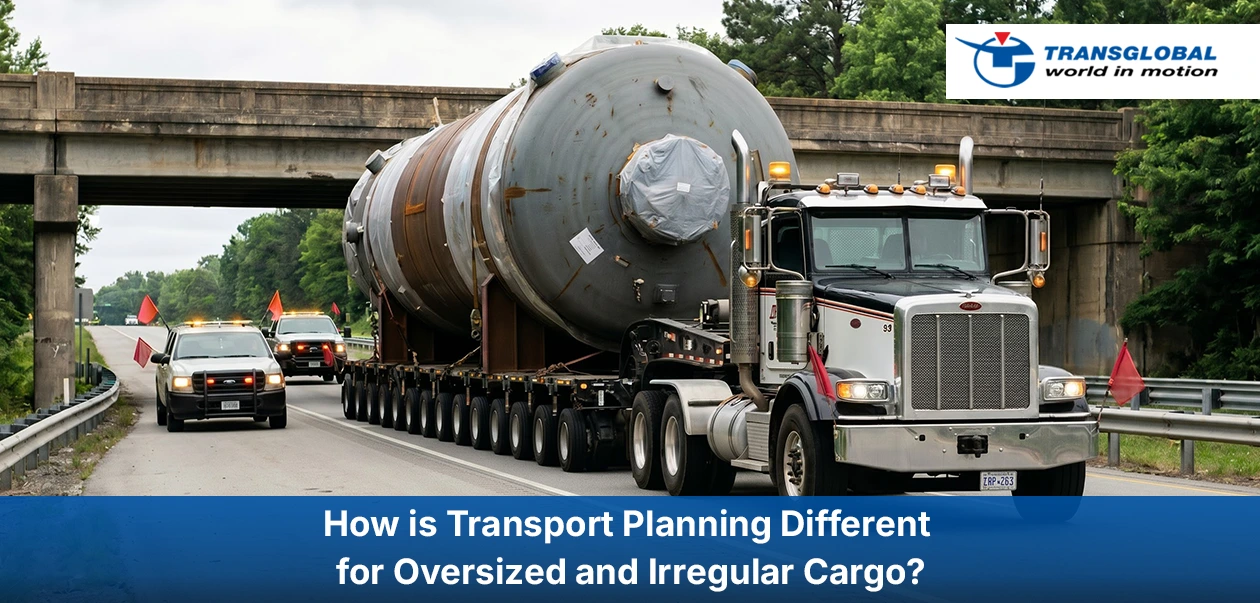
Oversized and irregular cargo cannot be planned around a standard freight movement.
The cargo may be too long, too wide, too high, too heavy, or shaped in a way that does not fit normal handling equipment.
It may be a machine part, mining component, industrial tank, vehicle chassis, construction unit, transformer, generator, steel structure, or project cargo item.
The shipment may look ready at the site.
But before it can move, the transport plan must answer several practical questions.
Can the cargo be lifted safely? Will the route allow the height and width? Does the vehicle match the load? Are permits required? Can the destination site receive the cargo? Will port, depot, or border handling need special arrangements?
This is why oversized cargo transport needs a different level of planning.
It is not only about booking a truck or vessel space. It is about building a movement plan around the actual cargo, route, equipment, permits, handling points, and delivery site.
Why Cargo Dimensions Decide the Transport Plan?
Oversized cargo planning starts with accurate dimensions.
Length, width, height, weight, centre of gravity, lifting points, and packing method all affect how the cargo can move.
A few centimetres can make a difference.
The cargo may need a low-bed trailer, extendable trailer, flat rack, crane truck, specialised lifting equipment, escort vehicle, or approved route.
If the cargo is irregular in shape, the transport team must also understand where the weight sits and how the item should be supported during movement.
A large machine part may not be heavy, but its shape may make loading difficult. A heavy industrial component may fit on a trailer but still need special support because of its weight distribution.
This is why the cargo should be measured and assessed before pricing, booking, and dispatch.
Photos, drawings, packing details, lifting instructions, and site information help the logistics team prepare a more accurate movement plan.
For unusual cargo, early freight forwarding support helps connect the cargo details with the right mode, carrier, permits, and delivery requirements.
When the dimensions are clear, the rest of the transport plan becomes easier to build.
How Route Planning Changes for Oversized Cargo?
A normal cargo route may not work for oversized or irregular cargo.
The shortest route is not always the most suitable route.
The cargo may need to pass under bridges, through toll points, along narrow roads, around sharp turns, across borders, or into industrial sites with limited access.
Height restrictions, road width, turning space, overhead cables, road surface, bridge capacity, traffic conditions, and local regulations all need to be considered.
For oversized road movements, road freight planning may involve route surveys, permit checks, escort arrangements, travel time restrictions, and coordination with local authorities.
Some routes may only allow movement during specific hours. Some cargo may need pilot vehicles or traffic control. In certain areas, the route may need to avoid low bridges, congested urban roads, weak infrastructure, or restricted access points.
The delivery site matters too.
A mine, factory, construction site, warehouse, port, or remote project location may all have different access conditions.
A strong route plan does more than move the cargo from origin to destination. It helps make sure the selected path can physically and legally support the movement.
Why Handling Equipment must Match the Cargo Shape?
Oversized and irregular cargo often needs more than standard loading.
The cargo may not sit evenly on a trailer. It may have delicate parts, exposed edges, unusual lifting points, or surfaces that need protection.
The handling equipment must match the cargo.
This may include cranes, forklifts, spreader bars, lifting beams, slings, shackles, timber supports, skids, ramps, or specialised loading frames.
The team must know where the cargo can be lifted, where it can be supported, and which points should not carry pressure.
For irregular cargo, incorrect lifting can place stress on the wrong area. Poor support can affect balance during loading, road movement, port handling, or final delivery.
The packing method also matters.
Some cargo may need crating. Some may need open protection. Some may need weatherproof covering, bracing, blocking, or custom supports.
For cargo moving internationally, early shipping documents should reflect the actual cargo description, dimensions, weight, packing type, and handling notes.
The clearer the handling plan, the smoother the handover between site, transporter, port, carrier, and receiver.
Why Permits and Site Readiness Need Early Attention?
Oversized cargo often needs approvals before it can move.
Permits may depend on the cargo size, weight, route, vehicle type, travel time, origin, destination, and road authority involved.
If the shipment crosses borders, each country may apply different movement rules.
Port terminals, depots, warehouses, and project sites may also need notice before the cargo arrives.
This is especially important when the cargo requires cranes, special storage, heavy-lift handling, escort vehicles, or controlled delivery timing.
The sending and receiving sites must be checked early.
The team should confirm access roads, gate width, turning space, ground strength, loading area, unloading equipment, and working hours.
For international project movements, container shipping documents can support the planning process when cargo details, packing records, permits, and transport documents need to match.
Cargo can be ready at origin, but the movement still depends on whether every approval and site condition is ready at the same time.
Early preparation gives the shipment a better chance of moving according to plan.
How Multimodal Planning Keeps Irregular Cargo Controlled?
Oversized cargo may not move by one mode only.
It may start by road, enter a port, move by sea, clear at destination, and continue inland to a project site.
Each stage has different requirements.
The road leg needs the right vehicle and route. The port may need lifting arrangements. The sea leg may require flat rack, breakbulk, RoRo, or special stowage. The destination leg may need permits, escorts, or site equipment.
For sea movements, sea freight planning should consider cargo dimensions, vessel acceptance, port handling, securing requirements, and arrival arrangements.
For higher-risk or highly controlled movements, specialised road freight planning also shows why route control, approvals, and cargo handling must be reviewed before dispatch.
The challenge is keeping each stage connected.
If the road plan does not match the port plan, the cargo may reach the wrong handling point. If the sea booking does not match the cargo dimensions, the carrier may need further review. If the destination site is not ready, final delivery may need to be adjusted.
Multimodal planning keeps the cargo visible, prepared, and controlled from origin to destination.
Conclusion: Oversized Cargo Transport Needs Planning Around the Cargo
Oversized and irregular cargo needs a transport plan built around its actual size, shape, weight, route, and handling requirements.
The cargo must be measured correctly. The route must be checked. The equipment must suit the load. Permits must be confirmed. Handling points must be prepared, and the delivery site must be ready before the movement begins.
This is why oversized cargo transport requires more coordination than standard freight.
Every decision affects the next stage of the movement.
A better plan helps protect the cargo, reduce handling pressure, support compliance, and keep project timelines under control.
Preparing oversized or irregular cargo for movement? Contact us to review the cargo dimensions, route, permits, equipment, and delivery requirements.
Move complex cargo with specialist freight forwarders who understand oversized cargo transport, project cargo planning, route coordination, and controlled delivery.
Frequently Asked Questions
What is oversized cargo transport?
Oversized cargo transport refers to the movement of cargo that exceeds standard size, weight, or handling limits and needs special planning.
What details are needed before moving oversized cargo?
Cargo dimensions, weight, centre of gravity, lifting points, route details, permits, equipment needs, and delivery-site access should be confirmed.
Why does irregular cargo need special handling?
Irregular cargo may have unusual shape, balance, lifting points, or support needs, so handling equipment and securing methods must be planned carefully.

Comments