

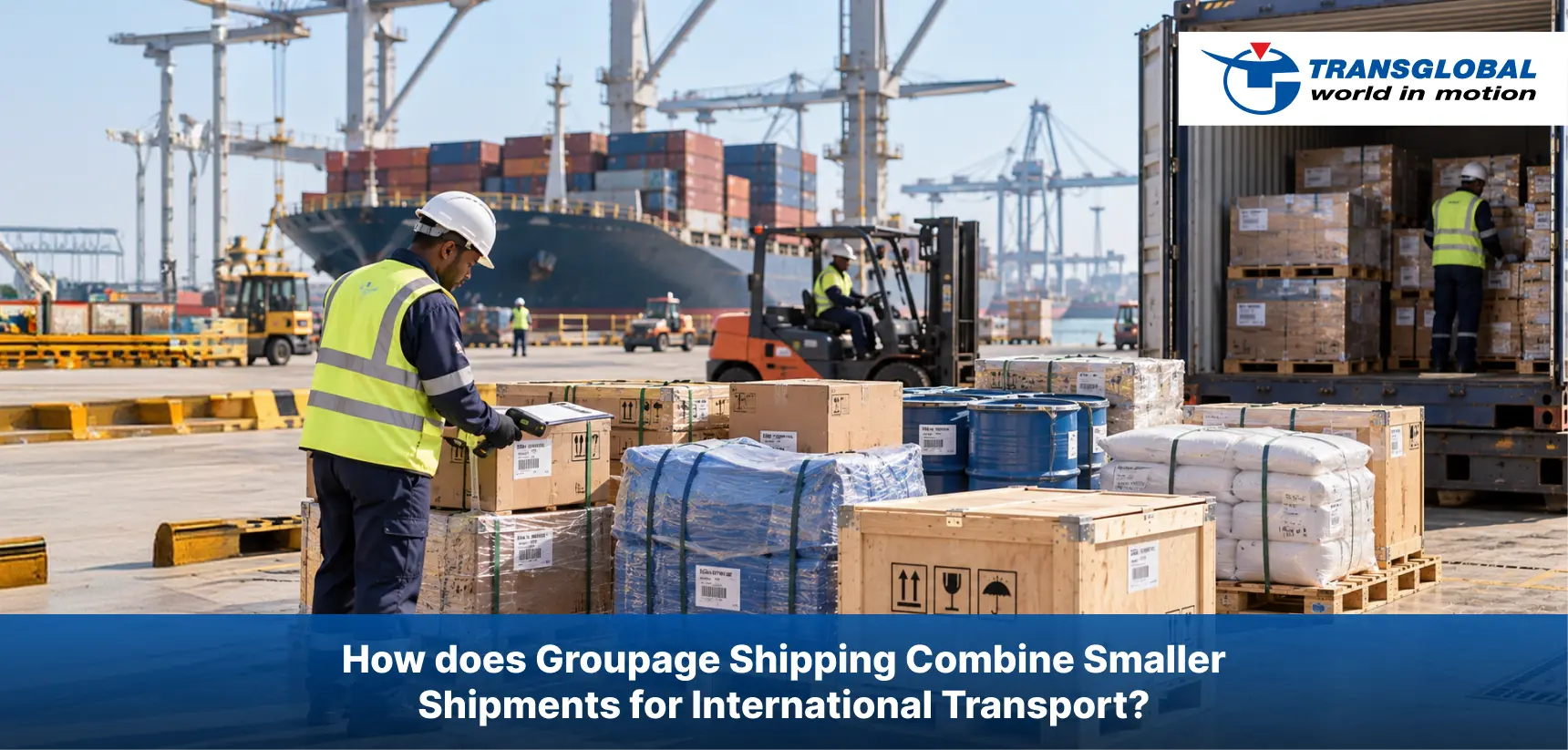
Not every international shipment needs a full container.
A business may only need to move a few cartons, several pallets, spare parts, retail stock, product samples, machinery components, or regular smaller orders to another country.
The cargo may still be valuable. The delivery may still be important. But the shipment may not be large enough to justify paying for the full space of a container.
That is where groupage shipping becomes useful.
Groupage shipping combines smaller shipments from different shippers into one shared international movement. Instead of each cargo owner paying for unused container space, the shipments are consolidated, transported together, and separated again before final delivery.
In sea freight, this is often connected to LCL shipping, cargo consolidation, consolidated freight, and shared container movement.
For importers and exporters, groupage shipping offers a practical way to move smaller cargo internationally without waiting until there is enough volume for a full container.
But the process still needs proper freight control.
Each shipment must be received, measured, labelled, documented, consolidated, loaded, shipped, deconsolidated, cleared, and delivered correctly.
How does Groupage Shipping Work for Smaller International Cargo?
Groupage shipping is a freight method where smaller shipments are combined into one larger movement.
In sea freight, this is usually called LCL shipping, or less-than-container load.
The cargo does not occupy a full container on its own. It shares container space with other compatible shipments moving in the same direction.
This can be useful for importers, exporters, manufacturers, traders, and distributors who need to move cargo internationally but do not have enough volume for a full container load.
For smaller cargo volumes, sea freight can offer LCL options where shipments share space instead of moving as a full container.
Groupage is not only about reducing unused space.
It can help businesses ship more regularly, manage smaller orders, test new markets, reduce stock pressure, and avoid waiting until they have enough cargo to fill a container.
The cargo still needs proper handling and documentation.
A smaller shipment may share space, but it still needs to move with the same level of accuracy as any international shipment.
How Cargo Consolidation Works Before Departure?
Groupage shipping starts before the container is loaded.
Each smaller shipment must first be collected or delivered to a consolidation warehouse or CFS.
A CFS, or Container Freight Station, is where LCL cargo is received, checked, measured, labelled, grouped, and prepared for loading into a shared container.
At this stage, the freight team confirms the package count, cargo description, dimensions, weight, destination, handling instructions, and document status.
The main checks usually include:
- package count and outer condition,
- cargo description and destination,
- dimensions, weight, and CBM,
- handling marks and labels,
- document status,
- cargo compatibility, and
- cut-off timing.
CBM is also important.
CBM means cubic metre, and it is used to measure the volume of the cargo. In groupage shipping, charges often depend on the cargo’s volume or weight, depending on which is higher.
That is why accurate dimensions, weights, and packing details matter before the cargo is accepted.
Cargo compatibility also matters.
Fragile cargo, dangerous goods, food products, chemicals, high-value goods, and moisture-sensitive cargo cannot always be placed together without proper review.
For businesses comparing full container and shared container options, FCL vs LCL planning helps explain when shared container movement may be more practical than paying for unused space.
Once the shipments are checked, they are grouped according to destination, route, container plan, and carrier schedule.
The consolidation point is where smaller cargo becomes one organised international movement.
If this stage is not controlled properly, the shared container process can become difficult to manage later.
Why Documents must be Accurate for Shared Container Cargo?
Groupage shipping depends heavily on document accuracy.
Each shipment inside the shared container belongs to a different cargo owner, so every consignment must be clearly identified.
The commercial invoice, packing list, transport document, cargo description, package count, weight, consignee details, and shipping instructions must match the actual cargo.
If one shipment has incomplete or incorrect documents, it can affect the wider consolidation process.
The issue may delay carrier acceptance, customs review, container loading, release, or deconsolidation at destination.
Accurate shipping documents help each smaller shipment remain traceable within the shared container movement.
This is especially important for LCL shipping.
The container may be shared, but the documents must still show which cargo belongs to which shipper and consignee.
A clear document file helps avoid confusion when the container is unpacked, and each shipment is separated for customs clearance or final delivery.
How do Cut-Off Times and Shared Container Handling Affect Timing?
Groupage shipping can be cost-effective, but it works around scheduled consolidation and sailing dates.
Cargo usually has to meet a cargo cut-off and document cut-off before the container can be loaded.
The cargo cut-off is the deadline for the goods to reach the consolidation point.
The document cut-off is the deadline for the required shipping information to be submitted.
If a shipment misses either deadline, it may need to wait for the next consolidation.
This makes timing important.
The shipper should know when cargo must be ready, when documents must be submitted, when the container is expected to load, and when the vessel is expected to depart.
Handling also needs attention.
Because several shipments share one container, each package must be strong enough for movement, stacking, loading, unloading, and warehouse handling.
Poor packing can affect the cargo during consolidation, container movement, port handling, and deconsolidation.
For port-based movements, sea freight flow helps explain how cargo moves through shipping schedules, terminals, containers, and inland connections.
Groupage works best when the cargo is ready on time, packed correctly, and prepared for the full journey.
A shared container can reduce freight cost, but it does not remove the need for disciplined preparation.
What Happens After the Container Arrives?
The groupage process continues after the container reaches the destination country.
The container must be received, unpacked, and separated according to each shipment.
This is called deconsolidation.
During deconsolidation, each consignment is matched with its documents, marks, consignee details, customs requirements, and delivery instructions.
This stage is important because several shipments that travelled together now need to be separated and released individually.
If the cargo is not properly labelled or documented, this stage can become difficult.
The destination team must know which cargo belongs to which consignee, which shipment has cleared, which needs inspection, and which is ready for delivery.
For groupage cargo that needs temporary holding before release or delivery, warehousing support can help manage received shipments, sorting, storage, dispatch preparation, and final handover.
The final delivery may go to a warehouse, factory, retail site, project location, business address, or customer facility.
The shared container journey is only complete when each smaller shipment is separated, cleared, and delivered to the correct receiver.
Why Groupage Shipping Needs the Right Freight Partner?
Groupage shipping may look simple because the cargo is smaller.
In practice, it needs careful coordination.
A freight partner usually manages:
- consolidation and CFS handling,
- CBM and chargeable weight checks,
- carrier booking and sailing schedule,
- cargo cut-off and document cut-off,
- cargo compatibility review,
- container loading coordination,
- destination deconsolidation,
- customs coordination, and
- final delivery instructions.
For businesses moving smaller international shipments, freight forwarding helps bring these steps together so the cargo does not get lost inside a shared process.
The right freight partner should be able to explain the schedule, cost structure, cargo readiness requirements, document needs, and possible timing differences compared with full-container movement.
This matters because groupage is not always the best option for every shipment.
Very urgent cargo, highly sensitive goods, oversized cargo, restricted items, or cargo that cannot be mixed with other shipments may need a different transport plan.
Groupage shipping works best when the cargo is suitable for shared movement, and the process is managed properly from origin to destination.
Conclusion: Groupage Shipping Gives Smaller Cargo Access to Global Routes
Groupage shipping combines smaller shipments into one shared international movement.
It allows cargo owners to move goods without paying for a full container when the shipment does not need that much space.
The process starts with cargo collection or delivery to a consolidation warehouse or CFS.
The goods are checked, measured, documented, grouped with compatible shipments, loaded into a shared container, shipped internationally, deconsolidated at destination, and delivered to the final receiver.
That answers the main question.
Groupage shipping works by turning several smaller consignments into one organised freight movement while still keeping each shipment identifiable and traceable.
For importers and exporters, it can support regular shipping, smaller order volumes, better space use, and access to international transport routes.
But it still depends on accurate documents, strong packing, cargo compatibility, cut-off control, CBM accuracy, and proper deconsolidation.
Planning to move smaller cargo internationally? Contact us to review the cargo volume, documents, route, consolidation option, and delivery requirements.
Move smaller international shipments with leading freight forwarders who understand groupage shipping, cargo consolidation, LCL shipping, and shared container movement.
Frequently Asked Questions
What is groupage shipping?
Groupage shipping combines smaller shipments from different cargo owners into one shared freight movement, often using LCL or shared container transport.
Is groupage shipping the same as LCL shipping?
Groupage shipping and LCL shipping are closely related. LCL usually refers to smaller sea freight shipments that share container space with other cargo.
How is groupage shipping charged?
Groupage shipping is usually charged by volume or weight, depending on which is higher. Accurate dimensions, weight, and packing details are important before acceptance.


Comments