

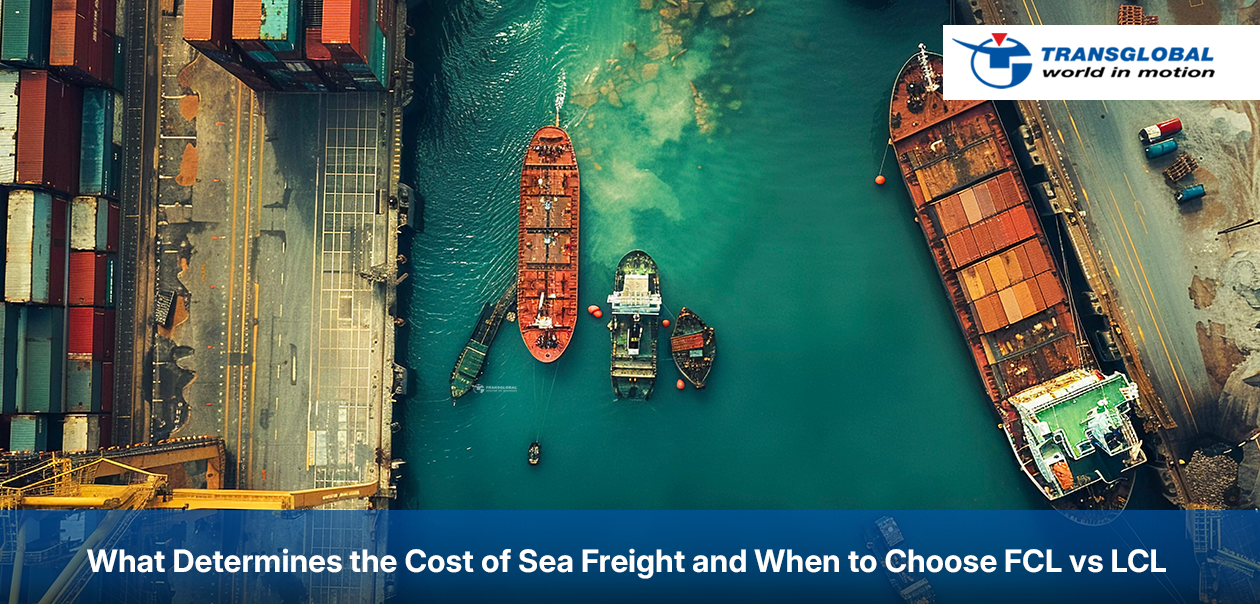
When shipping internationally, sea freight remains the most cost-effective option for large or bulk cargo. But understanding how ocean freight costs are calculated, and knowing whether to choose a Full Container Load (FCL) or Less than Container Load (LCL) can save your business thousands. From base charges and surcharges to temporary seasonal adjustments and cargo-specific fees, there’s more to ocean freight pricing than just booking a container.
Let’s break it down clearly and practically, so you can make informed shipping decisions and avoid hidden costs.
What Influences the Cost of Sea Freight?
The cost of sea freight isn’t a one-size-fits-all figure. It varies depending on several important factors:
Cargo Volume & Weight: Whether your goods are light but bulky or heavy but compact, pricing can be calculated either by cubic meter (CBM) or by weight, whichever is greater.
Type of Cargo: Standard cargo, dangerous goods, oversized items, or temperature-sensitive freight can all carry different handling fees.
Shipping Route & Distance: Longer routes and less-frequent destinations often come with higher rates due to port charges and carrier demand.
Container Type: 20ft or 40ft containers, reefers, flat racks, and open tops all have different base rates.
Incoterms & Port Services: Who pays what along the way, from loading and unloading to customs and inland delivery, affects your total freight bill.
Choosing Between FCL and LCL: What’s Right for You?
Before booking, one of the most important decisions you’ll make is whether to ship FCL or LCL. Here’s how they compare:
Full Container Load (FCL)
FCL means one shipper, one container. It’s your cargo and only your cargo inside.
Ideal when:
- Your shipment exceeds 10 pallets or 13 cubic meters
- You want more control over loading/unloading
- Speed, security, or cleanliness is a priority
FCL can be cheaper per CBM if you’re shipping in bulk, even if the container isn’t completely full.
Less than Container Load (LCL)
LCL means your cargo shares space with others in the same container. It’s grouped together (also called groupage) and priced based on weight or volume.
Ideal when:
- You’re shipping less than 13 cubic meters
- You want flexibility with smaller, regular shipments
- You don’t need the entire container
LCL comes with extra handling at consolidation warehouses; this might increase transit time and risk of minor damage.
Key Charges That Make Up Your Sea Freight Cost
Understanding your sea freight invoice is critical. It typically includes:
1. Base Freight
This is the primary cost from the port of origin to the port of destination.
2. Common Surcharges
BAF (Bunker Adjustment Factor): Accounts for fuel price changes
CAF (Currency Adjustment Factor): Protects against currency fluctuations
THC (Terminal Handling Charges): Loading/unloading costs at ports
CS (Congestion Surcharge): Applied when ports experience delays
3. Temporary or Seasonal Surcharges
PSS (Peak Season Surcharge): Demand-based pricing during high-volume months
WRS (War Risk Surcharge): Applied when routes pass through conflict zones
GRI / GRR / ERR: General rate increases during market disruptions
4. Cargo-Specific or Route-Specific Charges
IMO Surcharge: For hazardous/dangerous goods (UN-regulated)
Overweight Surcharge (OWS): When your cargo exceeds the weight limits
Special Equipment Surcharge (SEP): For flat racks or reefers
AMS Filing Fee: For shipments to the US/Mexico (security compliance)
When Do Sea Freight Costs Increase Unexpectedly?
Several hidden factors can cause prices to spike mid-shipment:
- Sudden demand shifts
- Weather events or strikes disrupting port activity
- Incomplete documentation triggering re-routing or delays
- Unexpected customs inspections or duty reclassification
That’s why it’s crucial to work with a freight partner who stays alert and helps you avoid preventable costs through early planning and proper paperwork.
Smart Tips to Optimize Your Sea Freight Budget
- Consolidate shipments to reach FCL thresholds when possible
- Book early to lock in rates and avoid peak season surcharges
- Work with a freight forwarder who has good carrier relationships and customs knowledge
- Track your cargo live to avoid demurrage, detention, and warehousing fees
Why it Pays to Work With Transglobal Cargo?
At Transglobal, we don’t just move containers, we help you make strategic freight choices. Whether it’s planning your FCL shipments from Asia or optimizing your LCL imports into Africa, we:
- Classify cargo to avoid unnecessary duty charges
- Offer full transparency on all cost components
- Provide bonded warehousing and cargo inspection support
- Handle complex sea freight documentation (including AMS and IMO filings)
- Monitor and advise on market-based surcharges in real time
If you’re looking to ship smarter, reduce costs, and simplify global trade, let’s connect.
Conclusion
Sea freight services don’t have to be complicated, but it does need the right strategy. Understanding FCL vs LCL, keeping an eye on rate variables, and choosing the right logistics partner can help you ship more efficiently while staying cost-effective.
Ready to optimize your ocean freight strategy? Get in touch with Transglobal Cargo and let us streamline your next shipment.
Frequently Asked Questions
Is LCL always cheaper than FCL?
Not always. LCL is cheaper for small volumes, but FCL is more cost-effective when shipping in bulk due to lower per-unit costs and fewer handling charges.
What documents are needed for sea freight shipping?
You'll typically need a commercial invoice, packing list, bill of lading, and, depending on your cargo, certificates like origin, insurance, or dangerous goods declaration.
How can I avoid unexpected sea freight surcharges?
Plan in advance, stay updated on global events, choose carriers with stable pricing policies, and work with a freight forwarder who proactively manages risks and communicates all costs upfront.



How Does Groupage Shipping Work for Smaller Shipments?
Sep 29[…] businesses comparing full container and shared container options, FCL vs LCL planning helps explain when shared container movement may be more practical than paying for unused […]