

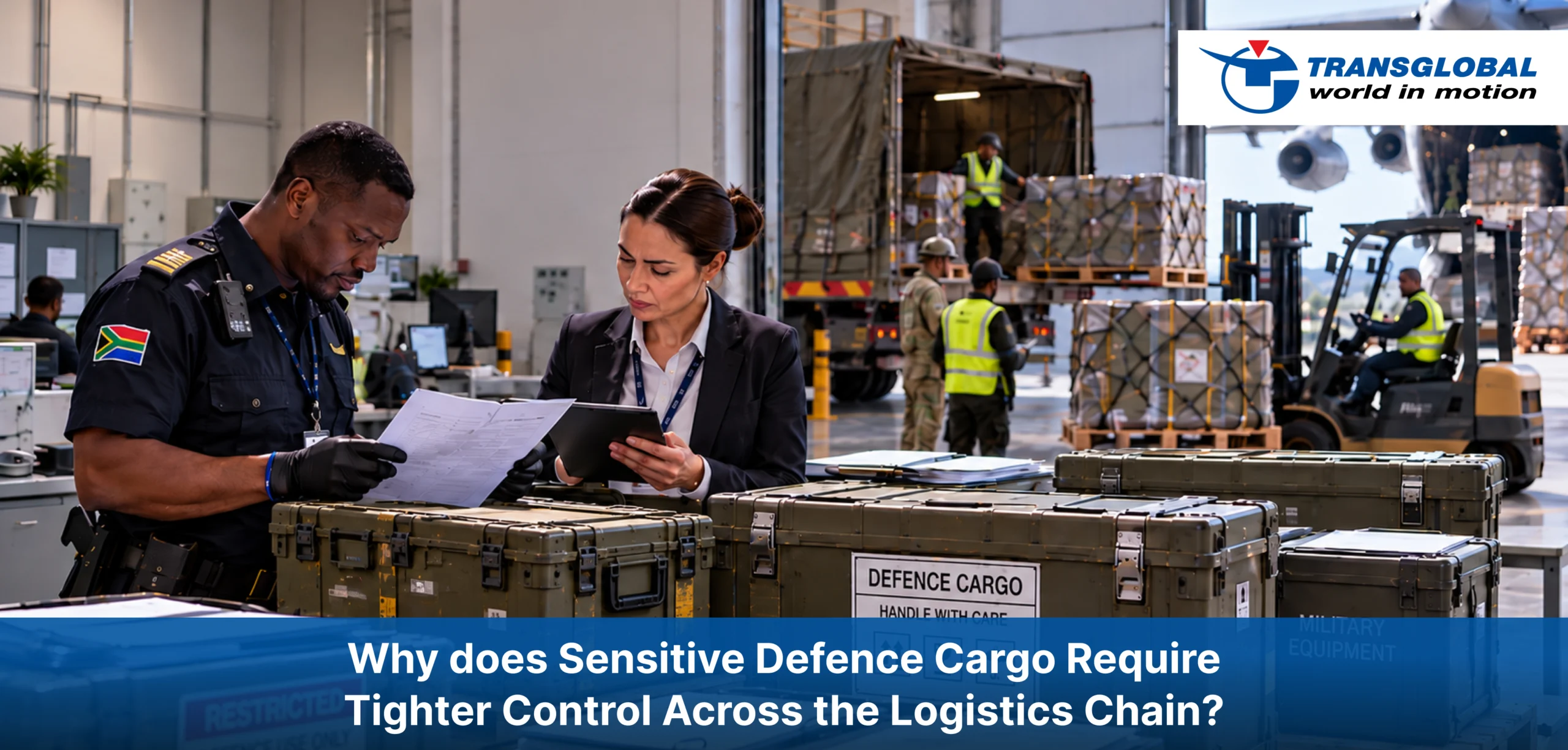
Sensitive defence cargo is different from standard freight before it even moves.
The cargo may be packed. The collection point may be known. The receiving party may be confirmed. But that does not mean the shipment is ready to travel.
Military cargo carries a different level of responsibility.
It may involve defence equipment, controlled components, tactical systems, armoured vehicle parts, communication units, restricted spares, protective equipment, or goods linked to defence procurement.
Some shipments may not look unusual from the outside.
But the risk sits in what the cargo represents, who is allowed to handle it, which approvals apply, where it is moving, and how the final handover is recorded.
That is why sensitive cargo needs tighter control across the logistics chain.
The movement must prove that the cargo is authorised, documented, protected, routed correctly, handled by approved parties, and delivered to the right receiver.
In defence transport, the goal is not only to complete a delivery.
The goal is to keep control from instruction to final acceptance.
Why Defence Cargo must be Cleared for Movement Before Dispatch?
Sensitive defence cargo cannot be moved only because the shipment is physically ready.
The movement itself must be cleared.
Before transport is arranged, the logistics team must confirm what the cargo is, who is sending it, who will receive it, why it is moving, and which approvals apply.
This may include end-user details, permit references, export or import approvals, controlled-goods information, consignee instructions, route requirements, and security conditions.
That is why defence procurement requires more than a normal freight booking. The cargo may be connected to government supply, contractor delivery, operational readiness, or controlled equipment movement.
If the authorisation is unclear, the shipment should not move forward.
This is where defence logistics differs from ordinary cargo.
A normal shipment may begin with collection instructions.
Sensitive military cargo begins with permission, accountability, and control.
How Information Control Protects the Movement?
In standard logistics, shipment information is often shared widely to keep things moving quickly.
In military freight, information must be shared carefully.
The right people need the right details at the right time.
But not every party needs to know the full cargo value, operational purpose, route sensitivity, consignee background, or end-use context.
Too much information in the wrong place can create risk.
Information control helps protect the shipment before and during movement. It reduces exposure, limits unauthorised access, and keeps the transport process aligned with the approved purpose.
The logistics team should control:
- cargo description visibility,
- route and timing details,
- driver instructions,
- permit references,
- consignee contacts,
- handover information, and
- escalation contacts.
For controlled military and defence shipments, NCACC control helps explain why approval, accountability, and responsible movement matter before cargo enters the transport chain.
Secure logistics is not only about guarding the cargo.
It is also about controlling the information around it.
Why Must Documentation Prove the Approved Purpose?
Defence cargo documentation must do more than identify the goods.
It must support the approved reason for the movement.
The cargo description, quantity, value, HS code, origin, destination, consignee, end-user, permit reference, and transport instruction should all point to the same shipment purpose.
If one part of the document file does not match, the cargo can face questions before release, during customs review, at a border, or at final handover.
For general freight, a document issue may create a delay.
For sensitive defence cargo, it can create a compliance concern.
This is why compliance gaps matter in defence and military exports. Responsibility must be clear between the buyer, seller, freight partner, consignee, and end-user.
A defence shipment may move under commercial terms, but the control requirements are not only commercial.
The documents must show that the cargo has moved within the approved framework.
In military cargo, paperwork is part of the security process.
How Access Control Shapes Handling and Storage?
Sensitive defence cargo may pass through several hands before it reaches the receiver.
It may be collected from a manufacturer, held at a secure facility, moved through a depot, loaded at a port, transferred at an airport, or delivered to a military, contractor, government, or project site.
Every handling point creates one important question.
Who had access to the cargo?
Access control is critical because the cargo may involve restricted goods, sensitive information, high-value equipment, or controlled end-use.
The shipment may need approved handlers, restricted storage, sealed packaging, cargo segregation, identity checks, secure loading, and recorded release instructions.
For military and defence movements, military logistics should be managed with discipline because the movement depends on trust, authorisation, and controlled handling.
The cargo should not wait in an uncontrolled environment because the next transport leg is not ready.
Storage is not empty time.
For sensitive cargo, storage is part of the protection chain.
Why Must Route Planning Look Beyond Distance?
The shortest route is not always the right route for defence cargo.
Route planning must consider security, permits, border requirements, inspection risk, road conditions, authorised stopping points, escort needs, receiver readiness, and contingency options.
A route may look efficient on a map but still be unsuitable for sensitive military freight.
If the cargo is hazardous, explosive, oversized, or linked to controlled defence use, the route may need a much closer review before dispatch.
For high-risk movements, specialist road freight shows why licensing, route planning, trained teams, and compliance checks matter before the cargo moves.
The transport plan should also answer what happens if conditions change.
What if a border is delayed?
What if a permit needs review?
What if the receiver changes the delivery window?
What if the vehicle must stop before the planned point?
Sensitive cargo cannot depend on last-minute decision-making.
The next decision should already be clear before the movement begins.
Why Chain of Custody Decides Final Accountability?
A defence shipment is not complete only because the cargo reaches the destination.
It is complete when the right receiver accepts the cargo with the right records.
That is chain of custody.
It shows who handled the cargo, when custody changed, where the cargo was held, which seals were used, what condition the shipment was in, and who accepted the final handover.
For sensitive defence cargo, this record protects the shipper, consignee, logistics provider, contractor, government body, and end-user.
A weak handover can create uncertainty even when the cargo physically arrives.
The final delivery should confirm:
- authorised receiver details,
- package count,
- seal status where used,
- cargo condition,
- supporting documents,
- time of delivery,
- handover signatures, and
- any special receipt notes.
Transglobal’s published defence expertise highlights why defence and hazardous logistics require certified capability, controlled handling, and specialist operational focus.
The last signature is not just proof of delivery.
It is proof that the controlled movement stayed controlled until the end.
Conclusion: Military Cargo Needs Control, Not Just Transport
Sensitive defence cargo requires tighter control because the risk is bigger than normal freight movement.
The shipment may involve national security, controlled equipment, restricted information, end-user accountability, government approval, and strict handover requirements.
That changes the way the logistics chain must work.
The cargo must be authorised before movement. Information must be controlled. Documents must prove the approved purpose. Handling and storage must limit access. Routes must be selected for security and compliance. Chain of custody must stay clear until final acceptance.
That is what separates defence transport from standard cargo movement.
Military cargo is not simply shipped.
It is managed through a controlled process where the cargo, documents, people, route, and receiver must remain aligned from start to finish.
Planning sensitive defence cargo or military freight movement? Contact us to review the cargo details, approvals, documentation, route control, and handover requirements before dispatch.
Move sensitive cargo with leading freight forwarders who understand military cargo, defence transport, secure logistics, and controlled freight movement.
Frequently Asked Questions
What is military cargo?
Military cargo refers to defence-related equipment, systems, components, spares, or supplies moved for military, government, contractor, or defence procurement purposes.
Why is end-user accountability important in military cargo?
End-user accountability confirms who is authorised to receive and use the cargo. It helps ensure sensitive defence goods are moved to the correct party and remain within the approved movement purpose.
Why does military cargo need a chain of custody?
Military cargo needs a chain of custody to show who handled the shipment, when it changed hands, where it was stored, and who accepted final delivery. This keeps the movement traceable from collection to handover.

Comments