

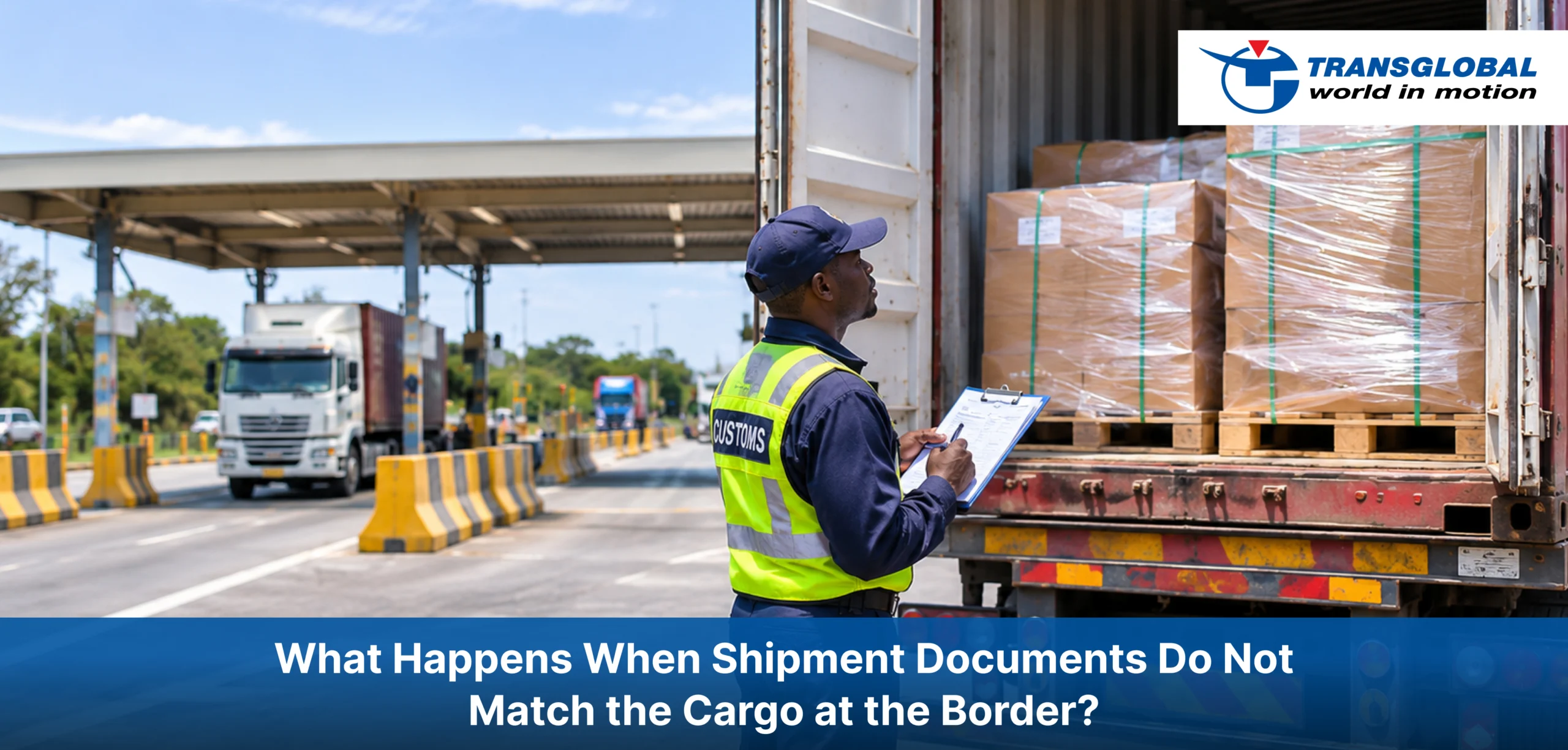
An industrial supplier in Johannesburg is sending replacement parts to a mining customer in Zambia. Shortly before collection, the customer requests an additional 20 components, which the warehouse includes in the shipment.
The order leaves with 140 components, but the commercial invoice and customs declaration still reflect the original quantity of 120.
The difference goes unnoticed until the goods are examined at the border.
Although the supplier has a legitimate reason for including the additional components, the customs authorities need to establish why they were not declared. Meanwhile, the driver cannot continue the journey without the necessary authorization.
Situations like this reveal an often overlooked aspect of customs documentation. Even when documents have been prepared correctly at the time of submission, subsequent changes to the physical shipment can make that information inaccurate.
Resolving the discrepancy requires cooperation between the businesses involved, particularly when the goods are already outside the supplier’s premises.
What Happens When Customs Questions an Already Submitted Declaration?
Receiving an initial acceptance of a customs declaration does not necessarily mean that every detail has been independently verified.
Customs authorities may conduct further documentary assessments or physical examinations according to their risk assessment procedures and regulatory requirements.
In the case of the mining components, an officer may request additional information to establish whether the difference resulted from an incorrect declaration, a counting error or an undocumented commercial transaction.
The distinction matters because each situation may require a different response.
Until the matter is resolved, the shipment may remain under customs control. Depending on the border procedures, the vehicle could be directed to an inspection area or the goods held at an approved facility.
The growing use of data-led customs clearance has made it possible for authorities to assess shipment information before arrival. However, electronic records cannot independently account for every change made during warehouse loading.
An accepted declaration does not authorise the movement of additional goods that fall outside its scope.
Why is Establishing What Actually Happened More Important Than Replacing an Invoice?
When a discrepancy is discovered, the supplier’s immediate response may be to issue a revised commercial invoice.
However, changing the document does not necessarily resolve the customs query.
The authorities may need evidence explaining why the original information was incorrect and whether the revised details represent the actual transaction.
Returning to the mining shipment, the additional components could have been supplied as part of a revised purchase order, provided under warranty or included in error.
Although the physical quantity is identical in each situation, the commercial circumstances differ and may influence how the goods should be declared.
The supplier may need to retrieve the customer’s revised order, warehouse picking records, inventory adjustment history and correspondence authorising the additional goods.
These records help establish what occurred between order confirmation and dispatch.
There is also a difference between an incorrect package count and an entirely undeclared product. The latter could introduce new tariff, valuation or permit considerations.
Transglobal’s article on Bill of Entry errors provides further insight into how declaration errors can affect customs assessments.
At this stage, the priority is establishing an accurate account of the shipment rather than simply producing a replacement document.
Who is Responsible for Resolving the Discrepancy at the Border?
A driver waiting at the border is rarely in a position to explain the commercial arrangements behind the goods being transported.
The information needed to resolve the query usually rests with the supplier, exporter, importer or other parties responsible for the transaction.
The warehouse may have evidence of the actual quantities loaded. The sales department may hold the customer’s revised instructions, while the importer may need to confirm the purchase arrangements or provide additional authorisation.
The customs broker brings the relevant information together and establishes which correction procedure is applicable.
Through customs brokerage, importers and exporters can receive assistance with declaration amendments, supporting evidence and communication with customs authorities.
Depending on the circumstances, the resolution may involve reassessing duties, obtaining further approval or addressing an applicable penalty.
Correcting one country’s export declaration may also require reviewing the related transit and destination import records.
This is particularly relevant across Southern African trade corridors, where a consignment can pass through several customs jurisdictions before reaching its destination.
The amended paperwork must be processed through the appropriate official channels before the affected movement can resume.
What Happens to Other Consignments Travelling on the Same Vehicle?
The consequences become more complicated when the affected shipment forms part of a consolidated road freight movement.
A vehicle heading towards Zambia may carry mining components for one customer, automotive parts for another and industrial supplies for several other businesses.
Those customers may have submitted accurate documentation for their respective consignments.
Nevertheless, if customs requires the vehicle to remain available for examination, their deliveries may also be affected.
Separating the consignments is not necessarily a straightforward solution.
The goods may be travelling under customs control, and unloading or transferring part of the cargo could require authorisation, suitable facilities and revised transport arrangements.
For freight providers coordinating cross-border logistics, this creates a challenge involving several delivery commitments rather than a single delayed order.
A documentation discrepancy can also affect vehicle utilisation. A truck expected to complete its journey and collect a return load may no longer be available as scheduled.
The relationship between border procedures and wider transport operations is covered further in Transglobal’s insights into customs clearance.
Where several customers share a vehicle, the freight provider must manage the affected delivery schedules while following the authorities’ instructions.
What Can Businesses Learn from a Shipment Held for Documentation Errors?
Once the mining components are released, the supplier may consider the matter closed.
However, a closer examination of the incident reveals a problem within its own order fulfilment process.
The sales team accepted a revised order. The warehouse picked the additional components. The dispatch team loaded them onto the truck. Yet nobody updated the information used for the customs declaration.
Each department completed its individual task, but the change was never communicated across the business.
This type of oversight can occur when shipping documents are prepared before the warehouse confirms the final consignment.
Businesses can address this by introducing a final reconciliation between the goods loaded and the information submitted for clearance.
Any subsequent changes to the shipment should be communicated to the person responsible for the declaration before the vehicle departs.
Reviewing previous border incidents can also help identify whether particular suppliers, product lines or internal processes are responsible for recurring discrepancies.
For companies managing frequent regional shipments, correcting the underlying information gap may be more valuable than repeatedly paying the costs associated with customs delays.
Conclusion: Customs Documentation Must Reflect the Goods Actually Dispatched
International shipments can change between the original order and the final collection. Additional products, substitutions and quantity adjustments are sometimes unavoidable.
The difficulty arises when those changes are not reflected in the customs documentation.
Businesses that connect their sales, warehouse and dispatch records with the declaration process are better positioned to manage these adjustments before goods enter international transit.
Should a discrepancy arise, retaining the original commercial records and responding with accurate supporting evidence can assist the customs review.
Preparing goods for regional export or require assistance with a customs documentation discrepancy? Contact us to discuss your shipment circumstances and applicable clearance requirements.
Manage your international cargo movements with leading freight forwarders who understand customs procedures and the practical challenges of cross-border trade.
Frequently Asked Questions
Can additional goods be included after a customs declaration has been submitted?
Changes to the consignment must be reflected through the applicable customs amendment or declaration procedure before the goods are moved.
Can a driver open a sealed shipment to resolve a customs discrepancy?
Where a shipment is under customs control, the driver must obtain the appropriate authorisation before breaking a customs seal or accessing the goods.
Can a revised commercial invoice alone resolve a customs discrepancy?
Not necessarily. The relevant customs authority may require supporting commercial records and a formal declaration amendment before authorising release.
Comments