

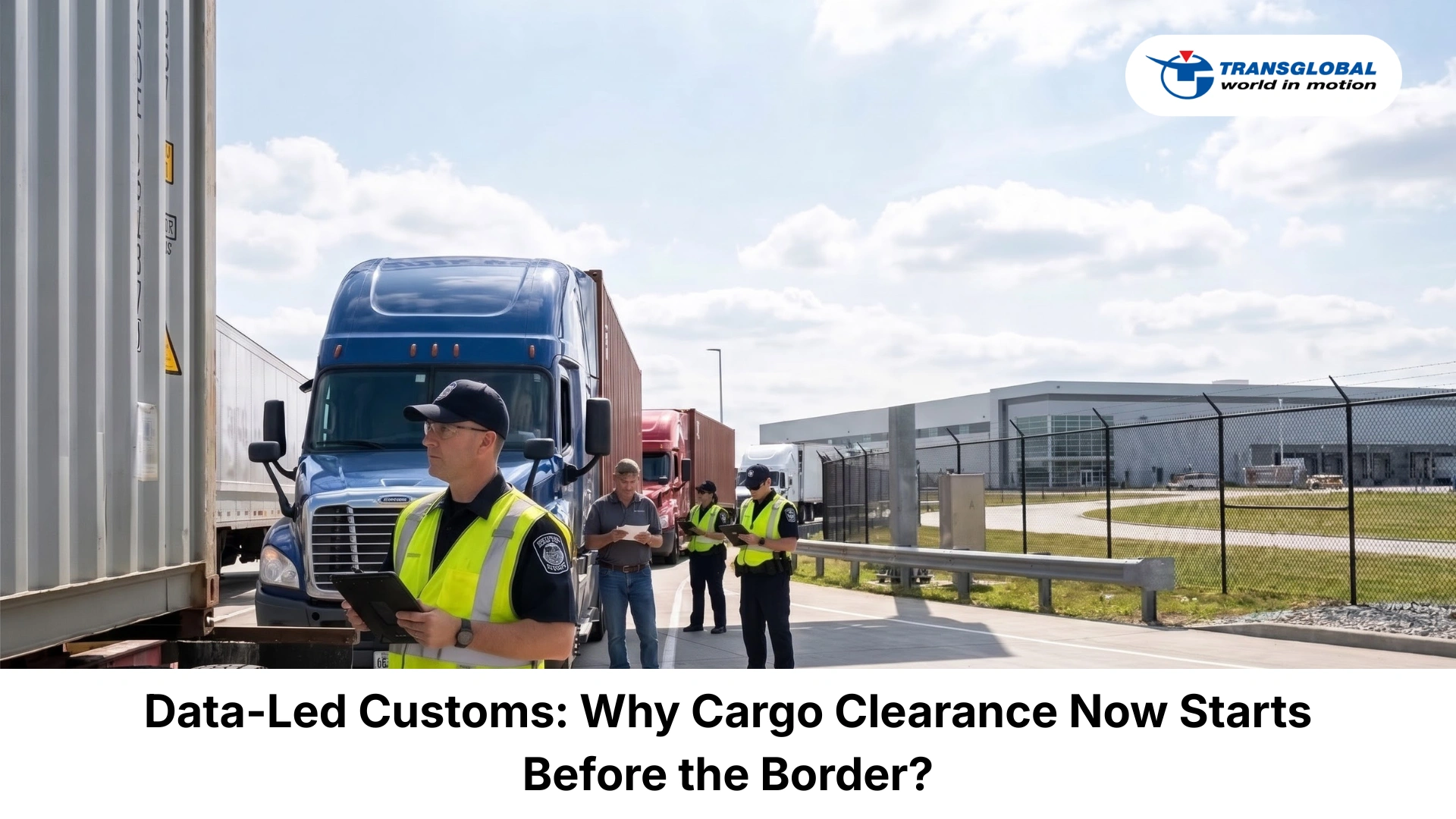
Customs clearance is becoming more data-led.
For importers, exporters, and freight operators, this is an important shift.
Border clearance has traditionally been associated with physical checks, document reviews, inspections, and cargo holds at the point of entry. But customs administrations are increasingly looking at risk before cargo arrives.
The focus is moving from reacting at the border to analysing shipment data earlier in the supply chain.
According to Wendy Naidoo, Customs House Brokerage Quality Assurer at Maersk South Africa, modern customs enforcement is shifting from checking goods at the border to analysing data before arrival.
This was discussed during an Institute of Customs, Freight Forwarding & Supply Chain Management masterclass on supply chain and regulatory compliance.
The message is clear.
👉 Cargo movement will increasingly depend on the quality, accuracy, and reliability of data submitted before the shipment reaches the border.
📊 Customs is Becoming More Intelligence-Led
Customs authorities have limited time, people, and inspection capacity.
A data-led model helps authorities focus those resources where the risk is highest.
Instead of stopping every shipment in the same way, customs can identify high-risk consignments, traders, commodities, routes, and documentation patterns before cargo arrives.
This allows lower-risk cargo to move with fewer unnecessary interventions.
For compliant importers and exporters, this can improve clearance predictability.
For customs authorities, it can support better enforcement.
For freight operators, it can reduce unnecessary regulatory stops and improve cargo flow.
This does not mean customs control becomes weaker.
It means control becomes more targeted.
🚛 Risk-Based Clearance can Keep Cargo Moving
Every unnecessary inspection creates time pressure.
Cargo may wait at a port, border post, warehouse, terminal, or delivery point while the shipment is reviewed.
For general cargo, this can affect delivery schedules and inventory planning.
For regulated cargo, the impact can be greater.
Pharmaceuticals, chemicals, food products, hazardous materials, machinery, and other controlled goods often require accurate classification, supporting permits, product descriptions, invoices, packing lists, and transport documentation.
When customs can assess risk before arrival, compliant cargo has a better chance of moving through the supply chain without avoidable disruption.
That is why accurate customs clearance is not just an administrative step.
It is part of keeping cargo moving.
🧾 Data Quality is Now a Clearance Requirement
The shift towards data-led customs places more responsibility on the information submitted by traders and logistics partners.
Incorrect HS codes, vague cargo descriptions, inconsistent invoice details, missing permits, wrong consignee information, or incomplete shipment records can all create risk signals.
Even when the cargo itself is legitimate, poor data can slow the shipment down.
In a risk-based system, data is not just used for record keeping.
It is used to decide whether cargo should be stopped, checked, queried, or released.
For regulated cargo, even a small data mismatch can lead to queries, holds, or additional checks.
This makes documentation accuracy more important than ever.
Importers and exporters need to make sure shipment information is complete, consistent, and submitted early enough for pre-arrival assessment.
🌐 Single Window Systems can Reduce Repeated Submissions
Advanced customs systems also depend on better coordination between government agencies.
A single window model allows traders to submit information through one platform, where it can be validated and shared with customs and other regulatory authorities.
This reduces the need to submit the same information repeatedly to different departments.
It can also help improve visibility across permits, licences, product controls, and border requirements.
For businesses moving cargo across South Africa and regional markets, this kind of coordination can reduce friction.
It can also help authorities identify gaps earlier instead of waiting until cargo is already at the border.
This kind of visibility also supports smoother sea freight flows, especially when documents are reviewed before cargo reaches the port.
⚖️ Compliance is Still the Foundation
The future of customs is not the removal of compliance.
It is the automation, standardisation, and intelligence surrounding compliance.
This distinction matters.
Data-led systems may reduce unnecessary stops, but they do not remove the trader’s responsibility to provide accurate information and meet regulatory requirements.
Customs authorities still need to protect revenue, prevent fraud, manage restricted goods, and control high-risk cargo.
Technology can support that process by identifying risk earlier and allowing compliant cargo to move more efficiently.
But businesses still need strong internal controls.
That includes correct documentation, supplier checks, product classification, invoice accuracy, and clear communication between the shipper, consignee, clearing agent, transporter, and freight forwarder.
🚧 Technology Alone Cannot Fix Border Delays
Data systems can improve customs performance, but they cannot eliminate every problem.
Fraud, corruption, inconsistent enforcement, human intervention, poor governance, and operational bottlenecks can still affect border performance.
This is why technology must be supported by accountability.
Digital systems need strong controls, transparent processes, trained officials, and reliable coordination between agencies.
For cargo owners, this means compliance cannot be treated as a once-off task.
It must be built into the shipment planning process from the beginning.
The same applies at border crossings, where documentation, inspection readiness, and regulatory coordination influence the full transport timeline.
📦 Clean Cargo Needs Clean Data
For importers and exporters, the message is practical.
Clean cargo needs clean data.
Before goods move, shipment details should be checked carefully.
Cargo descriptions must match the goods being transported.
HS codes must be accurate.
Commercial documents must align.
Permits and certificates must be available where required.
Consignee and supplier details must be correct.
The more accurate the data, the easier it becomes for authorities to identify lower-risk cargo and allow it to move with fewer interruptions.
This can support faster release, better planning, and fewer unexpected delays.
This is where choosing the right logistics partner becomes important, because compliance starts before the shipment reaches customs.
🚚 Conclusion: Better Data can Keep Cargo Moving
Customs is becoming more intelligence-led, and that shift will affect how cargo is planned, documented, and cleared.
The border will still matter.
Inspections will still happen.
Compliance will still be required.
But more decisions will be shaped by the information submitted before cargo arrives.
For businesses moving goods across ports, borders, and regional trade lanes, working with the leading freight forwarders help keep cargo planning, documentation, and customs processes aligned.
Because in modern customs, cargo is not judged only when it reaches the border.
👉 It is increasingly assessed by the data that arrives before it.
Comments