

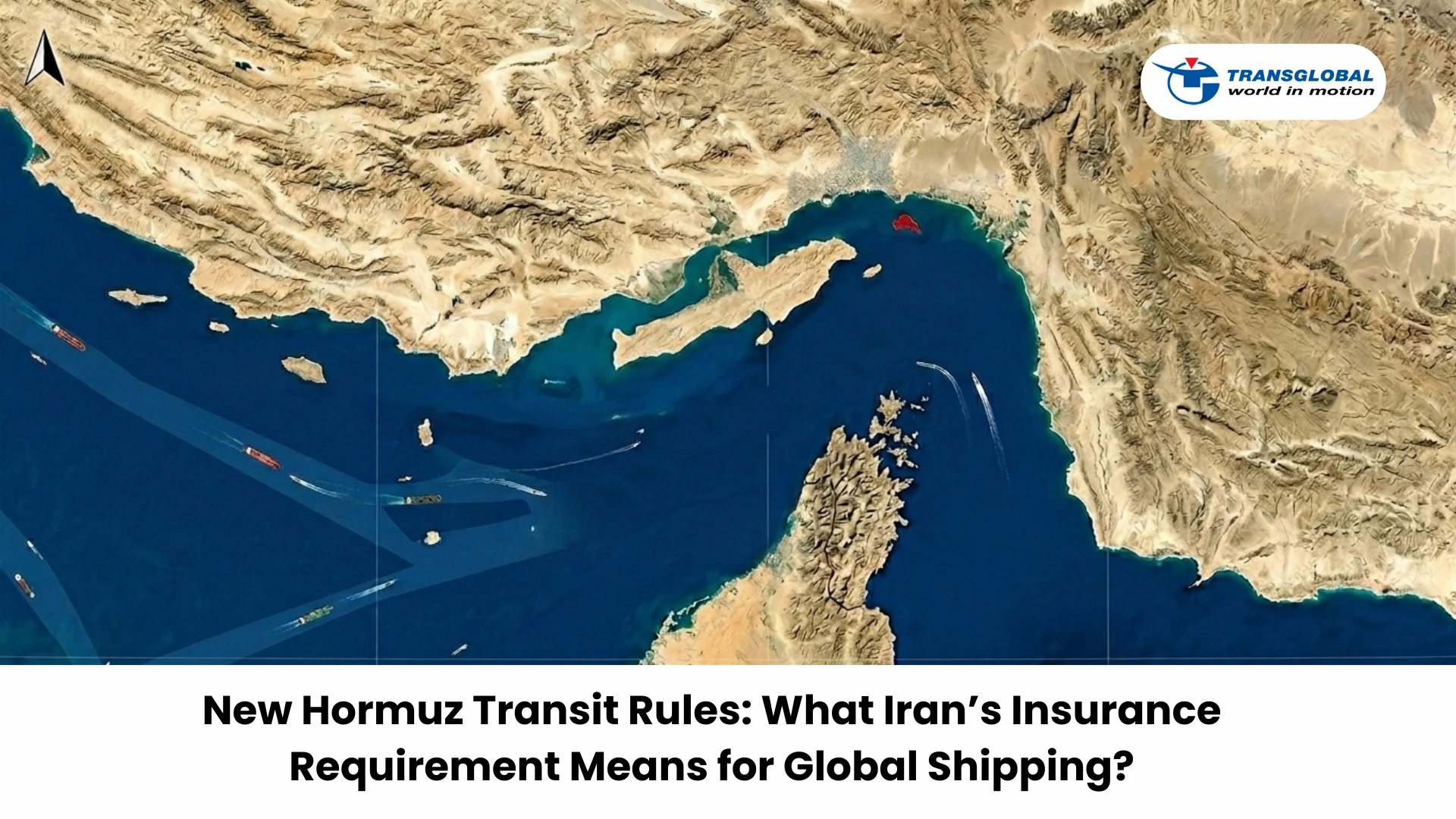
The Strait of Hormuz is moving again, but global shipping is not returning to business as usual.
Following recent disruptions that sent shockwaves through energy markets and global supply chains, Iran has introduced a new insurance framework for vessels transiting one of the world’s most important maritime chokepoints.
For shipping lines, freight forwarders, cargo owners, and logistics professionals, the announcement represents more than another regulatory requirement. It signals a new layer of compliance, cost consideration, and operational planning for vessels moving through a corridor that handles a significant share of global energy and trade flows.
The immediate impact may be limited during the initial implementation phase. However, the long-term implications could influence shipping costs, risk management strategies, insurance planning, and route selection across international trade networks.
🌍 Why the Strait of Hormuz Matters?
Few waterways carry as much strategic importance as the Strait of Hormuz.
Connecting the Persian Gulf to international shipping lanes, the narrow corridor serves as a critical route for:
- ⛽ Energy exports
- 🚢 Containerized cargo
- 🏭 Industrial goods
- ⚙️ Project cargo
- 📦 General commercial freight
Any disruption within the strait has immediate consequences for global trade.
Recent geopolitical tensions highlighted this reality as vessel movements slowed, security concerns increased, and shipping operators reassessed transit risks across the region.
At one point, industry reports suggested that hundreds of vessels were waiting for clearance or evaluating alternative operational plans before proceeding through the corridor.
📋 What has Changed?
Under the new framework, vessels transiting the Strait of Hormuz will be required to obtain insurance approved by Iran’s newly established Persian Gulf Strait Authority (PGSA).
The insurance programme is being introduced as part of a broader transit management system governing vessel movements through the strait.
During an initial 60-day implementation period, the insurance will reportedly be provided without charge while discussions continue regarding longer-term arrangements.
However, after this period, vessel operators may be required to pay additional insurance fees.
The framework also introduces:
- 📄 Transit permit requirements
- 🚢 Designated shipping routes
- 📍 Navigation requirements near Larak Island
- ⚖️ Compliance monitoring and enforcement provisions
For ship operators, this means Hormuz transit may increasingly involve both operational and administrative planning requirements.
⚠️ Why are Shipping Companies Paying Attention?
Insurance has become one of the most significant cost variables in global shipping during periods of geopolitical uncertainty.
Over the past several years, operators have already experienced:
- Increased war-risk premiums
- Higher marine insurance costs
- Security-related surcharges
- Additional compliance requirements
The introduction of a separate Hormuz transit insurance framework adds another factor to consider.
While the initial implementation may not immediately affect freight rates, the possibility of future fees creates uncertainty around long-term cost planning.
For shipping companies operating large fleets through the Gulf region, even relatively small increases can translate into substantial operational expenses.
🚢 What this Means for Freight Forwarders and Cargo Owners?
For cargo owners, the announcement serves as another reminder that supply chain risk extends beyond ports, vessels, and freight rates.
Today, geopolitical developments can directly influence:
- Transit costs
- Insurance premiums
- Route planning
- Delivery schedules
- Supply chain reliability
While most shipments may continue moving normally, businesses should remain aware that additional administrative processes could affect cargo planning in the months ahead.
Companies shipping through the Gulf region may benefit from reviewing:
- Marine insurance arrangements
- War-risk coverage provisions
- Alternative routing options
- Contingency planning measures
The goal is not to react to every headline but to ensure supply chains remain prepared for changing operating conditions.
🌐 A Larger Shift in Global Shipping
The new Hormuz insurance requirement reflects a broader trend emerging across international logistics.
Global trade routes are increasingly shaped by:
- Geopolitical developments
- Security considerations
- Regulatory changes
- Insurance market responses
- Risk management frameworks
In the past, route selection was primarily driven by cost and efficiency.
Today, resilience and risk exposure are becoming equally important factors.
Recent disruptions in the Red Sea, Black Sea, Panama Canal, and Strait of Hormuz demonstrate how quickly operating conditions can change.
As a result, freight forwarders, shipping lines, and cargo owners are placing greater emphasis on flexibility, visibility, and contingency planning.
📈 The Challenge Ahead: More Compliance, More Complexity
The shipping industry has always adapted to changing conditions.
However, the current environment is creating a new reality where compliance and risk management are becoming increasingly intertwined with operational performance.
For vessel operators, success now depends on more than moving cargo efficiently.
It requires:
- Strong regulatory awareness
- Effective insurance planning
- Real-time monitoring of developments
- Proactive communication across supply chains
Businesses that stay informed and prepared will be better positioned to manage disruption when conditions change.
🚚 Conclusion: Navigating Risk Has Become a Core Logistics Capability
Iran’s new Hormuz insurance framework may appear to be a regional development, but its implications extend far beyond the Gulf.
As global trade becomes increasingly influenced by geopolitical events, the ability to understand, anticipate, and manage risk is becoming one of the most valuable capabilities in logistics.
Working with the best freight forwarder helps businesses navigate evolving regulations, changing trade conditions, insurance complexities, and supply chain risks with greater confidence.
Because in today’s logistics environment, moving cargo is only part of the challenge.
👉 Understanding the risks around the journey is what keeps supply chains moving.
Comments