

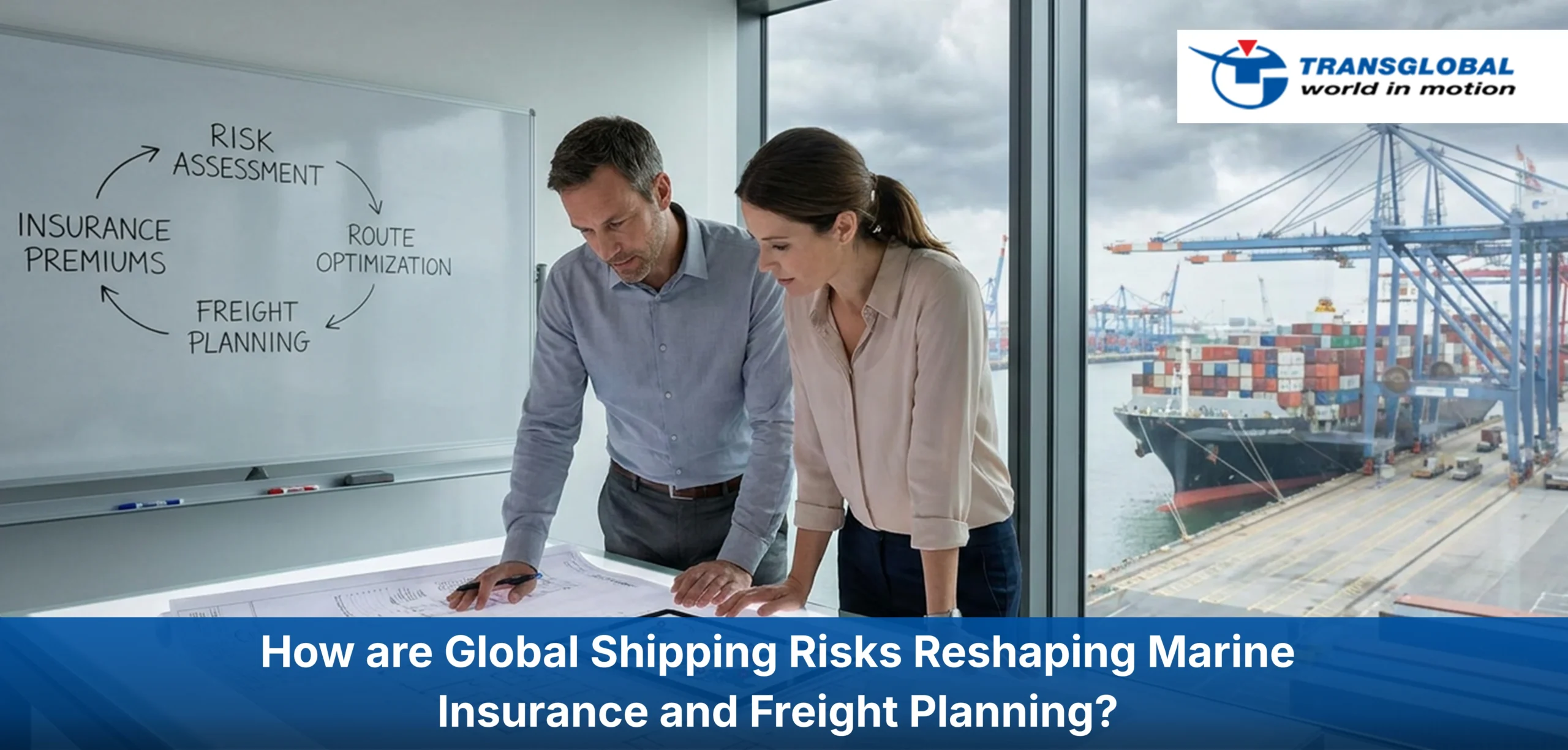
A vessel may leave port on schedule, but that does not mean the risky journey has ended.
Across global shipping today, marine risk is no longer limited to rough seas or cargo damage. Freight forwarders, importers, exporters, insurers, and logistics operators are now dealing with geopolitical instability, rising cargo fraud, cyber threats, congestion, and increasingly unpredictable supply chain conditions.
For businesses moving cargo internationally, especially through high-risk trade lanes, marine insurance and risk management have become strategic priorities rather than administrative requirements.
The recent geopolitical tensions around the Middle East and the continued pressure on global trade routes have once again highlighted how quickly supply chains can be disrupted. While shipping lines continue operating, the reality for logistics businesses is clear: risk exposure is increasing across every mode of transport.
Why Marine Risk has Become More Complex in Global Trade?
Modern supply chains are interconnected across ports, road networks, customs systems, digital platforms, and multiple transport providers. This creates efficiency, but it also creates vulnerability.
Today, a single disruption can trigger a chain reaction across the logistics ecosystem. A geopolitical conflict can increase insurance costs. Port congestion can delay vessel schedules. A cyberattack can interrupt cargo tracking systems. Fuel price increases can impact freight rates globally.
For businesses operating internationally, these risks directly affect transit time, operational continuity, and overall shipping costs.
The current environment has also increased concern around high-risk maritime zones and shipping chokepoints. When disruptions occur in these regions, shipping lines reroute vessels, insurers revise risk premiums, and ports experience additional pressure.
This creates an operational environment where businesses must prepare for volatility rather than wait for stability.
How Marine Insurance is Responding to Rising Global Risk?
Marine insurers are adapting quickly to the changing logistics landscape.
One of the biggest changes has been the increase in war-risk and high-risk area premiums. Even when shipping routes remain operational, insurers continue to factor geopolitical exposure into pricing models.
This means businesses are seeing higher insurance costs across ocean freight, especially for cargo moving through sensitive trade regions.
At the same time, insurers are becoming stricter about compliance and operational controls. Businesses can no longer rely on insurance alone as a safety net.
Today, underwriters increasingly expect evidence of:
- Strong cargo security controls
- Transparent shipment visibility
- Compliance monitoring
- Independent inspections
- Accurate cargo declarations
- Digital traceability systems
Companies that can demonstrate proactive risk management are often in a stronger position when negotiating coverage and handling claims.
Why South Africa Faces Unique Logistics and Marine Risk Challenges?
South Africa plays a critical role in global shipping and African trade connectivity, but it also faces growing pressure from global maritime disruptions.
As vessel traffic increases around the Cape shipping route, ports such as Durban and Cape Town continue to face congestion and infrastructure strain. Additional traffic increases operational risk, including vessel delays, pollution exposure, and cargo handling pressure.
At the same time, concerns around poorly maintained shadow fleet vessels have increased across international shipping. These vessels create additional risk around spills, salvage incidents, and maritime safety.
For importers and exporters using South African trade routes, this means marine risk management must include more than cargo insurance alone. Businesses also need visibility, contingency planning, and experienced freight coordination.
Why Cargo Fraud and False Declarations are Increasing?
Economic pressure and rising freight costs are also contributing to increased cargo fraud risk.
Insurance providers are reporting growing concerns around:
- False cargo declarations
- Inflated claims
- Misclassified dangerous goods
- Staged cargo incidents
- Documentation manipulation
As artificial intelligence tools become more advanced, identifying fraudulent claims and altered shipping data is becoming more difficult.
This creates additional pressure on logistics providers, freight forwarders, and insurers to strengthen cargo verification and compliance processes.
For businesses shipping dangerous goods, hazardous materials, explosives, or high-value cargo, accuracy in declarations and documentation has become more important than ever.
Why Cybersecurity is Now a Marine Logistics Risk?
Cargo theft is no longer limited to physical hijacking or port theft.
Today’s logistics environment faces growing cyber threats targeting cargo systems, shipment schedules, and logistics platforms.
Cyber criminals are increasingly using phishing, ransomware, and digital system intrusions to gain access to shipment information and manipulate cargo operations.
Recent incidents in Africa have shown how attacks on logistics systems can disrupt airport operations, cargo visibility, and financial systems.
As ports, shipping lines, and freight systems become more digitized, cybersecurity is becoming a core part of marine risk management.
This means logistics businesses now need to protect:
- Shipment tracking systems
- Customer and cargo data
- Dispatch platforms
- Payment systems
- Customs documentation platforms
Cybersecurity is no longer just an IT issue. It is now a logistics continuity issue.
Why Risk Control is Becoming More Important than Insurance Alone?
The logistics industry is shifting toward proactive risk control rather than reactive claims handling.
Businesses are now expected to demonstrate operational discipline before insurers are willing to provide competitive coverage.
This includes:
- Independent cargo inspections
- Compliance assurance
- Condition reporting
- Route risk assessment
- Digital shipment traceability
- Standardized operational procedures
Companies investing in visibility and preventative controls are better positioned to reduce claims exposure and maintain supply chain continuity.
For high-risk sectors such as mining, defence, hazardous cargo, dangerous goods, and project logistics, these controls are becoming essential.
Transglobal’s Role Goes Beyond Moving Cargo
In today’s volatile logistics environment, managing cargo movement is only one part of the equation.
At Transglobal, the focus extends beyond transportation into compliance, operational control, and strategic risk management.
Whether handling sea freight, air freight, or road freight, every shipment is planned with a strong focus on security, visibility, and compliance.
For specialized cargo such as dangerous goods, explosives, hazardous materials, military cargo, defence equipment, and armaments logistics, this approach becomes even more critical.
The team works proactively to:
- Monitor route and geopolitical risks
- Align shipments with compliance requirements
- Improve cargo visibility and tracking
- Coordinate documentation and insurance considerations
- Support secure cargo handling across all transport modes
This ensures clients are not only moving cargo efficiently but also reducing operational exposure across the supply chain.
Why Businesses Need Strategic Freight Partners Today?
The logistics industry is entering a period where resilience matters as much as cost.
Businesses that work with experienced freight forwarders gain access to operational insights, risk planning, and compliance expertise that help reduce disruption.
This is particularly important when moving cargo through high-risk regions or handling regulated shipments.
Choosing the right freight partner now means choosing a team that understands:
- Marine insurance pressures
- Security risks
- Global compliance requirements
- Cargo protection strategies
- Supply chain continuity planning
In a market shaped by uncertainty, these capabilities create real competitive advantage.
Conclusion
Marine risk management is no longer just an insurance conversation. It has become a core part of global logistics strategy.
From geopolitical disruption and port congestion to cybercrime and cargo fraud, today’s shipping environment demands greater visibility, stronger compliance, and smarter operational planning.
Businesses that prepare proactively will be better positioned to protect cargo, reduce disruption, and maintain supply chain performance.
If your cargo operations require secure, compliant, and strategically managed logistics support, work with a freight forwarder that understands risk beyond the shipment itself.
Contact us to combine operational expertise, compliance-driven execution, and specialized cargo capabilities across sea, air, and road freight.
Frequently Asked Questions
Why are marine insurance costs increasing in global shipping?
Marine insurance costs are rising due to geopolitical tensions, port congestion, cargo theft risks, and increasing claims across global trade routes.
How can businesses reduce marine cargo risk?
Businesses can reduce risk through proper compliance, cargo visibility, secure logistics planning, and working with experienced freight forwarders.
Why is risk management important in modern logistics?
Strong risk management helps prevent delays, reduce financial losses, improve cargo security, and maintain supply chain continuity.
Comments