

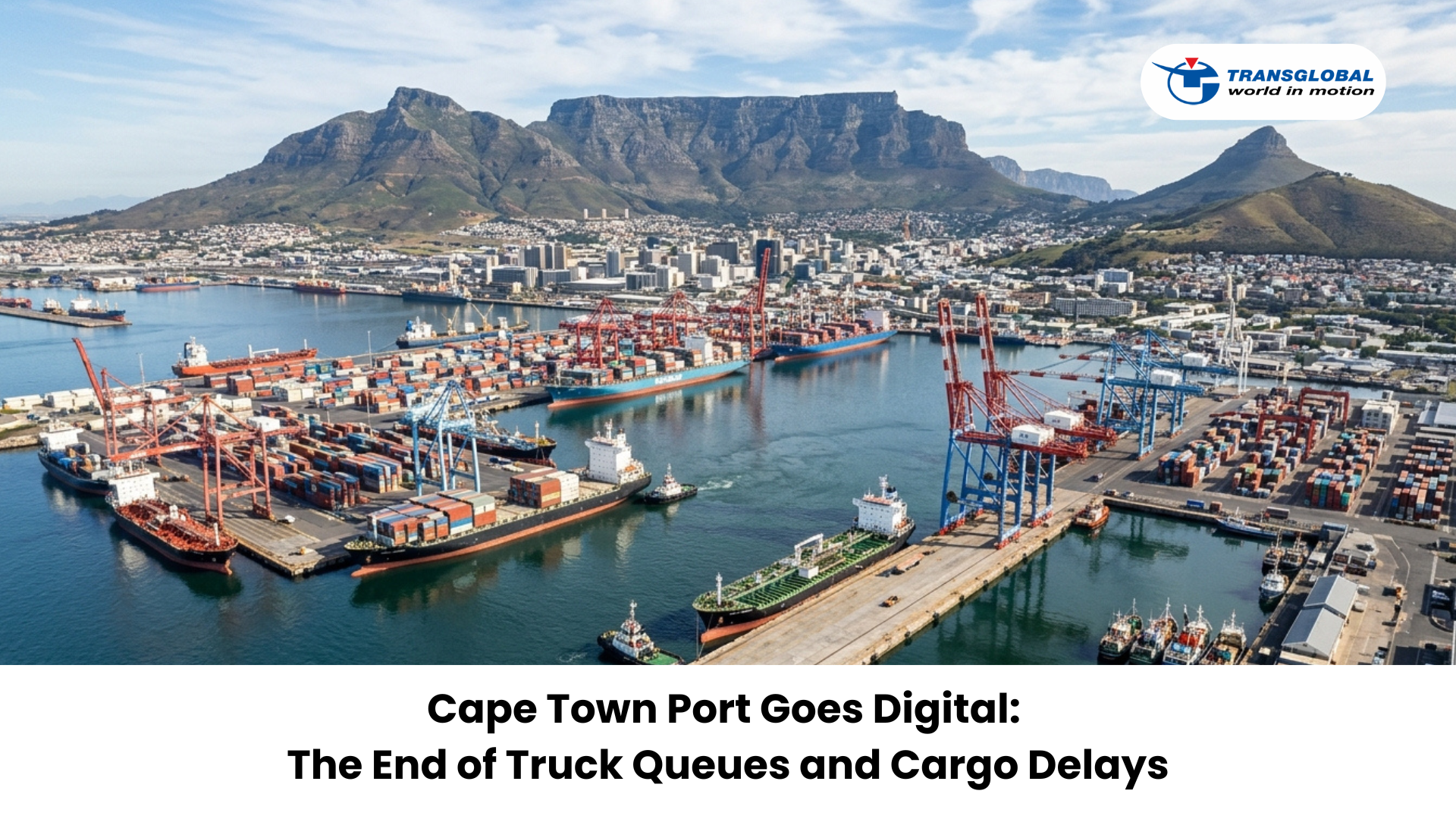
For years, one of the biggest frustrations for transport operators at the Port of Cape Town has been the same familiar sight: long truck queues waiting to enter the container terminal.
Congestion at access points, manual processing delays, and inefficient cargo flows have often created knock-on effects throughout the supply chain. For importers, exporters, freight forwarders, and transport operators, these delays translate directly into higher costs, longer turnaround times, and reduced operational efficiency.
Now, Transnet is looking to change that.
As part of a broader digitalization programme, the company has announced plans to introduce automated gates, expand its digital booking systems, and accelerate the use of smart technologies across terminal operations. While these developments may sound like infrastructure upgrades, they represent something much bigger: a shift towards a more connected, efficient, and digitally driven port environment.
The real question is no longer whether ports will digitalize.
👉 The question is how quickly businesses can adapt to a more technology-driven logistics landscape.
🌍 Why Port Digitalisation Matters More than Ever?
Global supply chains are under constant pressure to move faster, operate more efficiently, and provide greater visibility.
At the same time, ports around the world are facing increasing cargo volumes, larger vessels, tighter schedules, and growing customer expectations. Traditional manual processes are no longer enough to keep pace with modern logistics requirements.
Leading ports across Europe, Asia, and the Middle East have already invested heavily in automation, digital platforms, and smart terminal technologies. The objective is simple:
- Reduce port congestion
- Improve cargo flow
- Increase productivity
- Enhance customer experience
Cape Town’s latest initiatives reflect this global trend and signal a significant step forward for South African port operations.
🚛 Tackling One of Cape Town’s Biggest Bottlenecks
Anyone involved in container logistics through Cape Town understands the challenges surrounding truck access to the terminal.
One of the most persistent congestion points has been the truck entry process, where vehicles often spend valuable time waiting to gain access to terminal facilities.
To address this issue, Transnet plans to introduce automated gate systems designed to streamline truck processing and reduce waiting times.
The expected benefits include:
- 🚛 Faster truck turnaround times
- 📦 Quicker cargo collection and delivery
- ⏱️ Reduced terminal congestion
- 📈 Improved operational efficiency
For transport operators, even small reductions in waiting times can have a significant impact on fleet productivity and overall logistics costs.
💻 Moving Port Services Online
Beyond physical infrastructure improvements, Transnet is also expanding its digital service offering through the Integrated Port Management System (IPMS).
The platform allows customers to access and book various maritime services online rather than relying on manual processes.
Services already being integrated include:
- ⚓ Maritime service bookings
- 🚛 Truck booking systems
- 🔧 Ship repair facility bookings
This means shipping lines, freight forwarders, and logistics providers can increasingly manage operational requirements remotely, improving accessibility and reducing administrative delays.
🤖 Smart Equipment is Changing Terminal Operations
Digitalization is also extending beyond booking systems and into the terminal itself.
The newly commissioned rubber-tyred gantry cranes (RTGs) at Cape Town Container Terminal have been designed with digital operating capabilities, allowing equipment to be operated remotely when required.
This is particularly valuable during challenging weather conditions.
For example, during periods of strong winds, operators can continue working from controlled environments while maintaining safe and productive cargo handling operations.
Importantly, this technology is not replacing people.
Instead, it is enhancing operational safety and efficiency while allowing skilled operators to continue performing critical functions.
📊 What this Means for Importers, Exporters, and Freight Forwarders?
The practical impact of these developments could be significant.
As digital systems become more integrated into port operations, logistics businesses may benefit from:
- Faster cargo processing
- Improved schedule reliability
- Better visibility into cargo movement
- Reduced waiting times
- Enhanced operational planning
For exporters, particularly those moving time-sensitive cargo such as agricultural products, improved port efficiency can support better transit performance and stronger competitiveness in international markets.
For importers, faster cargo release and collection processes can help reduce storage costs and improve inventory management.
🌐 The Future Port is a Digital Port
What is happening in Cape Town reflects a broader transformation taking place across global logistics.
Ports are no longer viewed simply as physical gateways for cargo. They are becoming intelligent logistics hubs powered by:
- 📡 Real-time data
- 🤖 Smart equipment
- 💻 Digital platforms
- 📊 Predictive analytics
- 🔗 Connected supply chain systems
Transnet’s collaboration with leading international ports, including the Port of Antwerp, demonstrates its commitment to adopting global best practices and accelerating this transformation.
The goal is not just operational improvement.
The goal is to build a port ecosystem capable of supporting future trade growth.
🚚 Conclusion: Digital Ports Need Smarter Logistics Partners
As ports become more connected and technology-driven, businesses need logistics partners who can adapt just as quickly.
Digitalisation is creating new opportunities for faster cargo movement, better visibility, and improved operational efficiency. However, taking full advantage of these improvements requires planning, coordination, and supply chain expertise.
Working with the leading freight forwarder helps businesses navigate changing port environments, optimize cargo flows, and make the most of emerging digital capabilities.
Because in modern logistics, success is no longer measured only by how quickly cargo moves.
👉 It is measured by how intelligently the entire supply chain works together.
Comments