

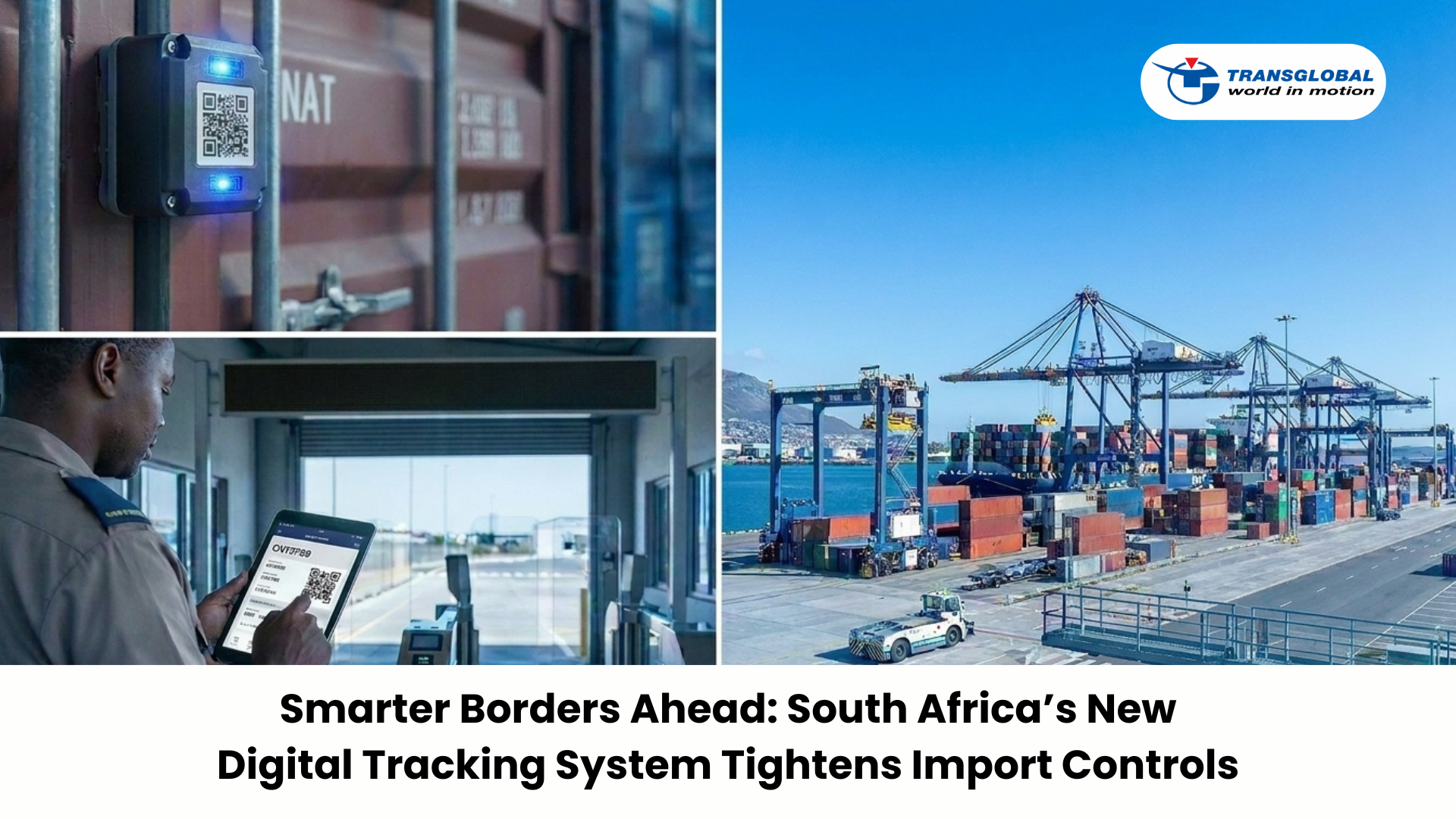
South Africa is moving toward a new era of import control, where cargo visibility, compliance, and traceability will matter more than ever.
Through a new partnership between the National Consumer Commission (NCC) and the South African Revenue Service (SARS), the country is preparing to strengthen import compliance using a digital track-and-trace system. The goal is simple: detect unsafe, counterfeit, misdeclared, or non-compliant goods before they enter the domestic market.
This is not just another customs update. It signals a bigger shift from traditional border checks to real-time digital enforcement.
🌍 Why does this Matter Now?
Global trade has become faster, more complex, and harder to monitor. E-commerce imports have grown rapidly, cargo moves through multiple countries, and many shipments enter markets with incomplete labels, incorrect declarations, or weak traceability.
At the same time, illegal trade continues to hurt legitimate businesses and public revenue. SARS estimates that illegal trade costs South Africa around R100 billion annually. For regulators, manual inspections are no longer enough. Digital systems can help identify risk earlier, support faster decision-making, and protect consumers from unsafe or substandard products.
📦 How the System could Work?
The new system is expected to connect customs declarations, product information, cargo reporting systems, and compliance databases. Instead of checking every shipment manually, authorities will use digital data to identify suspicious patterns.
The system may help detect:
- Counterfeit or unsafe products
- Misdeclared imports
- Missing product traceability
- Incorrect invoices or VAT details
- Unusual trade patterns
Compliant shipments with valid documentation and proper traceability should move with less friction. High-risk cargo, however, may face inspections, enforcement action, or further verification.
🚢 What does this Mean for Importers and Freight Forwarders?
For importers and logistics operators, compliance can no longer be treated as last-minute paperwork. Accurate product information, correct customs declarations, clear invoices, and proper labelling will become critical to cargo movement.
Businesses may need to upgrade internal systems, improve staff training, maintain better records, and strengthen supplier verification. E-commerce operators, in particular, may face closer scrutiny because small parcels and online imports often carry higher risks of mislabelling or undervaluation.
For freight forwarders, the role is also changing. Moving cargo is no longer enough. Clients now need support with documentation accuracy, customs alignment, traceability, and risk management.
⚠️ Compliance Costs vs Non-Compliance Risks
Adapting to digital enforcement may bring short-term costs. Companies may need better reporting tools, improved labelling processes, and stronger record-keeping.
But the cost of non-compliance can be far higher. Non-compliant cargo may face delays, penalties, seizures, increased inspections, and reputational damage.
In a more digital trade environment, weak documentation will become easier to detect. That means businesses that prepare early will have a clear advantage.
🔄 A Bigger Shift in Global Logistics
South Africa’s move reflects a wider global trend. Customs and regulatory agencies worldwide are becoming more connected, data-driven, and focused on supply chain transparency.
The question is no longer only, “Can the cargo move?”
It is now, “Can the cargo prove it is compliant?”
That changes the way businesses must think about logistics. Visibility, traceability, and compliance are becoming part of everyday trade planning.
🚚 Conclusion: Visibility is the New Trust
The NCC and SARS digital tracking initiative could create a cleaner, safer, and more transparent import environment. For compliant businesses, this may eventually mean smoother clearance and better market confidence.
But for those relying on outdated processes, the risks are growing.
Working with the best freight forwarder helps ensure that cargo is not only moved efficiently but also documented, traceable, and aligned with modern compliance expectations.
Because in today’s logistics world, visibility is no longer optional. It is the foundation of trusted trade.
Comments