

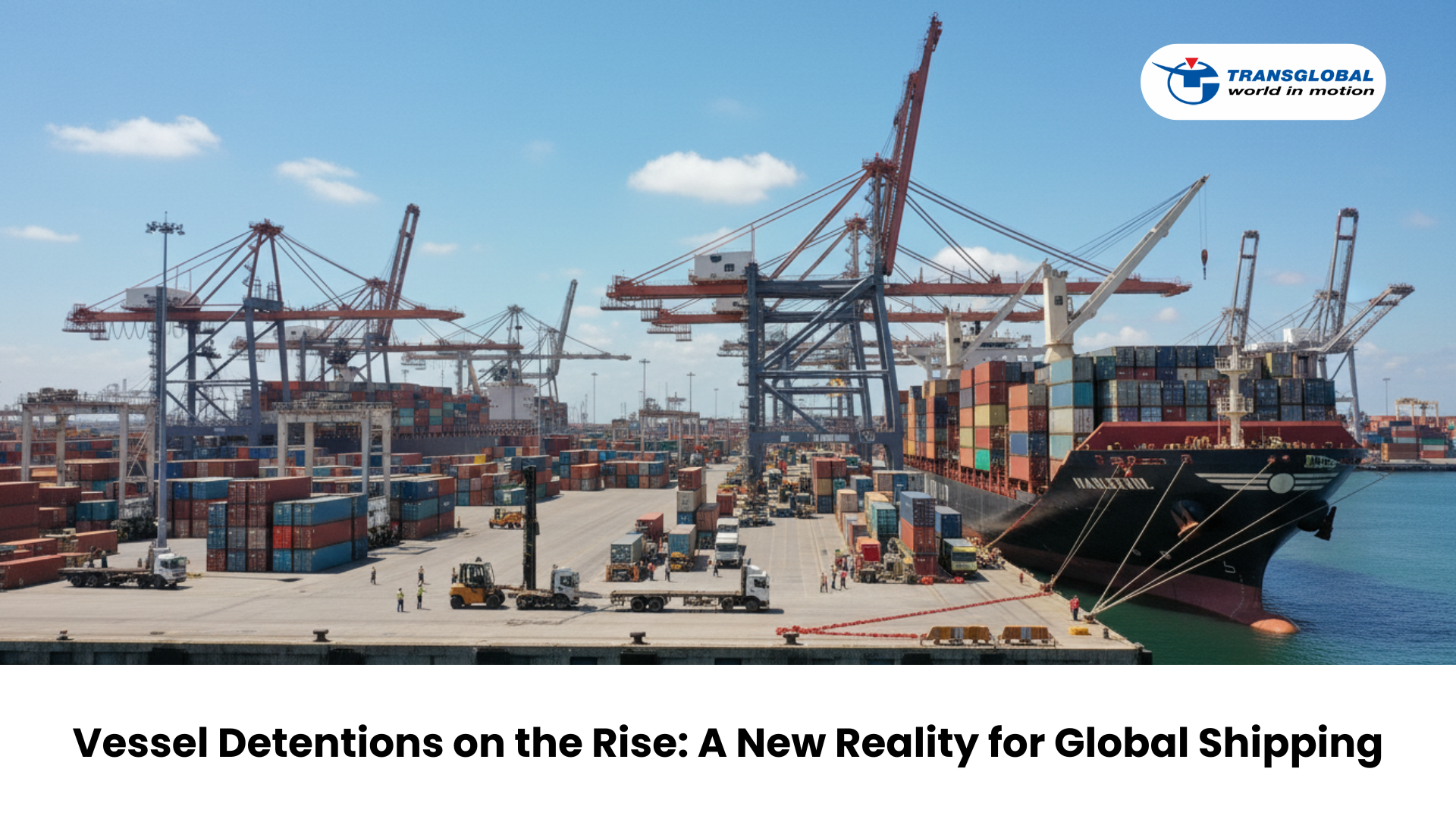
A vessel arriving at port should mark progress in the supply chain. Cargo has crossed oceans, schedules have been aligned, and customers are waiting.
But in today’s maritime environment, arrival does not always mean clearance.
Across major global ports, vessel detentions are increasing, with Port State Control (PSC) inspections becoming more rigorous, targeted, and frequent. For logistics professionals, this is no longer a rare disruption, it is becoming a pattern.
So the real question is:
Are shipping operations keeping pace with today’s compliance expectations?
🌍 The Growing Role of Port State Control (PSC)
Port State Control inspections are designed to ensure vessels meet international safety, environmental, and operational standards before entering or continuing operations in a port.
These inspections operate under global frameworks such as:
⚓ SOLAS (Safety of Life at Sea)
🌊 MARPOL (Marine Pollution Prevention)
🛠️ ISM Code (International Safety Management)
Across regions, PSC regimes such as:
- Paris MoU (Europe)
- Tokyo MoU (Asia-Pacific)
- Indian Ocean MoU
- Mediterranean MoU
are intensifying inspection practices.
📊 Recent global inspection trends indicate that thousands of vessels are inspected annually, with detention rates typically ranging between 3% to 6%, depending on the region, a figure that reflects increasing enforcement rather than declining compliance.
What has changed is the approach.
Inspections are no longer routine, they are strategic and risk-focused.
⚠️ Why Vessel Detentions are Increasing?
The rise in vessel detentions is not driven by a single issue. It reflects a broader shift in how global shipping is regulated.
Three key factors are shaping this trend:
🌱 1. Stronger Environmental Enforcement
Regulations around emissions, ballast water management, and pollution control are now strictly monitored. Even minor gaps can trigger detention.
📋 2. Increased Operational Complexity
Modern shipping involves complex documentation, certifications, and cargo declarations. Any inconsistency between documents and actual operations raises red flags.
🌐 3. Geopolitical Sensitivity
Certain cargo types, trade routes, and vessel ownership structures are now subject to heightened scrutiny due to global regulatory and political dynamics.
Together, these factors have raised the compliance bar significantly.
🔍 The Most Common Causes are Operational and Preventable
Despite the complexity of global shipping, many vessel detentions are not caused by extraordinary failures. They are the result of basic operational gaps.
The most common issues include:
📄 Incomplete or inconsistent statutory documentation
⚙️ Expired or poorly maintained safety equipment
🌊 Ballast water system deficiencies
📦 Mismatch between declared cargo and actual cargo profile
⏱️ Weak or rushed pre-arrival compliance checks
These are not unusual problems, but in today’s regulatory environment, even small inconsistencies can lead to detention.
📊 The Ripple Effect Across the Supply Chain
A detained vessel does not affect just the ship, it disrupts the entire logistics chain.
Operational impacts include:
📈 Escalating daily charter and operational costs
📦 Delays in cargo delivery schedules
⚓ Port congestion and downstream delays
🔄 Disruptions in container availability
Financial and reputational impacts can be even more severe:
💰 Increased insurance scrutiny and claims
📉 Contractual penalties for late delivery
🤝 Loss of trust in high-compliance industries like energy, mining, and defence
In today’s environment, reliability is not just expected, it is essential.
🔄 Compliance is No Longer Procedural It’s Strategic
Historically, compliance was treated as a checklist exercise. Today, it has become a core operational strategy.
Port authorities are now:
- Conducting targeted inspection campaigns
- Focusing on environmental and safety systems
- Verifying documentation accuracy in detail
This shift means that compliance must move from reactive correction to proactive preparation.
🧭 Prevention Starts Before the Vessel Sails
The most effective way to avoid vessel detention is to address risks before arrival at port.
Strong operational discipline includes:
📄 Independent documentation audits prior to departure
⚙️ Verification of equipment certifications and maintenance
📦 Alignment between cargo declarations and regulations
⏱️ Pre-arrival compliance readiness checks
🤝 Coordination with local port experts
These are not complex solutions, but they require consistency and attention to detail.
🤝 The Role of Professional Logistics Coordination
In complex shipping environments, structured coordination becomes essential.
Professional freight forwarding support helps ensure:
📋 Compliance alignment across documentation and cargo
⚓ Smooth coordination with port authorities
🔍 Identification and resolution of potential risks
✔️ Full adherence to legal and regulatory frameworks
The focus is not on bypassing regulations, but on meeting them accurately and efficiently.
🚚 Conclusion: Why the Right Freight Forwarder Matters?
Vessel detentions are rarely caused by one major failure. They are usually the result of small, preventable gaps in compliance and operational discipline.
In today’s maritime landscape, compliance is not just a requirement, it is a competitive advantage.
Working with the best freight forwarder ensures that documentation, regulatory alignment, and operational coordination are handled professionally across every stage of the supply chain.
Because in modern logistics, success is not just about reaching the port, it is about clearing it without disruption.
Comments