

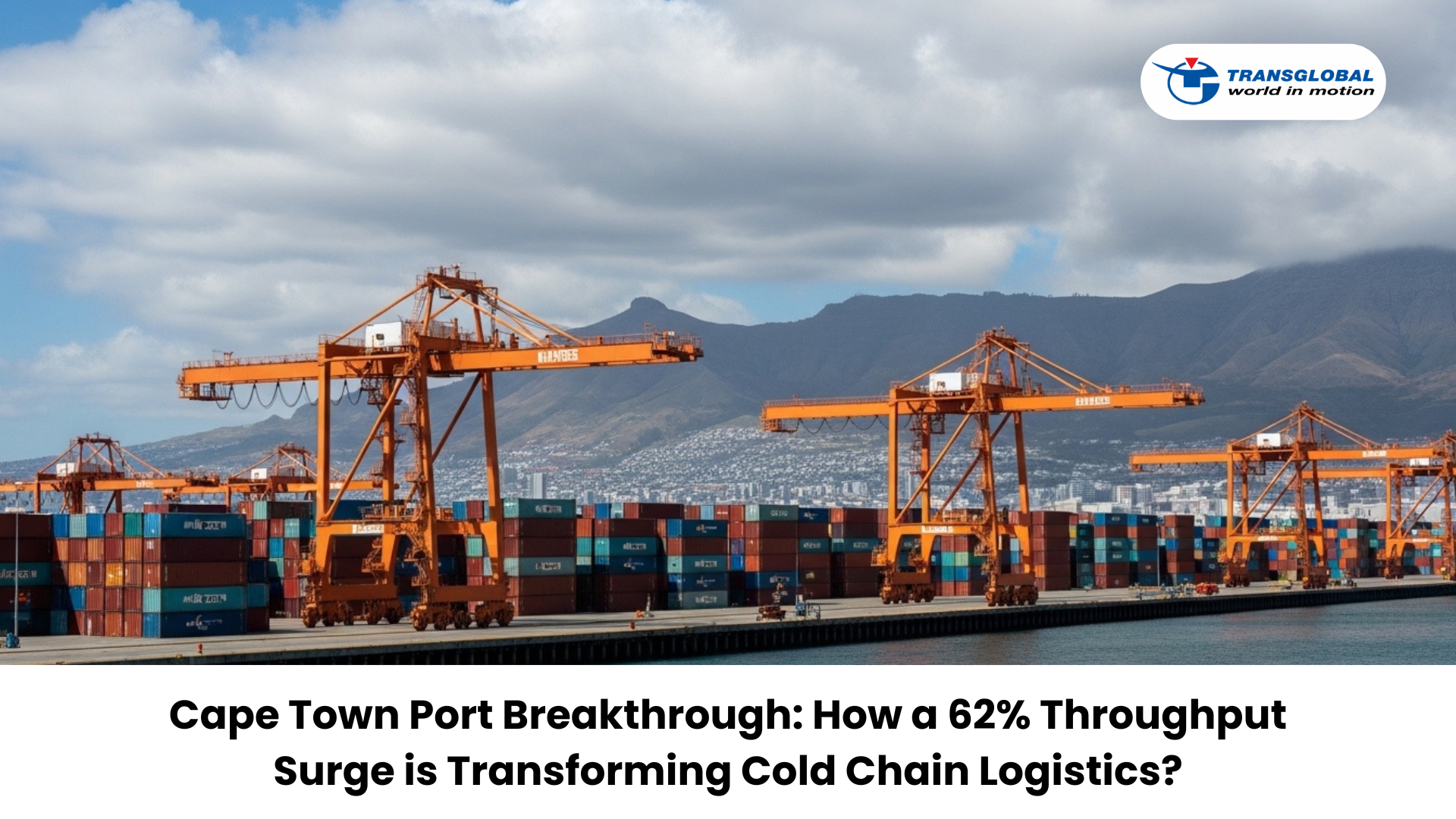
Not long ago, Cape Town’s Container Terminal was known for delays, congestion, and unpredictable vessel schedules.
Today, the story is very different.
Following a R4 billion infrastructure upgrade, the terminal has exceeded its own throughput forecasts by an impressive 62%, a performance shift that is already reshaping how cold chain cargo moves across Southern Africa.
So the real question is:
Is Cape Town still just another port, or is it becoming a strategic advantage for global trade?
🌍 A Turning Point for Port Performance
The transformation of Cape Town’s Container Terminal didn’t happen overnight, but the results are now clearly visible.
Driven by a combination of infrastructure investment, operational reform, and private sector collaboration, the terminal has moved from being a bottleneck to a high-performing logistics hub.
At the centre of this upgrade:
- ⚙️ 28 new rubber-tyred gantry (RTG) cranes
- 📡 Smart anti-sway technology for faster and safer container handling
- 🔄 Improved yard efficiency and reduced container movement delays
📊 The result?
Faster vessel turnaround times, improved yard productivity, and a port that is now outperforming its own expectations.
❄️ Why this Matters for Cold Chain Logistics?
The timing of this upgrade could not be more critical.
The Western Cape is responsible for around 55% of South Africa’s agricultural exports, much of which moves through Cape Town in temperature-controlled (reefer) containers.
These include:
- 🍊 Citrus and fresh produce
- 🐟 Seafood exports
- 💊 Pharmaceutical shipments
The fruit export season creates intense pressure on port operations, especially for:
- Reefer plug availability
- Crane productivity
- Cold storage throughput
With the new upgrades in place, Cape Town is now handling these peak demands more efficiently than before.
👉 In simple terms:
Perishable cargo is moving faster, safer, and with greater reliability.
🚢 Stronger Connectivity Across SADC Trade Lanes
The improved performance of Cape Town is also strengthening regional trade networks.
With major shipping lines expanding operations and designating hubs like Walvis Bay for transshipment, Cape Town is now part of a more connected logistics ecosystem.
This brings several advantages:
- 📦 More consistent vessel departures
- ⏱️ Improved schedule reliability
- 🌍 Better access to global markets (EU, UK, Middle East, Asia)
For exporters, this translates into greater confidence in delivery timelines, a critical factor in competitive international markets.
⚙️ The Port Service Partnership Model: A New Standard?
One of the key drivers behind Cape Town’s turnaround is the Port Service Partnership (PSP) model.
This approach combines:
- Public infrastructure management
- Private sector operational expertise
- Defined service-level accountability
The results are already visible:
- 📉 Reduced equipment downtime
- 📈 Increased crane productivity
- ⏱️ Shorter vessel waiting times
👉 What was once a challenge is now being seen as a potential blueprint for other ports.
📊 Capacity, Demand, and Future Growth
Cape Town’s current container capacity stands at approximately 980,000 TEUs per year, with further improvements expected as operations stabilize.
At the same time, the port is handling increased activity beyond cargo:
- 🚢 Growth in cruise vessel movements
- ⚓ Dual-use pressure from passenger and freight operations
Despite this, the upgraded infrastructure is enabling the port to manage demand more effectively, something that was difficult just a few years ago.
🔍 What does this Mean for Logistics Operators?
For freight forwarders, exporters, and cold chain operators, this shift is more than operational, it’s strategic.
A reliable Cape Town port offers:
- 📦 Improved service-level agreements with carriers
- ⏱️ Greater predictability in shipment timelines
- 📊 Stronger positioning in global export markets
👉 In a competitive environment, reliability is no longer optional, it is a key differentiator.
Logistics businesses should now:
- Reassess routing strategies through Cape Town
- Update performance expectations with clients
- Leverage improved port efficiency as a value proposition
🔄 A Broader Shift in the Logistics Landscape
Cape Town’s performance improvement reflects a wider trend in global logistics.
Ports are no longer just transit points, they are becoming strategic assets that influence:
- Cost efficiency
- Supply chain reliability
- Market competitiveness
In today’s environment, the difference between delay and delivery often comes down to port performance.
🚚 Conclusion: Why the Right Freight Forwarder Makes the Difference?
Cape Town’s transformation shows what is possible when infrastructure, technology, and operational discipline come together.
But even with improved port performance, navigating global trade still requires expertise, planning, and adaptability.
Working with the best freight forwarder ensures that you can fully utilize these improvements while managing risks, maintaining compliance, and delivering cargo on time.
Because in modern logistics, success is not just about moving goods, it is about moving them smarter, faster, and with confidence.
Comments