

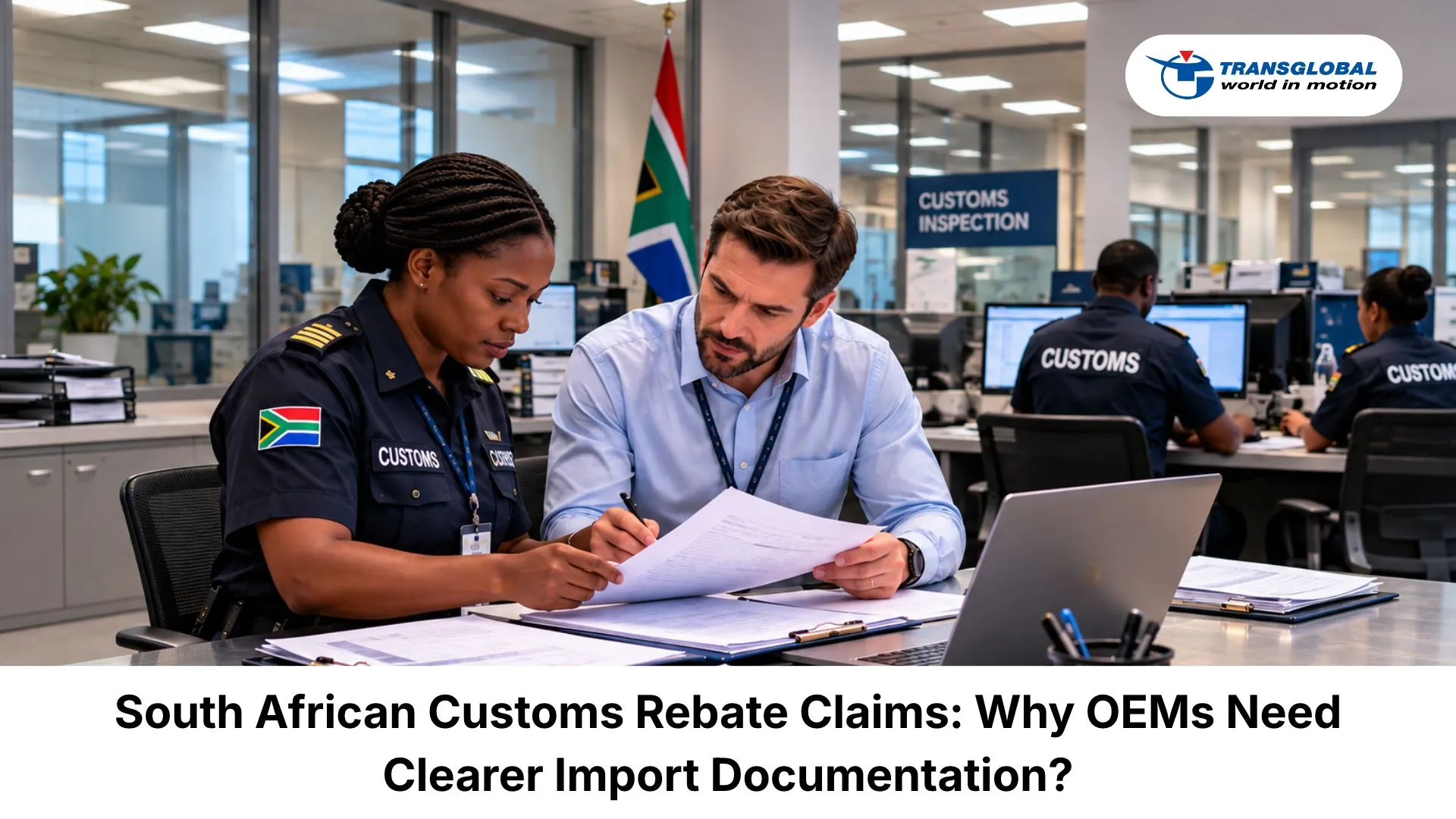
Customs documentation is once again in focus for South African manufacturers.
ITAC has proposed a change to the notes under Rebate Item 412.00 of Schedule 4 to the Customs and Excise Act. The proposal is aimed at solving a practical paperwork challenge faced by original equipment manufacturers and other manufacturers that use imported components in their production processes.
The issue is simple.
A manufacturer may buy components from a local supplier. Those components may have originally been imported, but the manufacturer may not hold the original customs documents linked to that import.
Those documents, known as bills of entry, are often held by the supplier.
In some cases, the supplier may not want to share them because they include confidential transaction details such as pricing, importer information or commercial records.
This can create a problem when the manufacturer needs to support a customs rebate claim.
Under the proposal, Form C2 could be used as supporting proof instead. SARS already accepts Form C2 at first assessment, but the change is still out for public comment and is not yet law.
For manufacturers, importers, clearing agents and logistics teams, the message is clear.
👉 Customs compliance does not depend only on moving goods. It also depends on having the right records available when they are needed.
📄 Why the Rebate Paperwork Issue Matters?
Manufacturing supply chains often involve several parties.
An OEM or manufacturer may not import every component directly. Instead, it may purchase imported inputs through local suppliers, distributors or related businesses.
That arrangement may work commercially, but it can create a documentation gap.
When a rebate claim is prepared, the manufacturer may need to show proof linked to the original import. If that proof sits with another company, the process becomes harder to manage.
This is why the ITAC proposal is important.
It recognises that customs processes must work with the way modern manufacturing supply chains are structured.
For companies that rely on imported inputs, proper customs clearance records are not only important when goods enter the country. They may also be needed later for rebate claims, assessments or audits.
🧾 Bills of Entry are Important Customs Records
A bill of entry is one of the key documents in the customs process.
It records the details of imported goods, including the product description, tariff classification, customs value, duty, VAT and importer information.
For a manufacturer buying components locally, the problem is not always that the goods were incorrectly imported.
The problem may be access to the document.
The supplier may hold the original bill of entry and may be unwilling to share it because it contains sensitive commercial information.
That leaves the manufacturer in a difficult position.
The rebate claim may require proof, but the proof may be controlled by another party in the supply chain.
The proposed use of Form C2 could help bridge this gap by giving manufacturers another recognised way to support the claim without requiring every confidential record to be shared.
⚖️ Customs Compliance Continues After Clearance
One of the main lessons from this proposal is that customs work does not always end when goods are released.
Imported components may continue to have customs relevance after they enter South Africa.
They may be used in manufacturing, linked to a rebate claim, included in a local sale, exported later or reviewed during an audit.
This means documentation needs to be managed beyond the first import stage.
Manufacturers and clearing agents should know what records exist, who holds them and whether they can be accessed when needed.
This is especially important for sectors that depend on imported inputs, duty relief mechanisms and tight production schedules.
If the supporting paperwork is not available at the right time, a claim may become slower, more difficult or exposed to compliance questions.
🏭 Why OEMs Should Watch the Final Wording?
The proposal is still open for public comment and is not yet law.
That means OEMs, manufacturers and clearing agents should not treat the change as final.
However, they should follow it closely.
The final wording will matter because it may define when Form C2 can be used, what supporting documents are still required and how rebate claims should be prepared.
For manufacturers, even a small customs documentation change can affect internal processes.
It may influence supplier agreements, recordkeeping, customs files and the way supporting proof is collected.
The key question for OEMs is practical:
Can the business trace imported components back to the documents needed for a rebate claim?
If the answer is unclear, the gap should be addressed before it becomes a claim or audit problem.
🔍 Clearing Agents Need to Prepare Early
Clearing agents will also need to watch this development.
If the proposal is finalised, it may change how certain rebate claims are supported in practice.
That does not remove the need for accuracy.
Form C2 may help solve one paperwork challenge, but manufacturers and clearing teams will still need to ensure that descriptions, classifications, values and supporting records align properly.
A customs process that looks simple on paper can become complex when several businesses are involved in the same supply chain.
Understanding regulated cargo and documentation requirements helps businesses avoid gaps that can delay claims or create compliance exposure.
The safest approach is to build the customs file early instead of waiting until the claim needs to be submitted.
🚚 Conclusion: Customs Records Must Support the Full Supply Chain
ITAC’s proposed rebate paperwork change is a practical reminder that customs documentation must match the way supply chains actually operate.
Manufacturers may not always hold every original import record, especially when components are purchased from local suppliers.
But rebate claims still need reliable supporting proof.
That is why the proposed use of Form C2 is important to watch.
It could make the process more workable for OEMs and manufacturers, while still keeping the need for proper customs evidence in place.
For businesses using imported components, the lesson is clear.
Customs compliance is not only about getting goods released.
It is about keeping the right documentation available throughout the product’s journey.
Working with experienced freight forwarders helps manufacturers, importers and suppliers align customs preparation, documentation control and clearance requirements before paperwork gaps become operational problems.

Comments