

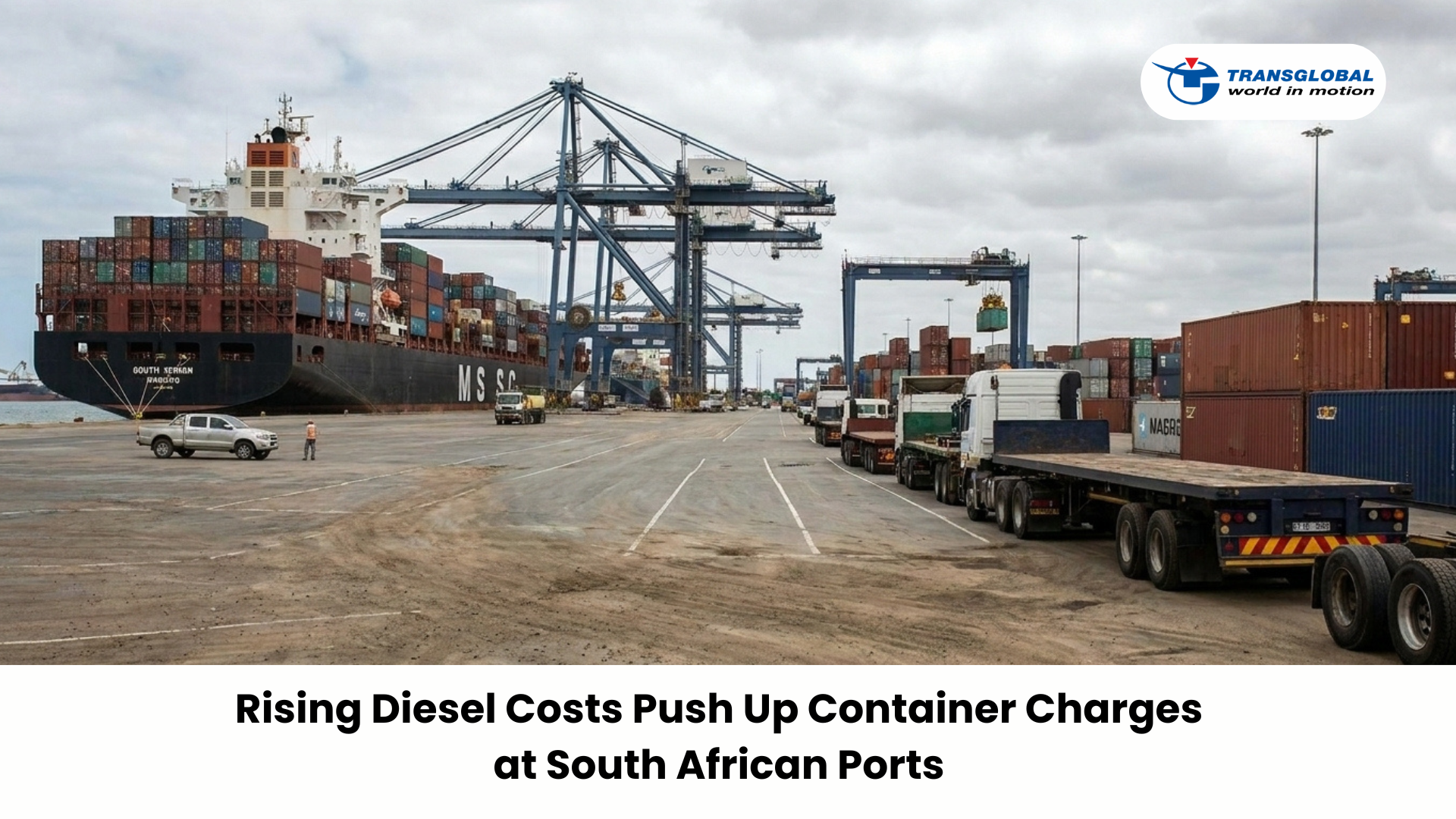
South Africa’s logistics sector is once again feeling the pressure of global supply chain instability, this time through higher diesel-related port costs.
Transnet Port Terminals (TPT) has confirmed that its fuel neutrality charge will increase to R78 per container from 1 June 2026, following continued increases in diesel prices linked to ongoing global trade disruptions.
While the adjustment may appear small on paper, the broader impact across import, export, and containerized supply chains could be significant, especially for businesses already managing rising transport, warehousing, and shipping costs.
For freight forwarders, importers, exporters, and logistics operators, the announcement is another reminder that fuel volatility is now directly influencing cargo handling economics at ports.
⛽ Why the Fuel Charge is Increasing?
According to TPT, the revised charge is linked to the coastal diesel price index thresholds under South Africa’s regulated fuel pricing framework.
The fuel neutrality charge applies at container terminals using diesel-powered equipment for cargo handling operations, including:
- 🚜 Reach stackers
- ⚙️ Yard equipment
- 🚢 Terminal handling machinery
- 📦 Container movement operations
TPT noted that diesel prices have increased from approximately R13.26 to R13.43 since March 2026, driven largely by continued global supply chain instability and fuel market volatility.
As a result, the operator introduced the updated charge as a temporary cost-recovery mechanism.
🌍 The Bigger Picture: Fuel Volatility and Global Logistics Pressure
Fuel costs remain one of the most sensitive variables in modern logistics.
Over the past few years, the industry has faced repeated disruptions linked to:
- ⚠️ Geopolitical tensions
- 🚢 Shipping rerouting around high-risk zones
- ⛽ Energy supply instability
- 📦 Congestion across global trade corridors
These factors continue to increase operational costs across shipping lines, trucking, port handling, and warehousing operations.
The latest TPT surcharge reflects how global disruptions are now filtering directly into local logistics costs.
👉 In today’s environment, fuel is no longer just a transport expense, it has become a key supply chain risk factor.
📦 What does this Mean for Importers and Exporters?
For many businesses, the fuel neutrality charge may not seem substantial individually. However, when combined with existing port fees, inland transport costs, fuel surcharges, and currency fluctuations, the overall landed cost impact becomes more noticeable.
High-volume importers and exporters moving large container volumes through South African ports may now need to reassess:
- 📊 Cost-per-container calculations
- 📄 Existing freight agreements
- 🚛 Inland distribution pricing
- 📦 Overall supply chain budgets
Industries heavily dependent on container movement, including retail, manufacturing, agriculture, and FMCG sectors, could feel the impact more quickly.
🚢 Why TPT Calls it a “Short-Term” Measure?
TPT has stated that the fuel neutrality charge is intended as a temporary mechanism used only during periods of extreme fuel price variation.
The charge will reportedly be:
- 📅 Reviewed monthly
- ⚖️ Adjusted according to diesel pricing movements
- 🤝 Managed alongside ongoing customer engagement initiatives
TPT also noted that the surcharge only partially recovers increased fuel costs, with the operator continuing to absorb part of the additional expense internally.
This suggests that port operators themselves are also under growing operational cost pressure.
🔄 Supply Chain Resilience is Becoming More Important than Cost Alone
The announcement highlights a broader shift happening across global logistics.
For years, supply chains were largely designed around efficiency and cost optimisation. Today, businesses are increasingly being forced to plan around volatility, disruption, and operational resilience.
Fuel fluctuations, route disruptions, geopolitical instability, and port congestion are no longer isolated events, they are becoming recurring operational realities.
As a result, logistics planning now requires:
- 📈 More flexible budgeting
- 🔍 Greater visibility into cost drivers
- 🤝 Stronger collaboration with logistics partners
- ⚙️ Faster operational adaptation
The companies that manage these disruptions effectively are often the ones that prepare early rather than react late.
🚚 Conclusion
The increase in TPT’s fuel neutrality charge may be temporary, but it reflects a much larger reality facing global supply chains: operational costs are becoming increasingly dynamic and interconnected.
For businesses moving cargo through South African ports, understanding these cost shifts early can help prevent pricing surprises, protect margins, and improve planning accuracy.
Working with the best freight forwarder helps businesses navigate changing logistics costs, port surcharges, fuel volatility, and operational disruptions with greater confidence and visibility.
Because in modern logistics, success is no longer only about moving cargo efficiently, it is about staying prepared when conditions change unexpectedly.
Comments