

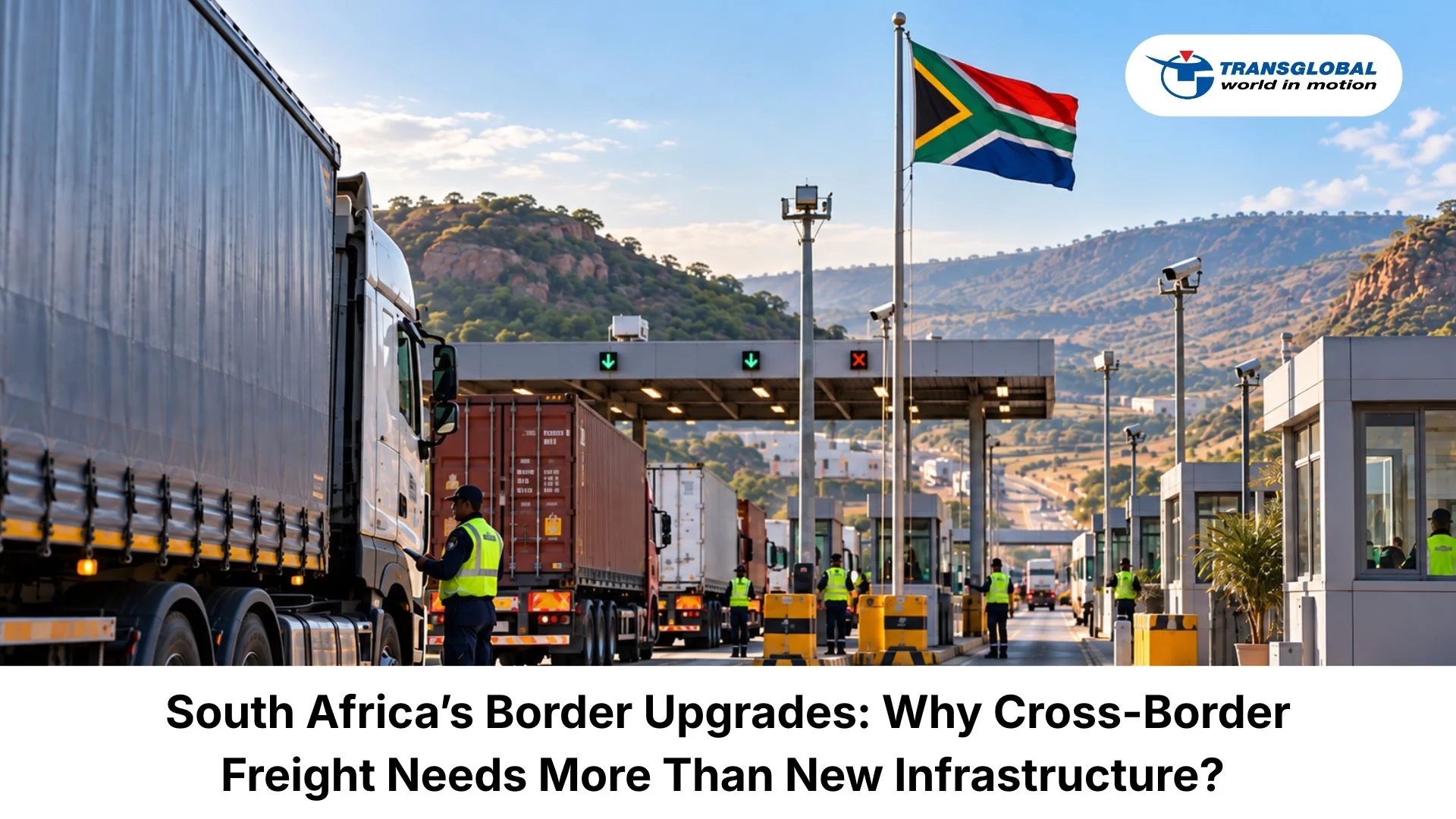
South Africa’s border upgrade plans are moving into sharper focus.
The government has signed off on the Borderline Infrastructure Improvement Plan for 2026 to 2030, along with a R12.5 billion public-private partnership to rebuild six major land ports.
For the freight industry, this is an important development.
Better facilities, improved lanes, upgraded inspection areas and stronger border infrastructure can all support smoother cargo movement.
But the Road Freight Association has raised an important point.
Infrastructure alone will not solve border delays if the inspection agencies working at those borders are not properly coordinated.
That matters because many transporters still face long waiting times at key crossings such as Lebombo and Beitbridge.
For importers, exporters, hauliers and freight forwarders, the issue is not only whether border facilities look better.
The real question is whether trucks can move through faster, with clearer processes, better coordination and fewer unnecessary delays.
👉 Border upgrades only create value when they reduce the time cargo spends waiting.
🚛 Border Delays are an Operational Problem
Cross-border freight depends on timing.
When a truck reaches a border, the movement has usually already been planned around collection times, delivery windows, driver hours, route conditions and customer commitments.
If that truck waits for days, the delay affects more than one shipment.
It can disrupt warehouse receiving plans, production schedules, retail deliveries, export commitments and return-load planning.
That is why border efficiency is not only a government infrastructure issue.
It is a supply chain issue.
Every hour lost at a border adds pressure to the full transport plan, especially for time-sensitive cargo, high-value shipments and scheduled regional deliveries.
For businesses moving cargo across Southern Africa, reliable road freight depends on more than trucks and routes.
It also depends on how well border processes are managed.
🏗️ New Infrastructure Must Improve Real Movement
New border buildings, lanes and inspection areas can make a major difference.
They can create more space, reduce bottlenecks and support safer, more organised movement of trucks and people.
But infrastructure is only one part of the solution.
If border agencies still work in isolation, freight delays may continue.
A truck may pass one check but still wait for another. Documents may be ready for one authority but not accepted by another. Drivers may move from queue to queue without a clear view of what comes next.
This is the concern raised by the Road Freight Association.
The problem is not the checking itself.
Checks are necessary for safety, compliance, customs control and border security.
The challenge is how those checks are carried out.
⚖️ Coordination Between Agencies is Critical
Border posts involve multiple authorities.
Customs, immigration, police, health, agriculture and other inspection agencies may all play a role depending on the cargo, route and destination.
When these agencies are not aligned, the process becomes slower for everyone.
A shipment may be compliant, but still delayed because one step is not coordinated with the next.
This is why stronger inter-agency coordination is just as important as physical border upgrades.
For freight to move efficiently, border authorities need shared processes, clear communication and practical time targets.
For importers and exporters, accurate customs clearance preparation also becomes important before the truck reaches the border.
When documents, cargo details and compliance requirements are ready early, the transport team has a better chance of avoiding avoidable delays.
⏱️ Clearance Targets Give the Industry Something to Measure
The RFA has called for clear performance targets to be built into the border upgrade process.
These include two to three hours for pre-cleared trucks and no more than six to eight hours where cargo needs physical inspection.
That type of target is important because it moves the conversation from general improvement to measurable performance.
Without clear targets, it becomes difficult for transporters, freight forwarders and cargo owners to know whether border upgrades are actually working.
A rebuilt land port should not only look better.
It should process compliant cargo faster, reduce waiting time and give freight teams more predictable movement across corridors.
This is especially important at busy regional gateways where delays affect large volumes of cargo moving between South Africa and neighbouring markets.
🌍 Regional Trade Depends on Border Efficiency
Southern African trade relies heavily on road corridors.
Cargo moving into Mozambique, Zimbabwe, Zambia, Botswana, Namibia, Malawi and the wider region often depends on road freight connections from South Africa.
When border posts slow down, the impact spreads across the region.
Importers may face late deliveries. Exporters may miss customer deadlines. Transporters may lose vehicle utilisation. Drivers may spend more time waiting instead of moving.
This is why efficient border crossings are central to regional logistics performance.
Border upgrades should therefore support faster cargo movement, not simply create newer waiting areas.
The real value comes when improved infrastructure, prepared documentation and coordinated inspections work together.
📦 Freight Planning Must Start Before the Border
A smoother border process does not begin at the gate.
It begins when the shipment is planned.
Cargo descriptions, commercial documents, customs requirements, permits, route planning and delivery commitments all need to be aligned before dispatch.
This becomes even more important when cargo is regulated, high-value, abnormal, hazardous or time-sensitive.
If information is incomplete or documents are not ready, even upgraded border facilities cannot prevent delays.
Strong freight planning helps identify the likely checks, required documentation and route-specific risks before the truck starts moving.
That is where a proper logistics partner adds value.
The role is not only to move cargo from one point to another, but to plan around the real conditions that affect movement.
🚚 Conclusion: Better Borders Must Deliver Faster Freight
South Africa’s border upgrade plans are a positive step for regional trade.
Improved facilities and major investment can help reduce bottlenecks at important land ports.
But the freight industry is right to focus on the outcome.
Border upgrades must lead to faster, more predictable cargo movement.
That requires coordinated inspections, practical clearance targets, prepared documentation and stronger communication between the authorities involved.
For importers, exporters and transporters, the real benefit will not come from infrastructure alone.
It will come from border processes that help compliant cargo move with less delay.
Working with experienced freight forwarders helps businesses align road freight planning, customs preparation and cross-border movement before delays happen.
Because a border upgrade is not successful when the building is complete.
👉 It is successful when trucks spend less time waiting and more time moving.
Comments