

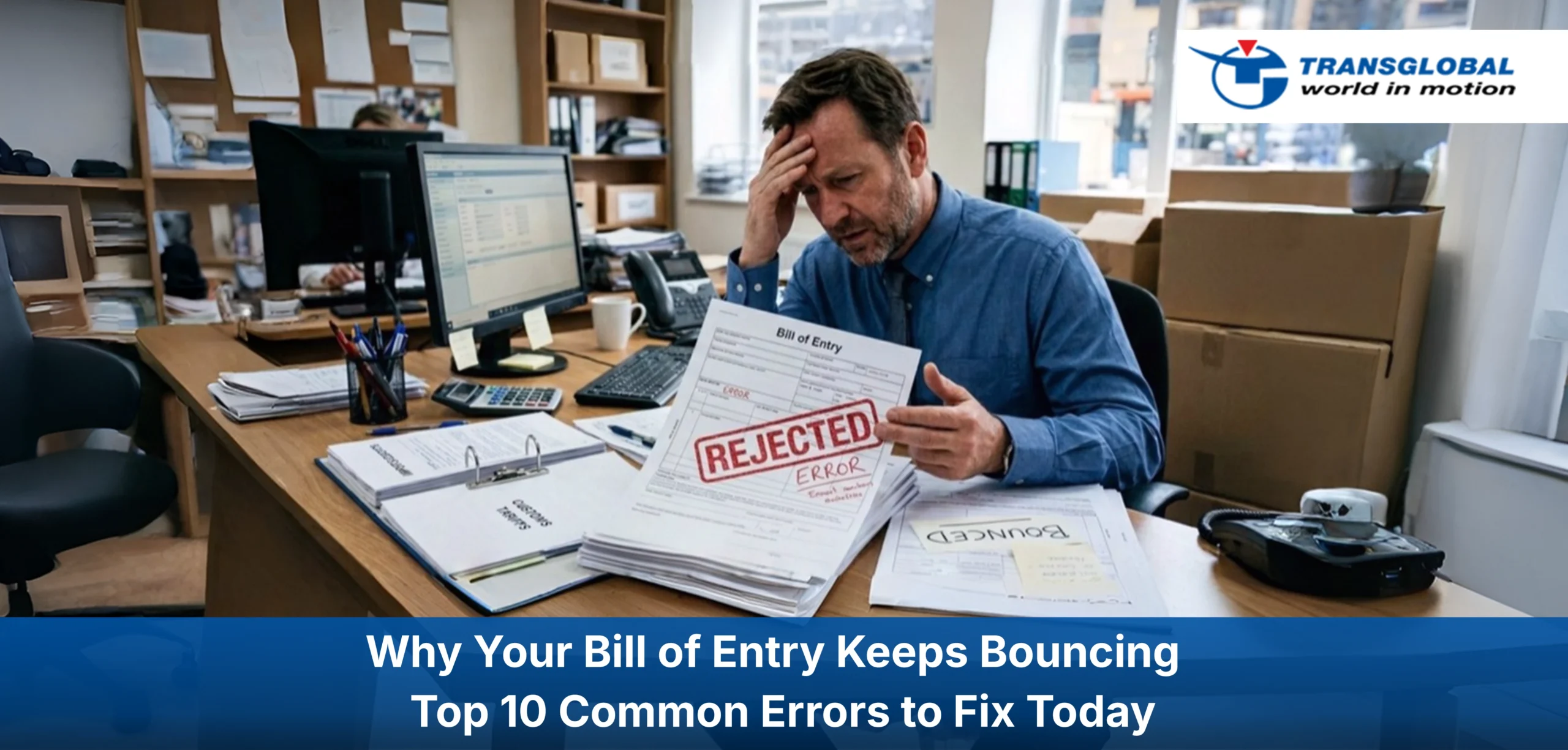
A container arrives at the port. The cargo is ready. The customer is waiting.
But the shipment still does not move.
Not because the vessel is delayed. Not because customs stopped operations. But because the Bill of Entry was rejected again.
For many importers, exporters, and freight forwarders, this is becoming an increasingly common problem. Across global trade today, customs authorities are tightening compliance checks, digital clearance systems are becoming stricter, and even small declaration mistakes can trigger delays, inspections, penalties, or shipment holds.
The reality is simple: your cargo moves only when your documentation moves correctly.
And among all customs documents, the Bill of Entry remains one of the most critical.
Why the Bill of Entry Matters More than Ever?
The Bill of Entry is not just another customs form. It is the official declaration submitted to customs authorities that explains what goods are being imported, their value, classification, origin, duties, and compliance details.
Customs authorities rely heavily on this document to determine:
- Whether the cargo can be cleared
- What duties and taxes apply
- Whether the shipment meets regulatory requirements
- If inspections or audits are required
When errors exist, the system flags the shipment immediately.
In today’s customs environment, many countries, including South Africa and major global trade hubs, use digital customs systems that automatically detect inconsistencies between declarations, invoices, packing lists, and shipping data.
That means even minor errors can cause your Bill of Entry to “bounce” or be rejected.
Top 10 Common Bill of Entry Errors Businesses Must Fix
1. Incorrect HS Code Classification
One of the most common reasons for customs rejection is using the wrong HS code.
The HS code determines duty rates, taxes, restrictions, and compliance requirements. If the classification does not match the cargo description, customs systems immediately flag the declaration.
This becomes even more sensitive when shipping:
- Dangerous goods
- Hazardous materials
- Defence equipment
- Armaments
- Specialized industrial cargo
Incorrect classification can lead to penalties, delays, or cargo seizure.
2. Mismatch Between Invoice and Bill of Entry
Customs systems compare the Bill of Entry against the commercial invoice automatically.
If there are differences in:
- Cargo description
- Quantity
- Weight
- Currency value
- Supplier details
The declaration may be rejected instantly.
Consistency across documents is critical for smooth customs clearance.
3. Incorrect Cargo Valuation
Under-declaring or inaccurately valuing cargo creates serious customs compliance issues.
Authorities use valuation checks to prevent duty evasion and trade fraud. If the declared value appears inconsistent with market pricing or shipping details, customs may stop the shipment for review.
This often leads to:
- Additional inspections
- Duty reassessment
- Financial penalties
- Delayed cargo release
4. Missing Supporting Documentation
A Bill of Entry cannot function independently.
Missing documents such as:
- Commercial invoices
- Packing lists
- Certificates of Origin
- Dangerous goods declarations
- Import permits
can immediately prevent customs clearance.
For specialized shipments such as explosives, DG cargo, military equipment, or hazardous materials, documentation requirements become even stricter.
5. Incorrect Incoterms Declaration
Many businesses overlook how important Incoterms are in customs declarations.
Using the wrong Incoterm—such as FOB instead of CIF—can impact:
- Duty calculations
- Freight allocation
- Insurance valuation
- Customs processing
Customs authorities expect the declared Incoterms to align perfectly with freight documentation and invoices.
6. Errors in Importer or Consignee Information
Even simple mistakes in company names, tax numbers, registration details, or consignee information can cause the declaration to fail.
Digital customs systems validate importer information automatically. If records do not match official registration data, clearance delays become likely.
This is especially problematic for multinational businesses moving cargo across multiple regions.
7. Dangerous Goods Compliance Errors
Dangerous goods shipments face additional customs scrutiny.
Incorrect or incomplete declarations related to:
- DG classification
- UN numbers
- Hazard labels
- Packaging declarations
- Safety documentation
Can result in immediate rejection.
For cargo such as explosives, hazardous chemicals, or defence materials, compliance accuracy is non-negotiable.
8. Incorrect Country of Origin Declaration
Country of Origin impacts:
- Trade agreement eligibility
- Duty rates
- Regulatory restrictions
- Sanctions compliance
Incorrect origin declarations can trigger audits or cargo holds.
This becomes particularly sensitive when cargo moves through multiple countries before final export.
9. Late Submission of Customs Entries
Timing matters in customs clearance.
Submitting the Bill of Entry too late can result in:
- Port storage charges
- Demurrage costs
- Delayed cargo release
- Operational disruption
In today’s congested logistics environment, customs timing has become just as important as documentation accuracy.
10. Failure to Align Multi-Modal Shipment Data
Modern cargo often moves through sea freight, air freight, and road freight within the same supply chain.
When shipment data is inconsistent across transport modes, customs systems identify discrepancies quickly.
This includes mismatched:
- Container numbers
- Transport references
- Cargo quantities
- Routing details
Integrated logistics coordination is now essential for customs success.
Why has Customs Compliance has Become More Complex Globally?
Global customs authorities are becoming more data-driven and compliance-focused.
Today’s environment includes:
- Automated customs verification systems
- Increased anti-fraud monitoring
- Stricter dangerous goods compliance
- Enhanced trade security regulations
- Greater scrutiny of high-risk cargo
This means customs clearance is no longer just administrative, it is strategic.
Businesses that fail to modernize their compliance processes face increasing delays and operational risk.
Transglobal’s Role Goes Beyond Moving Cargo
At Transglobal, customs and compliance management are treated as critical parts of the logistics process, not afterthoughts.
Whether managing sea freight, air freight, or road freight operations, the focus is on ensuring every shipment aligns with customs requirements before cargo reaches the border.
This becomes especially important for specialized cargo such as:
- Dangerous goods
- Hazardous materials
- Explosives logistics
- Military and defence cargo
- Armaments transport
- High-risk project cargo
The team works proactively to:
- Review customs documentation thoroughly
- Align shipment data across all transport modes
- Ensure dangerous goods compliance
- Coordinate permits and supporting certificates
- Reduce customs rejection risk before submission
This approach helps businesses avoid delays, reduce penalties, and maintain smoother cargo movement across global supply chains.
Why the Right Freight Forwarder Improves Customs Performance?
Many customs problems begin long before the Bill of Entry is submitted.
They often start with poor freight coordination, weak documentation control, or a lack of compliance oversight.
An experienced freight forwarder helps businesses:
- Improve customs accuracy
- Reduce rejection rates
- Align shipment documentation properly
- Maintain visibility across the shipment lifecycle
- Navigate complex international trade requirements
In today’s logistics environment, this support creates real operational advantage.
Conclusion: Customs Accuracy Keeps Cargo Moving
A rejected Bill of Entry is rarely just a paperwork issue, it becomes a supply chain issue.
Delays, penalties, inspections, and operational disruption often begin with small declaration mistakes that could have been prevented through proper planning and compliance management.
Businesses that prioritize customs accuracy and work with experienced logistics partners are better positioned to move cargo efficiently across global trade routes. If your shipments involve complex customs requirements, dangerous goods, hazardous materials, or specialized cargo, partner with a freight forwarder that understands compliance beyond documentation. Contact our team that delivers secure, compliant, and strategically managed logistics solutions across sea, air, and road freight.
Frequently Asked Questions
Why does a Bill of Entry get rejected?
Common reasons include incorrect HS codes, missing documents, valuation errors, and mismatched shipment information.
How can businesses avoid customs clearance delays?
By ensuring accurate documentation, proper cargo classification, and working with experienced freight forwarding and customs experts.
Are dangerous goods shipments subject to stricter customs checks?
Yes. Dangerous goods, explosives, and hazardous cargo require additional compliance documentation and detailed customs verification.
Comments