

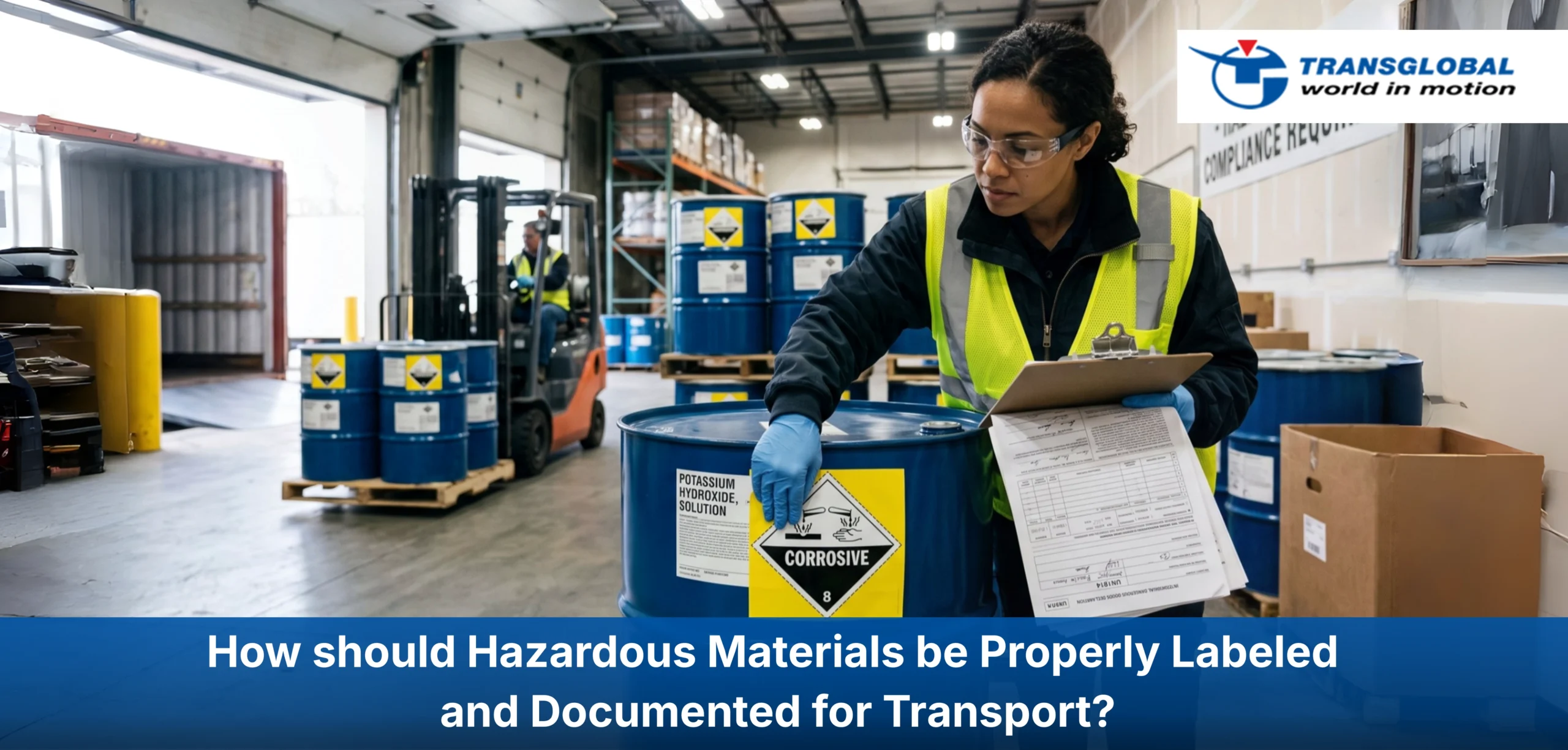
Hazardous materials need more than careful packing before they move.
The cargo may be prepared. The transport may be arranged. The delivery schedule may already be shared with the receiving team.
But before the shipment can travel safely, every label, mark, placard, declaration, and supporting document must give the same message.
A drum, carton, cylinder, pallet, IBC, tank, or container carrying hazardous materials must show what the cargo is, how it should be handled, and what level of risk is involved.
The documents must confirm the same information in detail.
If the label shows one hazard class and the paperwork describes another, the shipment becomes harder to accept, handle, store, inspect, and move.
Proper labelling and documentation are a key part of dangerous goods transport. They help carriers, customs teams, warehouse staff, port operators, drivers, emergency responders, and consignees understand the cargo before they touch, load, store, or release it.
Why Hazardous Material Labels Must Match the Cargo Risk?
Hazardous material labels are the first safety signal on the shipment.
They tell handlers what type of risk is present before the package is opened, moved, loaded, or stored.
A shipment may contain flammable liquid, corrosive material, toxic substance, gas, oxidising product, explosive goods, lithium batteries, radioactive material, or another regulated product. Each category needs a different level of care during handling and transport.
The label helps make that risk become visible.
It also supports safer segregation, warehouse placement, vehicle loading, container planning, terminal handling, and emergency response.
The label must match the actual cargo classification. The hazard class, UN number, proper shipping name, packing group, and special handling marks should all reflect the product being moved.
For shippers, this starts with understanding the 9 classes of dangerous goods. Each class points to a specific risk and helps determine which labels, marks, and declarations are required.
A correct label gives everyone in the transport chain the same safety message from the start.
How Documentation Proves. What the Label Shows?
Labels show the risk visually.
Documents explain that risk in detail.
A hazardous materials shipment may require a dangerous goods declaration, safety data sheet, commercial invoice, packing list, permit, emergency contact details, transport instruction, and cargo-specific certificate.
These documents give carriers and authorities the information they need to accept the shipment.
The UN number, proper shipping name, hazard class, packing group, quantity, package type, consignee details, and emergency response information must all align.
If the package is marked as a flammable liquid, the declaration and safety data sheet should support that classification. If the cargo requires a permit, the permit should match the product, quantity, route, consignee, and movement date.
Accurate documents also support customs brokerage, especially when hazardous cargo is moving across borders.
Customs teams may need to confirm what the goods are, whether they are controlled, whether permits apply, and whether the shipment can legally move through the intended route.
For exporters and importers, this is why shipping documentation and compliance should be checked before the shipment enters the transport chain.
The label alerts the transport chain.
The documents give the alert the evidence it needs.
Why Packaging, Marks, and Handling Instructions Must Work Together?
Labelling cannot stand alone.
The package itself must be suitable for the hazardous material being transported.
Some hazardous materials require UN-approved packaging. Others may need inner packaging, absorbent material, pressure protection, secure closures, temperature control, ventilation, or orientation marks.
Package marks give handlers extra instructions.
They may show orientation arrows, limited quantity marks, environmentally hazardous substance marks, lithium battery marks, marine pollutant marks, temperature requirements, or special handling symbols.
These details guide how the shipment should be stored, lifted, separated, and moved.
Warehouse teams may need to keep certain cargo away from incompatible goods. Drivers may need written handling instructions. Port teams may need approved storage areas. Receiving sites may need trained staff and suitable equipment before the cargo arrives.
A label identifies the hazard.
The packaging and handling instructions show how that hazard should be managed during the journey.
Why Transport Mode Changes the Labelling and Document Requirements?
Hazardous materials do not move under a single process.
Requirements can change when cargo moves by road, sea, or air.
A shipment accepted for road transport may need further checks before it is accepted by a shipping line or airline. Ports, terminals, carriers, and road transport operators may also apply their own acceptance conditions.
Air freight usually applies stricter limits because aircraft safety requirements are tighter. Sea freight may require dangerous goods declarations, container packing certificates, segregation checks, and vessel acceptance. Road freight may require vehicle placards, driver instructions, permits, route controls, and suitable handling at collection and delivery points.
This means one label or document set may not suit every transport stage.
The cargo information must match the mode, route, carrier, destination, and authority involved.
For inland movements, road freight planning may need to consider vehicle suitability, driver readiness, route timing, permits, and receiving-site access.
For higher-risk inland cargo, the same principle applies to explosives and specialised road freight, where labels, permits, routing, and handling requirements must be aligned before dispatch.
For multimodal movements, the same shipment may leave a warehouse by road, enter a port, move by sea, clear at the destination, and continue inland after arrival.
Each stage depends on the cargo being correctly labelled, declared, accepted, and understood.
How Early Review Keeps Hazardous Cargo Ready for Dispatch?
Hazardous materials should be checked before the truck arrives.
By that stage, the shipper should already have clarity on the cargo classification, package labels, safety data sheet, declaration, permits, emergency contacts, carrier acceptance, and handling requirements.
Early review gives the cargo team time to align these details properly.
It also helps confirm whether the shipment needs special storage, vehicle placards, route controls, security arrangements, site access checks, or additional approvals before dispatch.
For businesses moving chemicals, batteries, industrial materials, defence cargo, mining supplies, or controlled goods, this preparation protects the wider movement.
Before dispatch, the cargo team should confirm whether:
- The UN number and proper shipping name are correct,
- The hazard class and packing group are aligned,
- The package labels are visible and suitable,
- The safety data sheet supports the declared cargo,
- Permits and approvals apply to the movement,
- The carrier can accept the goods, and
- The receiving site is ready to handle the shipment.
When these details are reviewed early, collection, loading, customs checks, port handling, border movement, storage, and final delivery become easier to coordinate.
A well-prepared shipment gives every party a stronger basis for handling the cargo correctly.
Conclusion: Clear Labels and Complete Documents Create Safer Hazardous Cargo Movement
Hazardous materials move best when the cargo, labels, packaging, documents, handling instructions, and transport plan all support one another.
The label gives the first safety message.
The documents explain that message in detail.
The packaging protects the cargo during movement, while the transport plan helps ensure the shipment is accepted, routed, stored, and delivered under the right conditions.
For shippers, the purpose is not only to meet a compliance requirement. It is to make sure every person handling the cargo has the right information before the shipment moves.
That is what helps hazardous cargo travel with better control from collection to final delivery.
Preparing hazardous materials for transport? Contact us to review the labelling, documentation, packaging, and cargo movement requirements before dispatch.
Move regulated cargo with specialist freight forwarders who understand hazardous material labelling, dangerous goods documentation, mode-specific requirements, and controlled transport planning.
Frequently Asked Questions
Why do hazardous materials need special labels?
They show the cargo risk, hazard class, handling requirement, and safety information needed by carriers, handlers, authorities, and emergency responders.
What documents are needed for hazardous materials transport?
Common documents include dangerous goods declarations, safety data sheets, invoices, packing lists, permits, certificates, transport instructions, and emergency contact details.
When should hazardous materials be checked before transport?
They should be checked before dispatch so labels, packaging, documents, permits, carrier acceptance, and handling requirements can be aligned early.

Comments