

A vehicle shipment can look simple at first.
The car is ready. The buyer is waiting. The export documents are being prepared. The destination is confirmed.
But before the booking is made, one decision can change the full shipping plan.
Should the vehicle move by RoRo or inside a container?
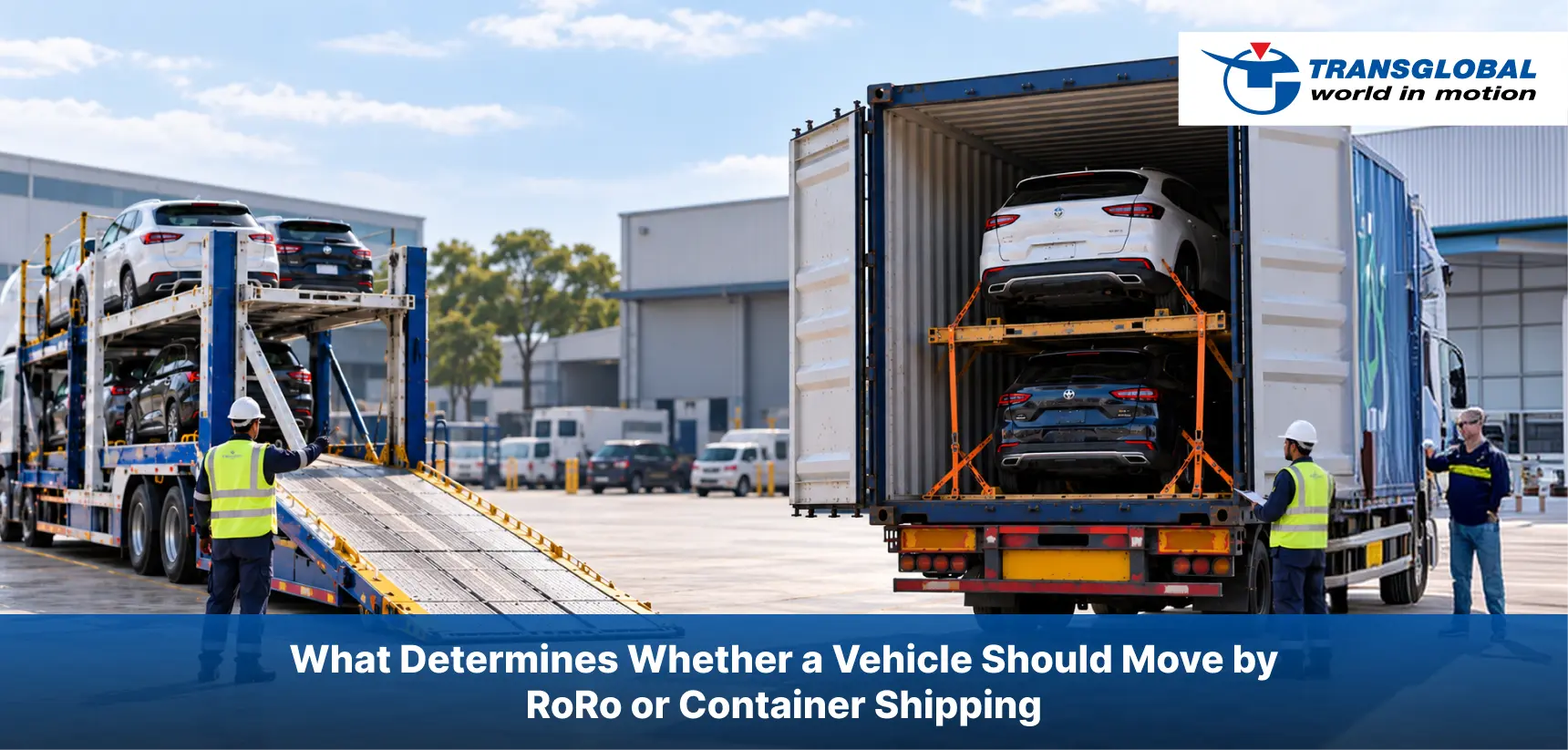
RoRo, or roll-on roll-off shipping, is designed for vehicles that can be driven or rolled directly onto a vessel. Container shipping places the vehicle inside a container, where it is loaded, secured, sealed, and moved as containerised cargo.
Both methods are used in international vehicle shipping.
The right choice depends on the vehicle, the route, the level of protection required, the destination rules, and what needs to happen after the vehicle arrives.
A standard running vehicle may suit RoRo. A high-value, non-running, low-clearance, modified, classic, or sensitive vehicle may need container shipping.
The decision should not be based only on price.
It should be based on what gives the vehicle the safest, most practical, and most suitable movement from collection to handover.
Why does the Vehicle’s Condition Come First?
The first question is whether the vehicle can be moved under its own power.
RoRo transport usually needs the vehicle to be driveable, steerable, and able to brake safely. The vehicle may need to move through a terminal, onto the vessel, and off again at destination.
That makes RoRo useful for standard cars, commercial vehicles, and other units that meet carrier and terminal handling requirements.
But if the vehicle cannot run, has mechanical issues, has accident damage, or needs special handling, RoRo may not be suitable.
A non-running vehicle may need winching, lifting, or controlled loading. A low-clearance vehicle may need special ramps. A prototype or race vehicle may need limited handling. A luxury or collector vehicle may need more controlled protection throughout the journey.
In those cases, container shipping may be more practical.
The vehicle can be loaded in a controlled environment, positioned carefully, secured inside the container, and moved with less exposure during the main international leg.
For vehicle exporters comparing international vessel options, sea freight support helps review carrier suitability, route availability, container choice, and port handling requirements.
The vehicle’s condition should guide the shipping method before cost is discussed.
How Vehicle Value Changes the Level of Protection Needed?
A vehicle’s value can change the shipping decision.
Some vehicles need more than standard movement.
A classic car, luxury vehicle, motorsport unit, prototype, limited-edition model, modified vehicle, or high-value commercial asset may carry financial, operational, or sentimental value.
For these shipments, protection becomes a priority.
RoRo can work well for many standard driveable vehicles, but the vehicle is not sealed inside its own container. It moves through RoRo terminal handling and is secured inside the vessel with other vehicles.
Container shipping gives a different level of control.
The vehicle is placed inside a container, secured with suitable restraints, and protected from some external handling exposure during the containerised part of the journey.
This can be useful when the vehicle needs:
- enclosed protection,
- controlled loading,
- condition photographs,
- limited handling,
- spare parts or accessories included where permitted,
- more secure handover records, and
- tighter control during origin and destination handling.
For cargo owners moving specialist or high-value cargo, the protection level should match the value and sensitivity of the asset.
Container shipping is not automatically better for every vehicle.
It still needs proper loading, lashing, wheel chocking, tyre protection, clearance checks, and condition records.
But for certain vehicles, the added control can be worth it.
Why Route and Port Availability Matter?
The chosen route can decide whether RoRo is even possible.
RoRo shipping depends on ports that can handle roll-on roll-off cargo and vessels that operate on the required trade lane.
Some routes have regular RoRo services. Others may have limited availability, longer waiting times, or no direct RoRo option.
Container shipping is often more widely available because container vessels serve many international routes.
That does not mean container shipping is always faster or easier, but it may offer more routing flexibility in some cases.
The origin port, destination port, sailing frequency, vessel schedule, terminal rules, and inland delivery plan should all be reviewed before the shipping method is selected.
A vehicle may be suitable for RoRo, but if the destination does not support practical RoRo handling, container shipping may become the better option.
The opposite can also happen.
A standard driveable vehicle moving on a strong RoRo route may not need the extra cost and handling involved in container loading.
For port-based vehicle movements, sea freight flow helps explain why vessel schedules, port handling, terminal processes, and inland links all affect the movement.
A vehicle shipping method only works if the ports, carrier, destination process, and final delivery plan can support it.
How Customs and Destination Rules Affect Vehicle Export?
Vehicle shipping depends heavily on destination acceptance.
The carrier, customs team, port, consignee, and destination authority may all need to confirm the vehicle details before release.
The shipment may require an invoice, ownership record, registration papers, export permit, import permit, VIN or chassis number, engine number where required, vehicle value, and destination instructions.
For container shipping, the container number, seal number, loading record, and packing details may also matter.
For RoRo, the vehicle condition, running status, keys, fuel level, and terminal handling requirements may need to be confirmed.
Destination rules can also influence the method.
Some countries may have requirements for used vehicles, age limits, cleaning, roadworthiness, inspection, registration, import permits, or duties and taxes.
For vehicle exports and imports, customs brokerage helps align the vehicle description, value, HS code, ownership records, permits, and release requirements.
The shipping method should support these requirements, not create extra difficulty after arrival.
A vehicle can be ready at origin, but the shipment is only complete when it can be accepted and released at destination.
Why Should Cost be Compared with the Full Movement?
Cost matters, but it should be compared properly.
RoRo may appear more cost-effective for standard driveable vehicles on suitable routes.
Container shipping may involve additional costs for container space, loading, securing, terminal handling, unpacking, and inland movement.
But the freight rate alone does not show the full picture.
The real comparison should include:
- vehicle value,
- running condition,
- route availability,
- sailing schedule,
- loading cost,
- securing cost,
- port handling,
- destination release,
- inland delivery, and
- risk exposure.
A lower freight cost may not help if the method creates handling risk, delivery complications, or protection concerns.
The best option is not always the cheapest one.
It is the option that matches the vehicle and keeps the full movement practical.
Why Should Final Handovers be Planned Before Booking?
The vehicle’s journey does not end when the vessel arrives.
After arrival, the vehicle may need customs release, terminal collection, unpacking, inspection, storage, inland transport, or delivery to a buyer, dealer, workshop, private owner, event location, project site, or mine.
RoRo and container shipping create different destination processes.
A RoRo vehicle may need to be collected from the terminal within a required time frame.
A containerised vehicle may need unpacking space, suitable equipment, inspection time, and a controlled handover process.
The receiving party should know what to expect before the shipment arrives.
They should understand when the vehicle will be available, who will handle clearance, who will collect it, where it will be inspected, and how final delivery will happen.
For vehicle shipments that need inland movement after port release, road freight planning helps connect port collection, route planning, site access, and final handover.
Final handover should influence the shipping choice because the vehicle still needs to move safely after the international leg.
A good vehicle export plan starts with the destination in mind.
Conclusion: RoRo or Container Shipping Depends on the Vehicle and the Route
The choice between RoRo and container shipping depends on more than availability.
It depends on the vehicle’s condition, value, size, handling sensitivity, destination rules, port options, sailing schedule, customs requirements, protection needs, and final handover plan.
RoRo can be a practical option for driveable vehicles moving through suitable RoRo ports.
Container shipping can be more suitable for high-value, non-running, low-clearance, modified, classic, sensitive, or specialist vehicles that need enclosed protection and controlled securing.
That is the key difference.
RoRo works when the vehicle can safely move through a roll-on roll-off process. Container shipping works when the vehicle needs more controlled loading, protection, or routing flexibility.
Planning an international vehicle shipment? Contact us to review the vehicle condition, route, documents, shipping method, and destination requirements.
Move vehicles internationally with leading freight forwarders who understand RoRo transport, car container shipping, vehicle export, and controlled delivery planning.
Frequently Asked Questions
What is RoRo shipping for vehicles?
RoRo shipping means roll-on roll-off transport, where a vehicle is driven or rolled onto a vessel at origin and driven or rolled off at destination.
When should a vehicle move by container shipping?
Container shipping may be better when the vehicle is high-value, non-running, low-clearance, classic, modified, sensitive, or needs enclosed protection.
Is RoRo cheaper than container shipping?
RoRo may be cheaper for standard driveable vehicles on suitable routes, but the best option depends on protection needs, route availability, handling, customs, and final delivery.
Comments