

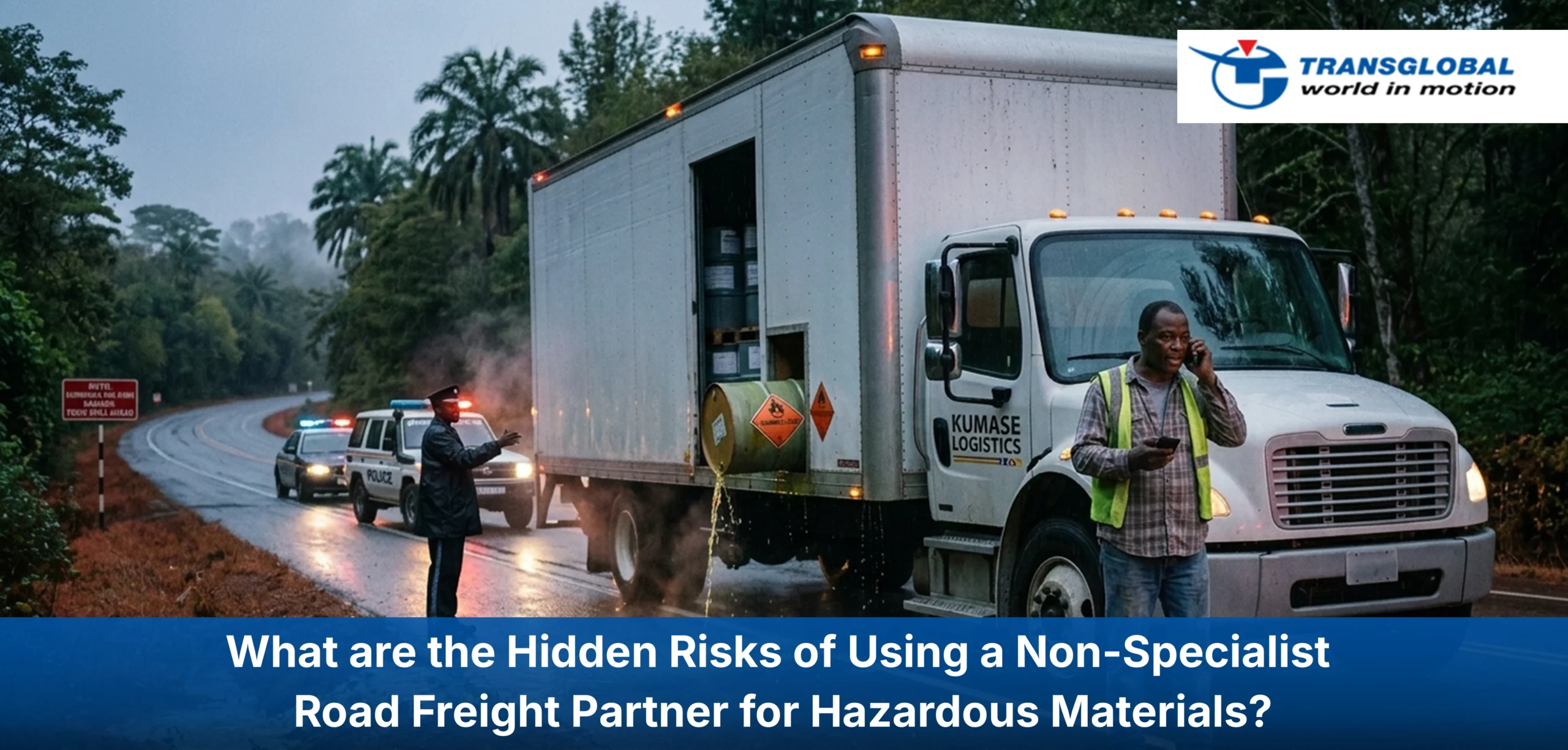
A hazardous materials shipment can leave the warehouse fully compliant and properly packaged, yet still become a serious risk before it reaches its destination.
Why?
Because compliance does not end when the cargo is loaded onto a truck.
For many businesses moving hazardous materials, dangerous goods, chemicals, explosives, or regulated industrial products, one of the biggest risks often comes from the transport provider itself. While many road freight companies can move general cargo efficiently, hazardous materials require a completely different level of expertise, planning, compliance, and operational control.
The challenge is that these risks are not always obvious during the quoting stage.
A transport provider may offer competitive pricing and available capacity, but without specialized dangerous goods experience, hidden compliance gaps can quickly become operational problems.
In today’s logistics environment, where regulations are becoming stricter and supply chains are under increasing scrutiny, choosing the wrong road freight partner can create consequences that extend far beyond delayed deliveries.
Why Hazardous Materials Logistics Requires Specialized Expertise?
Transporting hazardous materials is fundamentally different from transporting standard freight.
Hazardous cargo can include:
- Dangerous goods
- Industrial chemicals
- Flammable liquids
- Corrosive substances
- Explosives
- Toxic materials
- Gas products
- Specialized mining products
- Defence-related cargo
Each shipment is governed by strict transport regulations that define how cargo must be classified, packaged, labeled, documented, handled, and transported.
Road freight operators handling hazardous materials must understand these requirements in detail. A lack of knowledge can result in compliance breaches, shipment rejection, safety incidents, or regulatory penalties.
This is why hazardous materials logistics should never be treated as standard transport.
Why Compliance Failures Often Start Before the Truck Moves?
Many hazardous materials incidents do not begin on the road.
They begin during planning.
Non-specialist transport providers may overlook critical requirements such as:
- Cargo compatibility
- Vehicle suitability
- Route restrictions
- Driver certifications
- Emergency response procedures
- Dangerous goods documentation
- Regulatory approvals
Even when the cargo itself is compliant, failures in transport planning can expose businesses to significant operational and legal risks.
In many cases, problems only become visible during inspections, border crossings, or incident investigations, when correcting them becomes far more costly.
The Hidden Cost of Inadequate Driver Training
Drivers are one of the most important risk control factors in hazardous materials transportation.
Unlike standard freight operations, dangerous goods transport requires drivers to understand:
- Hazard classifications
- Emergency response procedures
- Cargo segregation requirements
- Incident reporting processes
- Safe loading and unloading practices
- Regulatory transport requirements
A non-specialist carrier may not provide the same level of dangerous goods training or operational awareness required for high-risk cargo.
This creates increased exposure during routine transport activities and can significantly impact safety performance.
For hazardous materials, driver competence is not just a regulatory requirement—it is a critical layer of risk management.
Why Vehicle Selection Matters More than Many Businesses Realize?
Not every vehicle is suitable for transporting hazardous materials.
Certain cargo categories require specialized equipment, safety features, containment systems, and compliance certifications.
Using an inappropriate vehicle can create multiple risks, including:
- Cargo instability
- Environmental exposure
- Safety incidents
- Regulatory violations
- Insurance complications
Specialist hazardous materials operators understand how vehicle specifications align with cargo classifications and transport regulations.
Non-specialist providers may not always have the infrastructure or expertise necessary to make those assessments correctly.
How Route Planning Directly Impacts Hazardous Cargo Safety?
Route planning is often underestimated in hazardous materials logistics.
For standard cargo, the fastest route may be the preferred option.
For hazardous materials, the safest and most compliant route is often the priority.
Specialist operators evaluate factors such as:
- Population density
- Restricted transport zones
- Tunnel restrictions
- Environmental risks
- Emergency response accessibility
- Security considerations
A non-specialist road freight provider may focus primarily on transit efficiency without fully accounting for these compliance and safety factors.
This can increase operational exposure throughout the journey.
Why Documentation Errors Create Serious Risks?
Hazardous materials transport is heavily documentation-driven.
Incorrect declarations, missing permits, or inaccurate dangerous goods information can lead to:
- Vehicle detention
- Regulatory penalties
- Border delays
- Cargo rejection
- Insurance disputes
Modern enforcement authorities are increasingly using digital verification systems to identify inconsistencies quickly.
As a result, documentation accuracy has become just as important as physical cargo handling.
Specialist hazardous materials providers typically maintain stricter documentation controls because they understand the operational consequences of compliance failures.
Why Insurance May Not Protect Against Every Risk?
Many businesses assume insurance automatically protects them against hazardous cargo incidents.
However, insurance coverage often depends on compliance.
If investigations reveal that the transport provider failed to meet regulatory requirements, insurers may question coverage or claims eligibility.
This creates a significant financial risk for cargo owners.
Choosing a specialist road freight partner helps reduce this exposure by ensuring that transport operations align with both regulatory and insurance expectations.
For hazardous materials, prevention is always more effective than relying on post-incident recovery.
Why Hazardous Materials Logistics is Becoming More Regulated?
Global supply chains are seeing increasing regulatory pressure around dangerous goods transportation.
Authorities are focusing on:
- Environmental protection
- Public safety
- Dangerous goods compliance
- Security requirements
- Operational accountability
This means businesses can no longer treat hazardous materials transport as a standard procurement decision.
Transport partners must demonstrate real expertise, operational controls, and compliance capabilities.
As regulations continue evolving, specialist logistics knowledge becomes even more valuable.
Transglobal’s Role Goes Beyond Moving Hazardous Cargo
At Transglobal, hazardous materials logistics is built around safety, compliance, and operational discipline.
The focus is not simply on moving cargo from one location to another. It is about ensuring that every stage of the transport process aligns with regulatory requirements and risk management best practices.
Whether supporting road freight, sea freight, or air freight operations, the team works proactively to manage:
- Dangerous goods compliance
- Hazardous materials transport
- Explosives logistics
- Mining industry cargo
- Military logistics
- Defence equipment transport
- Armaments logistics
- Specialized project cargo
Every shipment is carefully planned, documented, monitored, and executed with a strong emphasis on safety and operational integrity.
This approach helps businesses reduce risk, maintain compliance, and improve supply chain reliability across complex logistics environments.
Why Choosing the Right Hazardous Materials Partner Creates Long-Term Value?
The true cost of hazardous materials transportation is not measured only by freight rates.
It is measured by:
- Safety performance
- Regulatory compliance
- Operational reliability
- Risk reduction
- Cargo integrity
- Business continuity
A specialist hazardous materials logistics provider helps businesses protect all of these areas simultaneously.
In a highly regulated environment, choosing the right transport partner is often one of the most important risk management decisions a company can make.
Conclusion: The Cheapest Road Freight Option Can Become the Most Expensive Risk
Hazardous materials logistics demands expertise that goes far beyond standard transport operations.
While non-specialist carriers may appear competitive on price, hidden compliance gaps, operational weaknesses, and safety risks can create far greater costs over time.
Businesses moving dangerous goods, hazardous materials, explosives, defence cargo, or regulated industrial products need transport partners who understand the full responsibility that comes with high-risk cargo.
If your business requires safe, compliant, and reliable hazardous materials transportation, partner with a leading freight forwarder that specializes in dangerous goods logistics across road, sea, and air freight. Choose a team that delivers operational confidence, regulatory expertise, and supply chain reliability at every stage of the journey.
Frequently Asked Questions
Why should hazardous materials be transported by a specialist logistics provider?
Specialist providers understand dangerous goods regulations, vehicle requirements, documentation standards, and safety procedures required for compliant transport.
What risks come with using a non-specialist road freight partner for hazardous cargo?
Businesses may face compliance failures, shipment delays, safety incidents, insurance complications, and regulatory penalties.
What types of cargo require specialized hazardous materials transport?
Dangerous goods, chemicals, explosives, flammable products, toxic substances, defence cargo, and many regulated industrial materials require specialist handling and transportation expertise.
Comments